


Adult desmoid tumors: biology, management and ongoing trials
- PMID: 28489620
- PMCID: PMC5470853
- DOI: 10.1097/CCO.0000000000000374
Adult desmoid tumors: biology, management and ongoing trials
Abstract
Purpose of review: To summarize the current knowledge about the biology and clinical management of adult desmoid tumors.
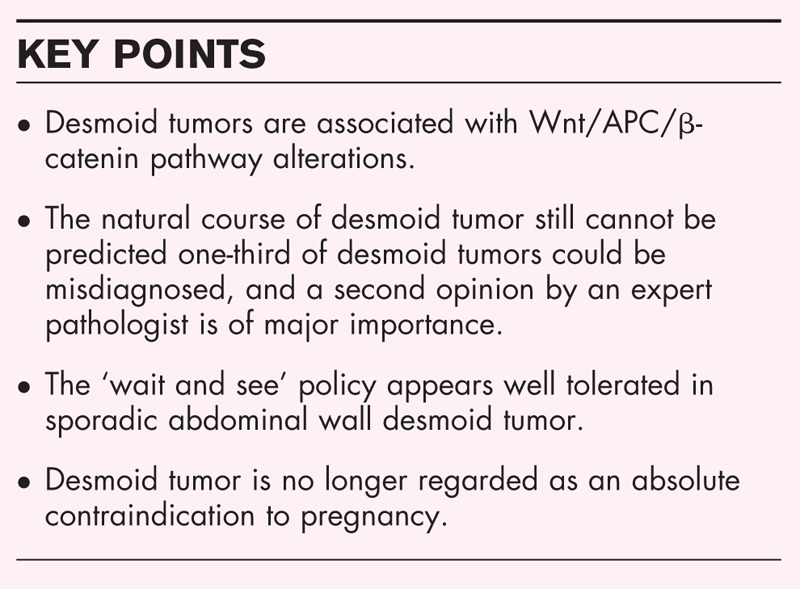
Recent findings: In the past decade, we have learned that desmoid tumors are driven by alterations of the Wnt/APC/β-catenin pathway, sporadic desmoid tumors are associated with somatic mutations of CTNNB1, and germline mutations of APC and somatic mutations of CTNNB1 are probably mutually exclusive. One-third of desmoid tumors are misdiagnosed; a second pathological opinion is therefore of major importance for desmoid tumor. Surgery is no longer regarded as the cornerstone of desmoid tumors; several retrospective studies have demonstrated the safety of a 'wait and see' policy in sporadic abdominal wall desmoid tumor. Desmoid tumors is no longer regarded as an absolute contraindication for pregnancy. At least two new investigational drugs targeting the Wnt/APC/β-catenin pathway are currently being developed.
Summary: The management of desmoid tumors requires multidisciplinary expertise by an experienced team. We must fully understand the physiopathology of the disease (factors influencing the natural history of the disease) and learn how to avoid desmoid tumors occurrence in patients with APC germline mutations, identify reliable prognostic/predictive factors and better assess the efficacy of systemic treatment.
References
-
- Wu C, Nik-Amini S, Nadesan P, et al. Aggressive fibromatosis (desmoid tumor) is derived from mesenchymal progenitor cells. Cancer Res 2010; 70:7690–7698. - PubMed
-
- Penel N, Coindre JM, Bonvalot S, et al. Management of desmoid tumours: a nationwide survey of labelled reference centre networks in France. Eur J Cancer 2016; 58:90–96. - PubMed
-
This nationwide 4-year survey demonstrates that one third of desmoid tumors are misdiagnosed outside reference center and stresses the importance of second opinion by expert pathologist. Moreover, the set-up of reference network was associated with dramatic decrease in delay between initial diagnosis and first consultation experienced physician in management of desmoid tumor (from 400 to 60 days).
-
- Li J, Wang CY. TBL1-TBLR1 and beta-catenin recruit each other to Wnt target-gene promoter for transcription activation and oncogenesis. Nat Cell Biol 2008; 10:160–169. - PubMed
-
- Salas S, Chibon F, Noguchi T, et al. Molecular 194 characterization by array comparative genomic hybridization and DNA sequencing of 194 desmoid tumors. Genes Chromosomes Cancer 2010; 49:560–568. - PubMed
Publication types
MeSH terms
LinkOut - more resources
Full Text Sources
Other Literature Sources
Research Materials
Miscellaneous
