


Sexual dimorphism in African elephant social rumbles
- PMID: 28489908
- PMCID: PMC5425207
- DOI: 10.1371/journal.pone.0177411
Sexual dimorphism in African elephant social rumbles
Abstract
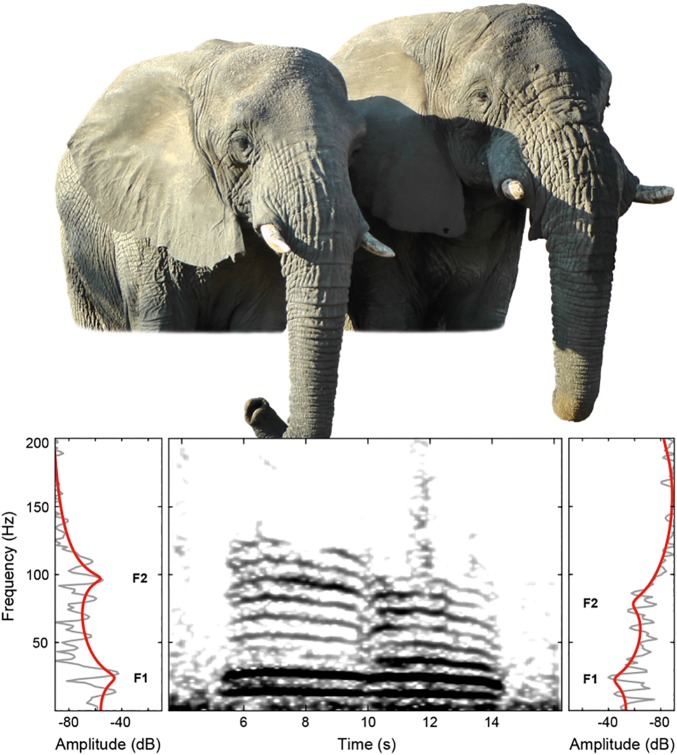
This study used the source and filter theory approach to analyse sex differences in the acoustic features of African elephant (Loxodonta africana) low-frequency rumbles produced in social contexts ('social rumbles'). Permuted discriminant function analysis revealed that rumbles contain sufficient acoustic information to predict the sex of a vocalizing individual. Features primarily related to the vocalizer's size, i.e. fundamental frequency variables and vocal tract resonant frequencies, differed significantly between the sexes. Yet, controlling for age and size effects, our results indicate that the pronounced sexual size dimorphism in African elephants is partly, but not exclusively, responsible for sexual differences in social rumbles. This provides a scientific foundation for future work investigating the perceptual and functional relevance of specific acoustic characteristics in African elephant vocal sexual communication.
Conflict of interest statement
Figures
References
-
- Darwin C. The descent of man, and selection in relation to sex. By Darwin Charles. New York: D. Appleton and Company; 1871.
-
- Fairbairn DJ. Allometry for Sexual Size Dimorphism: Pattern and Process in the Coevolution of Body Size in Males and Females. Annual Review of Ecology and Systematics. 1997;28(1):659–87.
-
- McPherson FJ, Chenoweth PJ. Mammalian sexual dimorphism. Animal Reproduction Science. 2012;131(3):109–22. - PubMed
-
- Taylor AM, Reby D. The contribution of source–filter theory to mammal vocal communication research. Journal of Zoology. 2010;280(3):221–36.
-
- Rendall D, Rodman PS, Emond RE. Vocal recognition of individuals and kin in free-ranging rhesus monkeys. Animal Behaviour. 1996;51(5):1007–15.
MeSH terms
Grants and funding
LinkOut - more resources
Full Text Sources
Other Literature Sources
