. 2017 May 10:10:120.
doi: 10.1186/s13068-017-0798-9. eCollection 2017.

Applications of microalgal biofilms for wastewater treatment and bioenergy production

Affiliations

Applications of microalgal biofilms for wastewater treatment and bioenergy production

Ana F Miranda et al. Biotechnol Biofuels. .

Abstract

Background: Microalgae have shown clear advantages for the production of biofuels compared with energy crops. Apart from their high growth rates and substantial lipid/triacylglycerol yields, microalgae can grow in wastewaters (animal, municipal and mining wastewaters) efficiently removing their primary nutrients (C, N, and P), heavy metals and micropollutants, and they do not compete with crops for arable lands. However, fundamental barriers to the industrial application of microalgae for biofuel production still include high costs of removing the algae from the water and the water from the algae which can account for up to 30-40% of the total cost of biodiesel production. Algal biofilms are becoming increasingly popular as a strategy for the concentration of microalgae, making harvesting/dewatering easier and cheaper.

Results: We have isolated and characterized a number of natural microalgal biofilms from freshwater, saline lakes and marine habitats. Structurally, these biofilms represent complex consortia of unicellular and multicellular, photosynthetic and heterotrophic inhabitants, such as cyanobacteria, microalgae, diatoms, bacteria, and fungi. Biofilm #52 was used as feedstock for bioenergy production. Dark fermentation of its biomass by Enterobacter cloacae DT-1 led to the production of 2.4 mol of H2/mol of reduced sugar. The levels and compositions of saturated, monosaturated and polyunsaturated fatty acids in Biofilm #52 were target-wise modified through the promotion of the growth of selected individual photosynthetic inhabitants. Photosynthetic components isolated from different biofilms were used for tailoring of novel biofilms designed for (i) treatment of specific types of wastewaters, such as reverse osmosis concentrate, (ii) compositions of total fatty acids with a new degree of unsaturation and (iii) bio-flocculation and concentration of commercial microalgal cells. Treatment of different types of wastewaters with biofilms showed a reduction in the concentrations of key nutrients, such as phosphates, ammonia, nitrates, selenium and heavy metals.

Conclusions: This multidisciplinary study showed the new potential of natural biofilms, their individual photosynthetic inhabitants and assembled new algal/cyanobacterial biofilms as the next generation of bioenergy feedstocks which can grow using wastewaters as a cheap source of key nutrients.

Keywords: Bio-hydrogen; Biofilms; Biofuel; Cyanobacteria; Microalgae; Wastewater treatment.


Figures
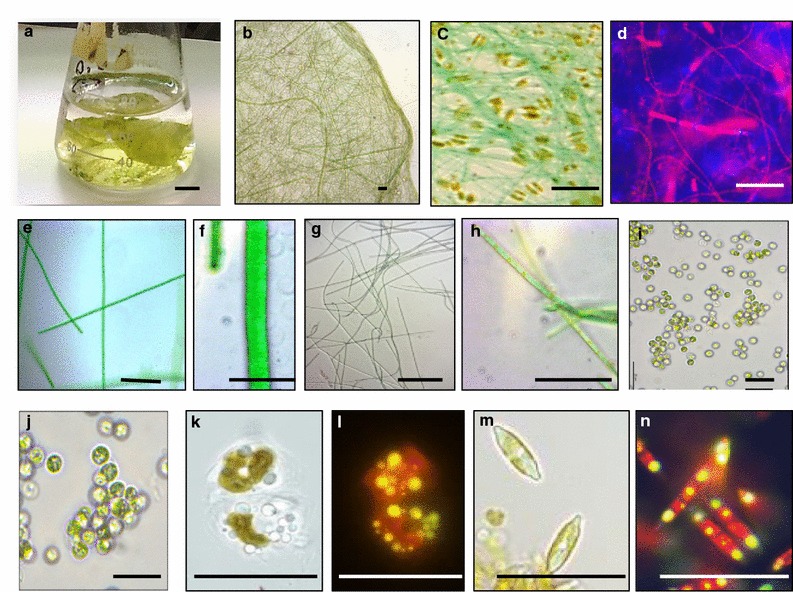
Fig. 1
Fig. 1
Biofilm #52 and its isolated photosynthetic components. a Biofilm #52 growing in F2 media in flask. bd Biofilm #52 under different magnifications. e, f BAPS-52-1. g, h BAPS-52-2. i, j BAPS-52-3. k, l BAPS-52-5. m, n BAPS-52-4. d Under UV light, l, n staining for lipids with Nile Red. Scale bars a 1 cm, bn 20 µm
Fig. 2
Fig. 2
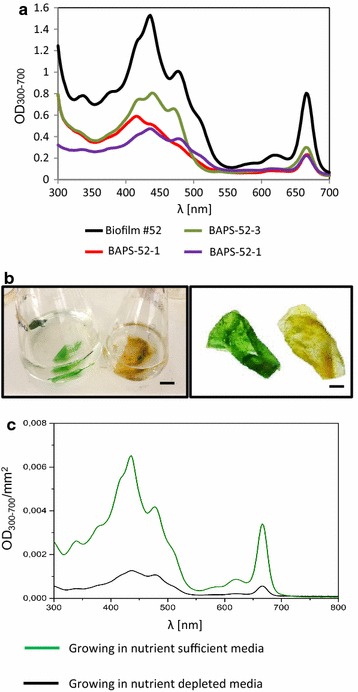
Absorbance spectra of Biofilm #52 and its photosynthetic components. a OD300–700 values of pigments extracted from Biofilm #52 and its photosynthetic components. b Biofilm #52 grown in nutrient-sufficient (green) and nutrient-depleted (yellow) media. c OD300–700 values of pigments extracted from Biofilm #52 grown in nutrient sufficient and nutrient-depleted media. b Scale bar 1 cm
Fig. 3
Fig. 3
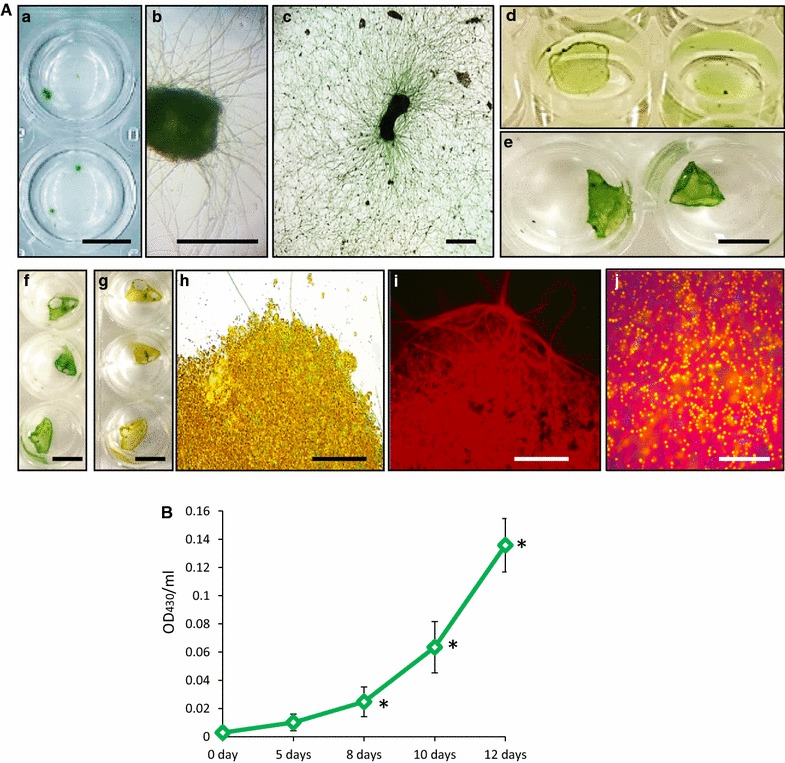
Growth of Biofilm #52 in microtiter plate. A 1 mm2 biofilm (seed culture) at day 0 (a, b); in 24 h (c); 7 days (d) and 9 days (e); days 9 and 14 (f and g, respectively); (hj) growth of BAPS-52-4 and BAPS-52-5 diatoms within Biofilm #52 in F2 + Si media. (i) under UV light; (j) staining for lipids with Nile Red. Scale bars A (a, d, eg), 1 cm; A (b, c), 1 mm; A (hj), 20 µm. B Growth rates of Biofilm #52 in F2 media. Significance levels: *P < 0.05
Fig. 4
Fig. 4
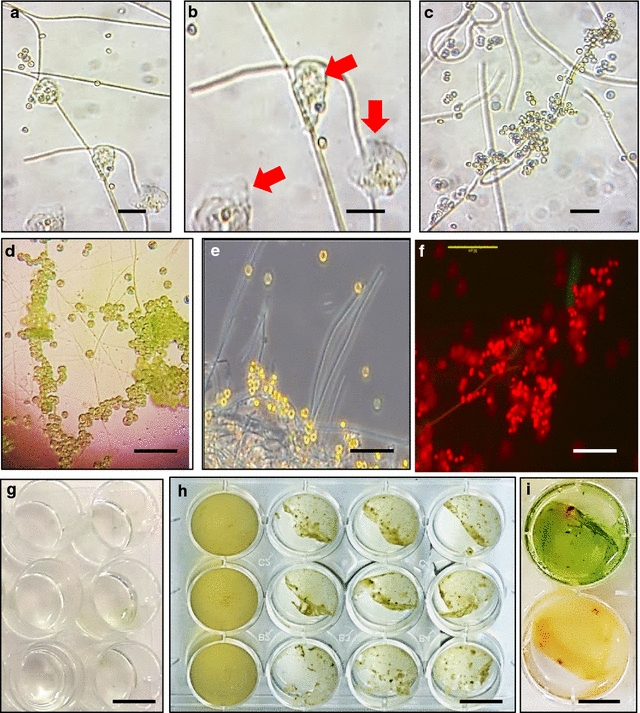
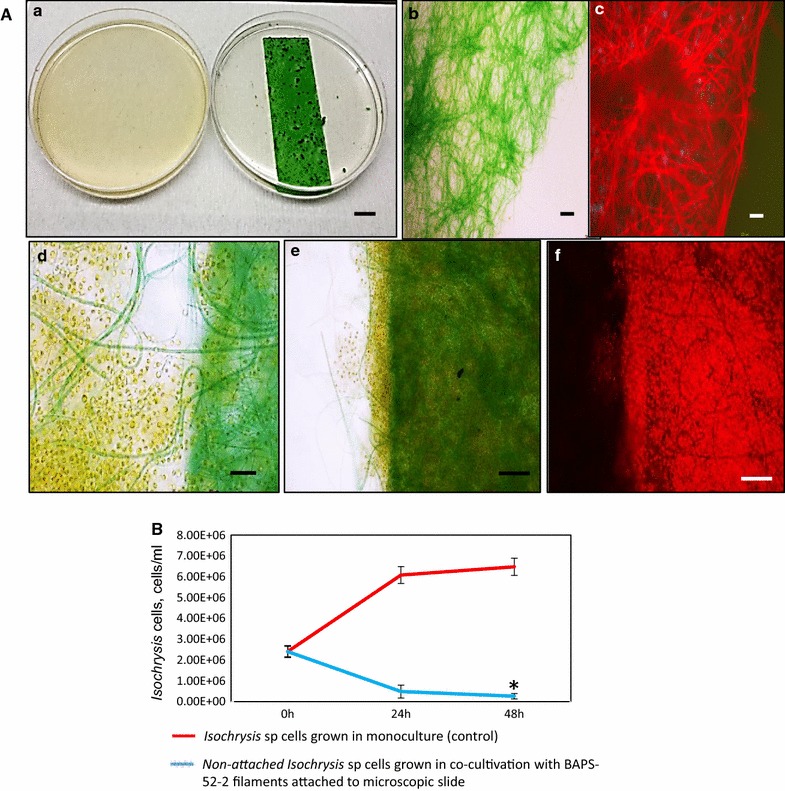
Bio-flocculation of Isochrysis sp. cells by BAPS-52-2 filaments. af Attachment of Isochrysis sp. cells to BAPS-52-2 filaments. Secreted EPS shown by red arrows. g Isochrysis cells (left wells, controls) and Isochrysis cells mixed with BAPS-52-2 filaments (right wells) at day 0 and day 10 (h). Green pigmentation produced by biofilm produced by monocultured BAPS-52-2 filaments at day 10 (i upper well) and Biofilm #102 at day 10 (i bottom well). Scale bars af 20 µm; gi 1 cm
Fig. 5
Fig. 5
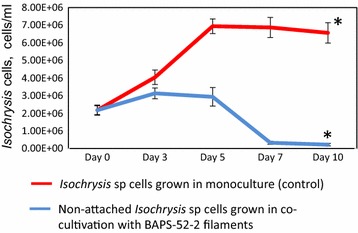
Bio-flocculation of Isochrysis sp. cells by BAPS-52-2 filaments. The red line shows Isochrysis growth in monoculture (control); the blue line shows a number of non-attached Isochrysis after co-cultivation with BAPS-52-2 filaments. Significance levels: *P < 0.05
Fig. 6
Fig. 6
Bio-flocculation of Isochrysis sp. cells by BAPS-52-2 filaments. A (a) Culture of Isochrysis sp. cells at day 0 (left). The culture of Isochrysis sp. cells 2 days after co-culture with BAPS-52-2 filaments attached to the microscopic slide (right); (b, c) BAPS-52-2 filaments grown on the microscopic slide; the culture of Isochrysis sp. cells mixed with BAPS-52-2 filaments at day 0 (d) and day 2 (e, f). (c, d) images under UV light. Scale bars (a), 1 cm; (bf), 20 µm. Significance levels: *P < 0.05. B Red line shows Isochrysis growth in monoculture (control); blue line shows a number of non-attached Isochrysis after co-cultivation with BAPS-52-2 filaments
Fig. 7
Fig. 7
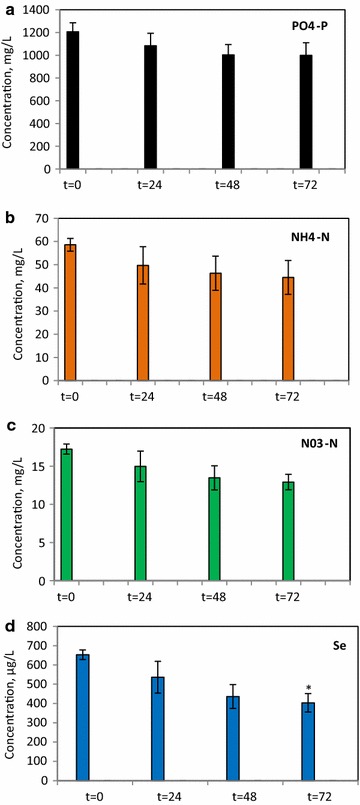
Reductions in concentrations of nutrients and selenium after treatments of SeSW with Biofilm #52. Reduction in concentrations of PO4-P (a); NH4-N (b); NO3-N (c) and Se (d). Significance levels: *P < 0.05
Fig. 8
Fig. 8
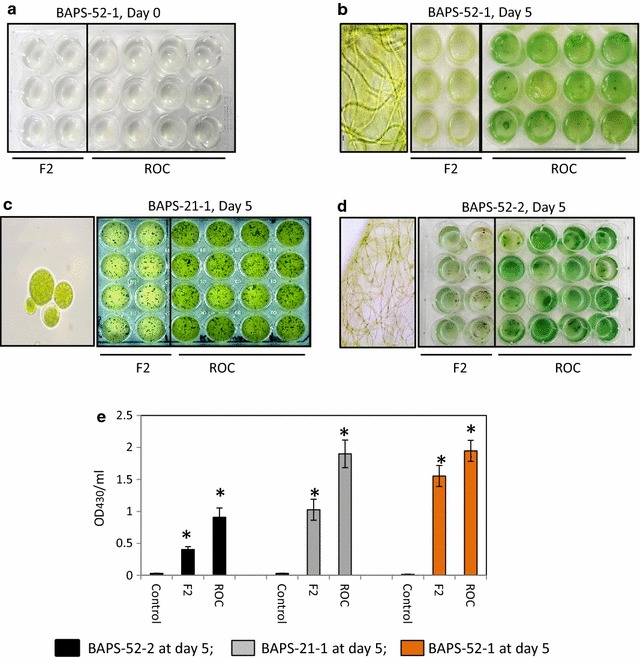
Growth of components isolated from Biofilms #52 and #21 in F2 media and ROC. a The growth of BAPS-52-1 in F2 media and ROC at day 0. Similar images were observed for concentrations of BAPS-52-2 and BAPS-21-1 at day 0 (not shown); Growth rates in F2 and ROC at day 5 for BAPS-52-1 (b), BAPS-21-1 (c), BAPS-52-2 (d). e Growths of BAPS-52-1, BAPS-21-1 and BAPS-52-2 after 5 days in F2 media and ROC. Control, concentrations of components in F2 and ROC at day 0. Significance levels: *P < 0.05
Fig. 9
Fig. 9
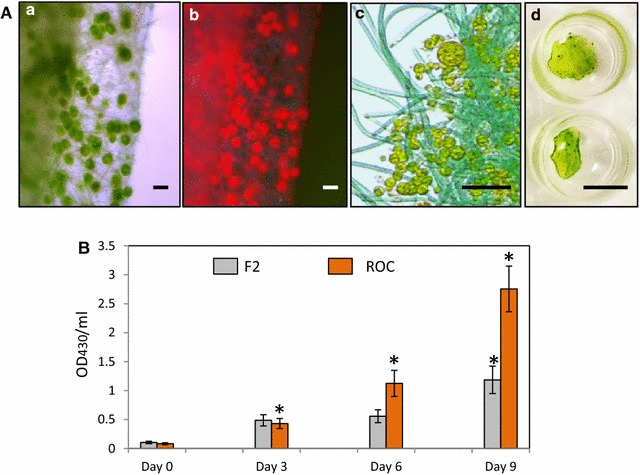
Growth of assembled Biofilm #109 in F2 media and ROC. A (ad) Images of Biofilm #109 assembled from BAPS-52-1, BAPS-21-1 and BAPS-52-2; Scale bars A (ac),20 µm; A (d), 1 cm. B Growth rates of Biofilm #109 after 9 days in F2 media and ROC. Significance levels: *P < 0.05
Fig. 10
Fig. 10
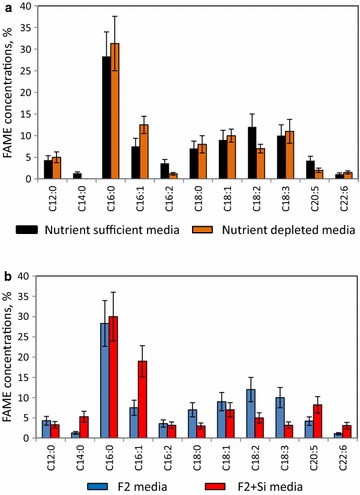
FAME concentrations of Biofilm #52. a FAME concentrations of Biofilm #52 grown in nutrient-sufficient and -depleted F2 media. b FAME concentrations of Biofilm #52 grown in F2 and F2 + Si media
Fig. 11
Fig. 11
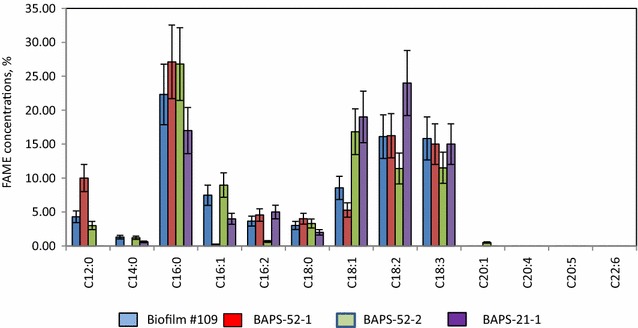
FAME concentrations of assembled Biofilm #109 and its components
Fig. 12
Fig. 12
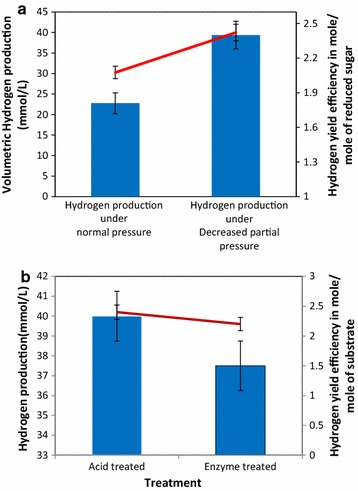
Hydrogen production from Biofilm #52 biomass. a Batch fermentative hydrogen production performance of E. cloacae DT-1 from acid-treated prehydrolysate and enzymatically saccharified Biofilm #52 sugar, under normal and reduced partial pressure. b Comparative hydrogen production performance of E. cloacae DT-1 from acid-treated and enzymatically hydrolysed biofilm biomass sugar, during the dark fermentation process

References

    1. Henry RJ. Evaluation of plant biomass resources available for replacement of fossil oil. Plant Biotechnol J. 2010;8(3):288–293. doi: 10.1111/j.1467-7652.2009.00482.x. - DOI - PMC - PubMed
    1. Borowitzka MA, Moheimani NR. Sustainable biofuels from algae. Mitig Adapt Strateg Glob Change. 2013;18(1):13–25. doi: 10.1007/s11027-010-9271-9. - DOI
    1. Schenk PM, Thomas-Hall SR, Stephens E, Marx UC, Mussgnug JH, Posten C, Kruse O, Hankamer B. Second generation biofuels: high-efficiency microalgae for biodiesel production. Bioenergy Res. 2008;1(1):20–43. doi: 10.1007/s12155-008-9008-8. - DOI
    1. Rajkumar R, Yaakob Z, Takriff MS. Potential of the micro and macro algae for biofuel production: a brief review. Bioresources. 2014;9(1):1606–1633.
    1. Pragya N, Pandey KK, Sahoo PK. A review on harvesting, oil extraction and biofuels production technologies from microalgae. Renew Sustain Energy Rev. 2013;24:159–171. doi: 10.1016/j.rser.2013.03.034. - DOI