. 2017 Apr 26;4(5):326-339.
doi: 10.1002/acn3.413. eCollection 2017 May.

Screening of conventional anticonvulsants in a genetic mouse model of epilepsy

Affiliations

Screening of conventional anticonvulsants in a genetic mouse model of epilepsy

Nicole A Hawkins et al. Ann Clin Transl Neurol. .

Abstract

Objective: Epilepsy is a common neurological disorder that affects 1% of the population. Approximately, 30% of individuals with epilepsy are refractory to treatment, highlighting the need for novel therapies. Conventional anticonvulsant screening relies predominantly on induced seizure models. However, these models may not be etiologically relevant for genetic epilepsies. Mutations in SCN1A are a common cause of Dravet Syndrome, a severe epileptic encephalopathy. Dravet syndrome typically begins in infancy with seizures provoked by fever and then progresses to include afebrile pleomorphic seizure types. Affected children respond poorly to available anticonvulsants. Scn1a+/- heterozygous knockout mice recapitulate features of Dravet syndrome and provide a potential screening platform to investigate novel therapeutics. In this study, we conducted a screening of conventional anticonvulsants in Scn1a+/- mice to establish assays that most closely correlate with human response data.

Methods: On the basis of clinical response data from a large, single center, retrospective survey of Dravet syndrome case records, we selected nine drugs for screening in Scn1a+/- mice to determine which phenotypic measures correlate best with human therapeutic response. We evaluated several screening paradigms and incorporated pharmacokinetic monitoring to establish drug exposure levels.

Results: Scn1a+/- mice exhibited responses to anticonvulsant treatment similar to those observed clinically. Sodium channel blockers were not effective or exacerbated seizures in Scn1a+/- mice. Overall, clobazam was the most effective anticonvulsant in Scn1a+/- mice, consistent with its effect in Dravet syndrome.

Interpretation: Genetic models of spontaneous epilepsy provide alternative screening platforms and may augment the AED development process. In this study, we established an effective screening platform that pharmacologically validated Scn1a+/- mice for preclinical screening of potential Dravet syndrome therapeutics.


Figures
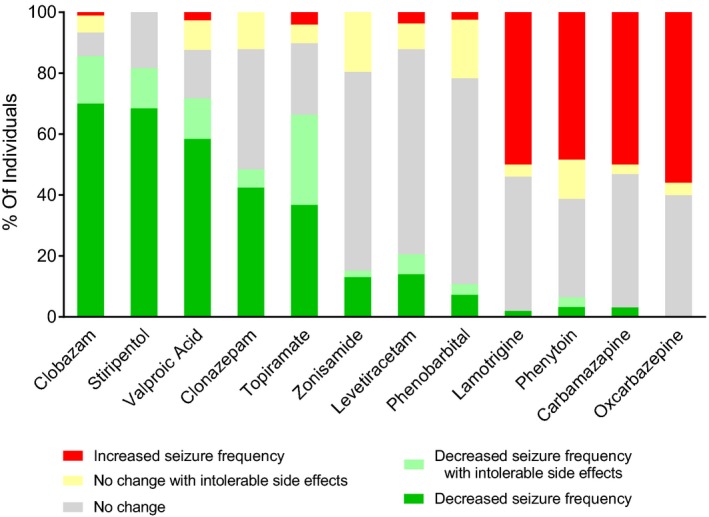
Figure 1
Figure 1
Seizure frequency response to anticonvulsants in a Dravet syndrome clinical population. Parent‐reported changes in seizure frequency in pediatric patients carrying a diagnosis of clinical Dravet syndrome were quantified over the course of anticonvulsant therapy treatment and normalized per the size of the patient population treated. Red bars indicate an overall increase in seizure frequency. Yellow bars denote a lack of change with medication, limited by duration of therapy or dose limitations due to side effects considered intolerable by parents. Dark and light green indicate decreased number of seizures without side effects, or with duration of therapy or dose limitations due to side effects, respectively. Gray bars indicate the proportion of patients with no change in seizure frequency.
Figure 2
Figure 2
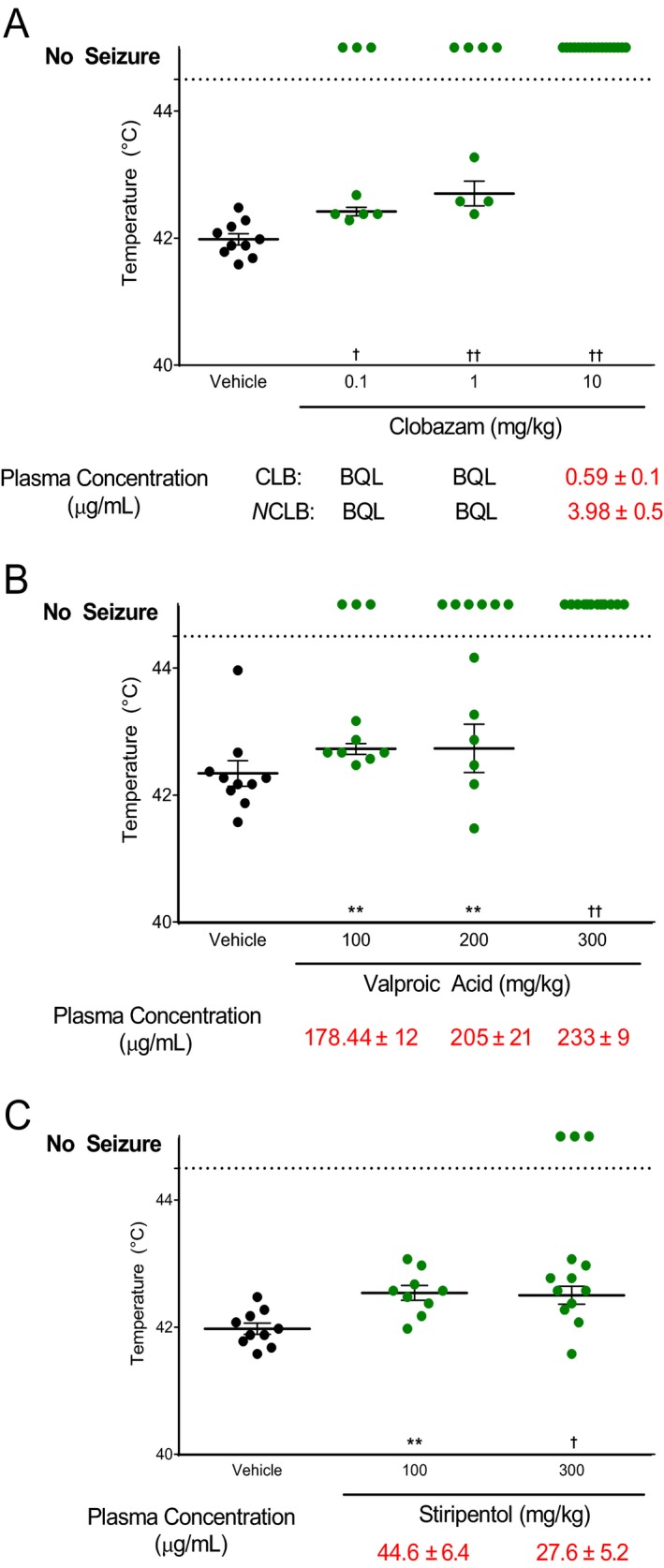
Dose‐effect screening using hyperthermia‐induced seizures in Scn1a +/− mice. Threshold temperature of individual mice for GTCS induced by hyperthermia following acute treatment with varying doses of drug. Average plasma concentrations ± standard error of the mean (SEM) are listed beneath the corresponding drug dose. (A) Clobazam significantly protected against hyperthermia‐induced GTCS at doses within and beyond the human therapeutic range. (B) Valproic acid provided significant protection against hyperthermia‐induced GTCS at doses that result in plasma concentrations above the human therapeutic range. (C) Stiripentol provided significant protection against hyperthermia‐induced GTCS at doses resulting in plasma concentrations above the human therapeutic range. The average temperatures of seizure induction are depicted by the thick horizontal line. Error bars represent SEM, with n = 8–17 per group (**P < 0.01, P < 0.001, †† P < 0.0001, logrank Mantel‐Cox). [N.B.‐ Panels A and C use the same vehicle controls that are replotted for clarity.]
Figure 3
Figure 3
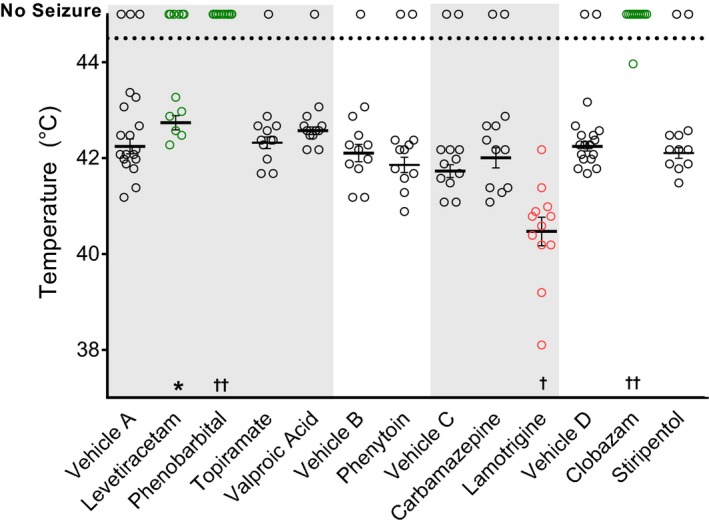
Single‐dose anticonvulsant screening using hyperthermia‐induced seizures in Scn1a +/− mice. Threshold temperature of individual mice for GTCS induced by hyperthermia following acute administration of anticonvulsant doses to achieve plasma concentrations within the human therapeutic range. Lamotrigine treatment significantly lowered the threshold for thermally induced seizures and significantly increased the percentage of mice with GTCS (red, open symbols). Levetiracetam, phenobarbital, and clobazam treatments protected against GTCS, resulting in a significantly improved response to thermal seizure induction (green, open symbols). Vehicles A, B, C, and D correspond to saline, methylcellulose, HP β CD, and vegetable oil, respectively. The average temperatures of seizure induction are depicted by the thick horizontal line. Error bars represent SEM, with n = 12–19 per group (*P < 0.05, P < 0.001, †† P < 0.0001, logrank Mantel‐Cox).
Figure 4
Figure 4
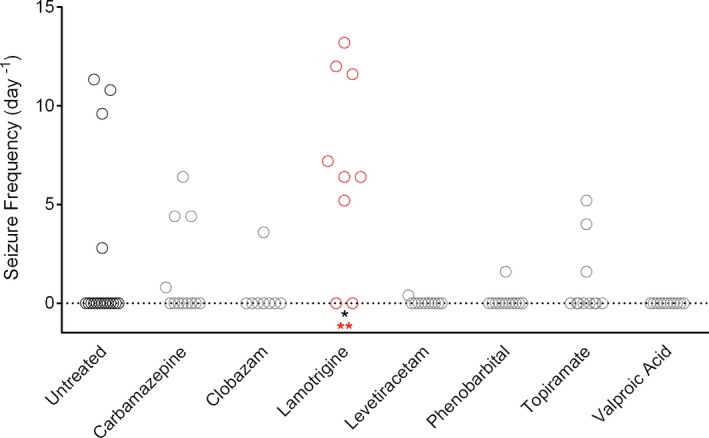
Screening anticonvulsant response using spontaneous seizure monitoring in Scn1a +/− mice. GTCS frequency of individual untreated and drug‐treated mice determined for a 60‐hour period (n = 8–17 mice per treatment group). Lamotrigine treatment resulted in a significantly higher seizure frequency and percentage of mice with seizures compared to untreated controls (**P < 0.004 (red), Dunn's multiple comparisons test; *P < 0.014, Fisher's exact test).
Figure 5
Figure 5
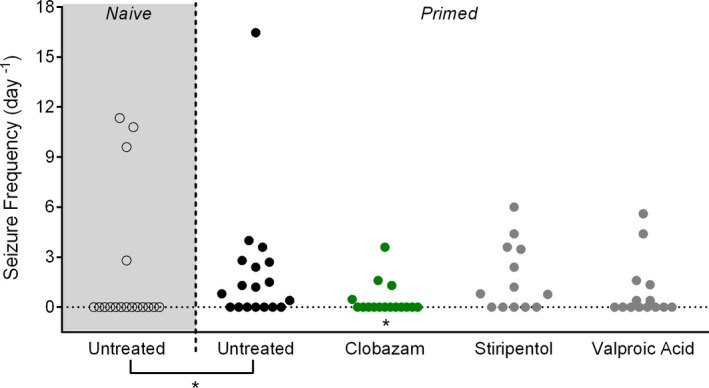
Screening anticonvulsant response using spontaneous seizure monitoring following hyperthermia‐priming in Scn1a +/− mice. GTCS frequency of individual untreated and drug‐treated mice (n = 13–18 mice per treatment group). Drug treatment was initiated following the induction of a single hyperthermia‐induced seizure. Unprovoked, spontaneous GTCS were subsequently quantified over a 60‐hour recording period. Clobazam treatment significantly reduced the proportion of mice experiencing GTCS (*P < 0.046, Fisher's exact test). The untreated cohort represented by black, open symbols, and gray shading are naïve controls to demonstrate the significant difference between naïve and hyperthermia‐priming (black, closed circles) seizure incidences (P < 0.041, Fisher's exact test).
Figure 6
Figure 6
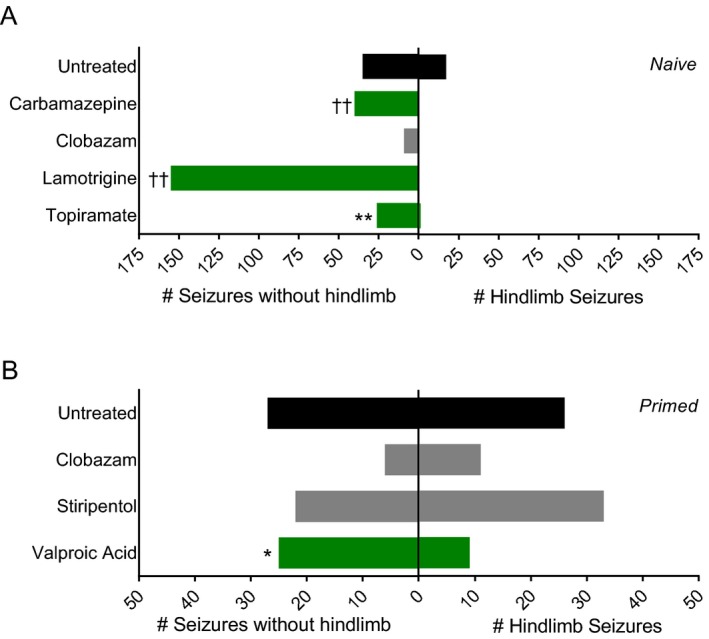
Anticonvulsant treatment alters spontaneous GTCS Severity. (A) The total number of spontaneous GTCS with or without full tonic hindlimb extension of naïve untreated and drug‐treated mice is displayed (n = 8–17 mice per treatment group). The proportion of spontaneous GTCS without tonic hindlimb extension was significantly greater in carbamazepine, lamotrigine, and topiramate‐treated mice (green bars) compared to untreated controls. (B) The total number of spontaneous GTCS with or without full tonic hindlimb extension of primed untreated and drug‐treated mice is displayed (n = 13–18 mice per treatment group). The proportion of spontaneous GTCS without tonic hindlimb extension was significantly less in valproic acid‐treated mice (green bars) compared to untreated controls. Total number of spontaneous GTCS and seizure severity were scored over a 60‐hour recording period. (*P < 0.05, **P < 0.01, †† P < 0.0001, Fisher's exact test).
Figure 7
Figure 7
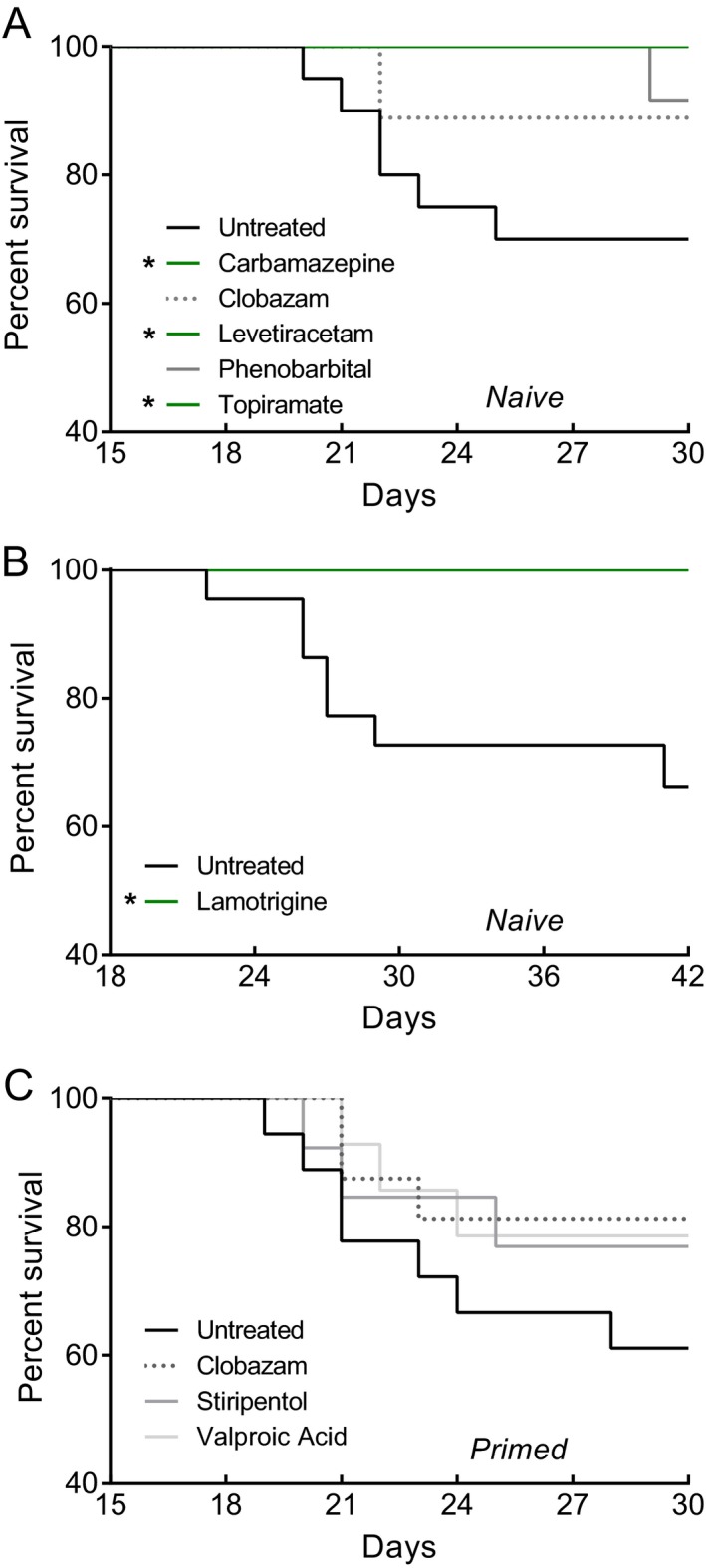
Survival analysis of Scn1a +/− mice. Survival curves comparing untreated and drug‐treated naïve (A, B) or hyperthermia‐primed (C) Scn1a +/− mice. Treatment began at P18 and survival was monitored until P30. (A) Carbamazepine, levetiracetam, and topiramate treatment (green lines) significantly improved survival compared to untreated naïve mice (n = 10–21 mice per treatment group). (B) Survival curves comparing untreated and lamotrigine‐treated Scn1a +/− mice. Treatment began at P18 and survival was monitored until P42 (n = 15–22 mice per treatment group). Lamotrigine treatment significantly improved survival compared to untreated mice (C) No difference in survival was identified in hyperthermia‐primed mice (n = 14–19 mice per treatment group). (*P < 0.05, Logrank Mantel‐Cox).
Figure 8
Figure 8
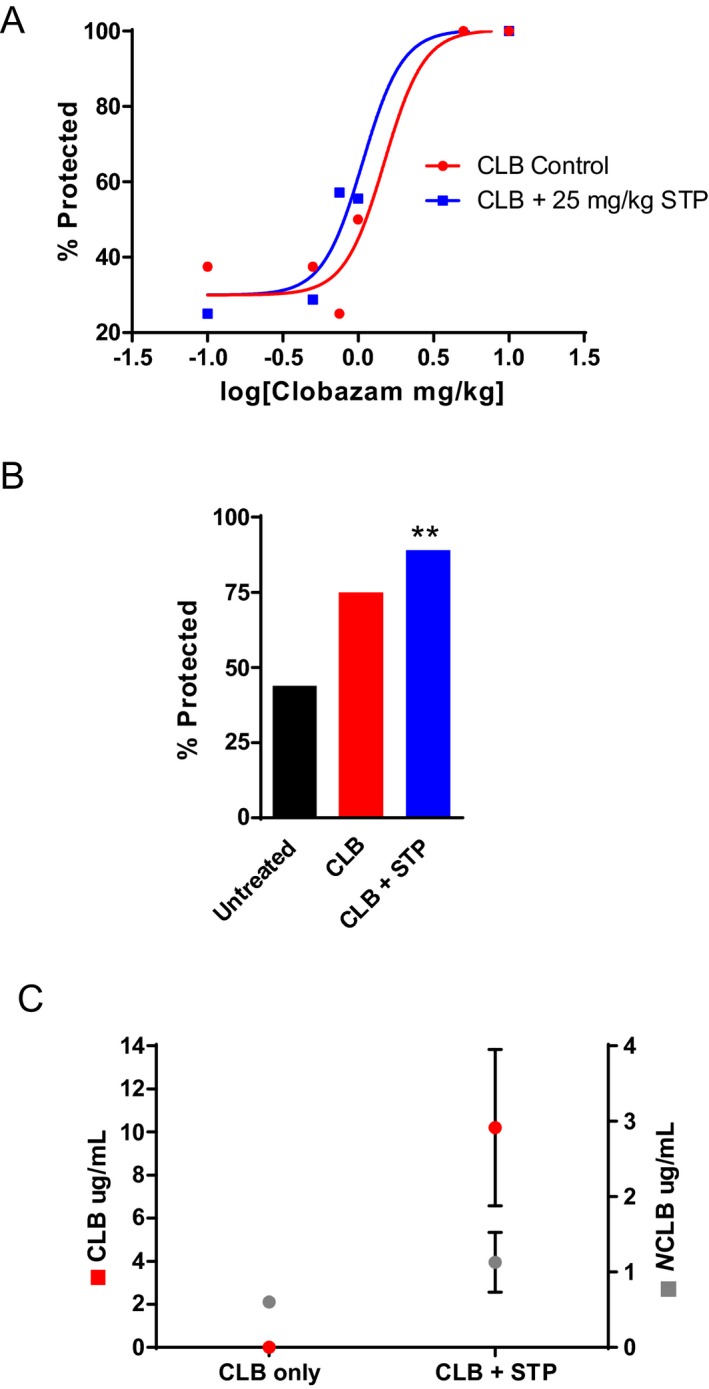
Combination therapy with clobazam and stiripentol in Scn1a +/− mice. (A) Dose‐response curve for seizure protection in hyperthermia‐induced seizure threshold testing. Scn1a +/− mice treated with varying doses of clobazam and 25 mg/kg of stiripentol resulted in a left‐shift of the EC 50 compared to clobazam‐only treated mice (n = 8–17 mice per treatment group). (B) The percentage of untreated, clobazam only, and clobazam plus stiripentol‐treated mice that did not have spontaneous GTCS during the 60‐hour recording period. Drug treatment was initiated following the induction of a single hyperthermia‐induced seizure (n = 16–25 mice per treatment group). (C) Average clobazam and N‐desmethylclobazam plasma concentrations of Scn1a +/− mice treated subchronically with clobazam‐only or clobazam plus stiripentol. The combination treatment resulted in higher clobazam and N‐desmethylclobazam plasma levels (n = 6–7 mice per treatment group, error bars represent SEM). (**P < 0.004).

References

    1. Golyala A, Kwan P. Drug development for refractory epilepsy: the past 25 years and beyond. Seizure 2017;44:147–156. - PubMed
    1. Simonato M, Brooks‐Kayal AR, Engel JJr, et al. The challenge and promise of anti‐epileptic therapy development in animal models. Lancet Neurol 2014;13:949–960. - PMC - PubMed
    1. Dravet C, Oguni H. Chapter 65 ‐ Dravet syndrome (severe myoclonic epilepsy in infancy) In: Harvey BS, ed. Olivier Dulac ML. Handbook of Clinical Neurology: Elsevier, 2013:627–633. - PubMed
    1. Shmuely S, Sisodiya SM, Gunning WB, et al. Mortality in Dravet syndrome: a review. Epilepsy Behav 2016;64:Part A:69–Part A:74. - PubMed
    1. Shi X‐Y, Tomonoh Y, Wang W‐Z, et al. Efficacy of antiepileptic drugs for the treatment of Dravet syndrome with different genotypes. Brain Develop 2016;38:40–46. - PubMed