


Development of the life impact burn recovery evaluation (LIBRE) profile: assessing burn survivors' social participation
- PMID: 28493205
- PMCID: PMC10064494
- DOI: 10.1007/s11136-017-1588-3
Development of the life impact burn recovery evaluation (LIBRE) profile: assessing burn survivors' social participation
Abstract
Purpose: Measuring the impact burn injuries have on social participation is integral to understanding and improving survivors' quality of life, yet there are no existing instruments that comprehensively measure the social participation of burn survivors. This project aimed to develop the Life Impact Burn Recovery Evaluation Profile (LIBRE), a patient-reported multidimensional assessment for understanding the social participation after burn injuries.
Methods: 192 questions representing multiple social participation areas were administered to a convenience sample of 601 burn survivors. Exploratory factor analysis and confirmatory factor analysis (CFA) were used to identify the underlying structure of the data. Using item response theory methods, a Graded Response Model was applied for each identified sub-domain. The resultant multidimensional LIBRE Profile can be administered via Computerized Adaptive Testing (CAT) or fixed short forms.
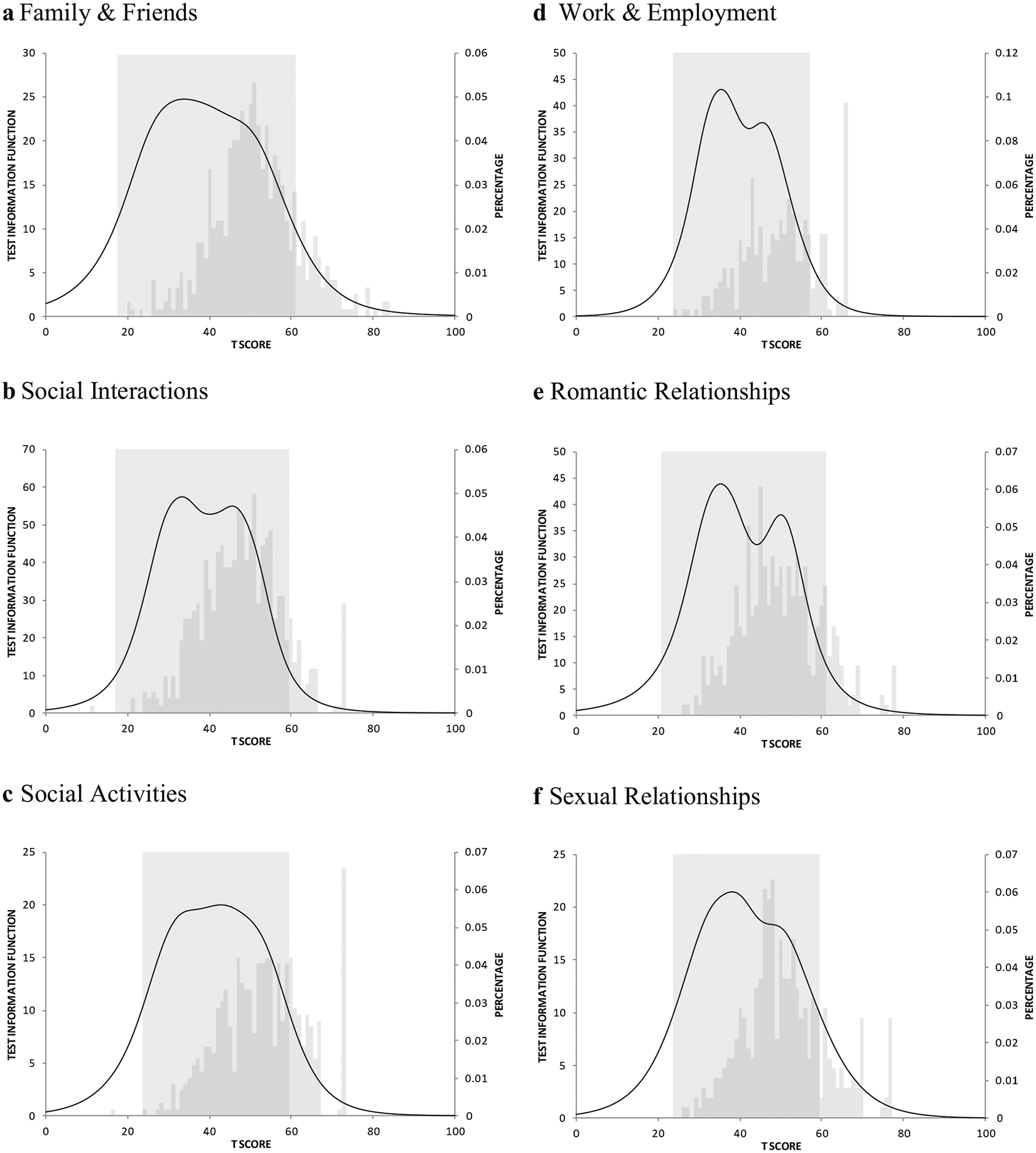
Results: The study sample included 54.7% women with a mean age of 44.6 (SD 15.9) years. The average time since burn injury was 15.4 years (0-74 years) and the average total body surface area burned was 40% (1-97%). The CFA indicated acceptable fit statistics (CFI range 0.913-0.977, TLI range 0.904-0.974, RMSEA range 0.06-0.096). The six unidimensional scales were named: relationships with family and friends, social interactions, social activities, work and employment, romantic relationships, and sexual relationships. The marginal reliability of the full item bank and CATs ranged from 0.84 to 0.93, with ceiling effects less than 15% for all scales.
Conclusions: The LIBRE Profile is a promising new measure of social participation following a burn injury that enables burn survivors and their care providers to measure social participation.
Keywords: Burns; Computerized adaptive test; Item response theory; Social reintegration.
Conflict of interest statement
Figures

References
-
- Brigham PA, & McLoughlin E (1996). Burn incidence and medical care use in the united states: Estimates, trends, and data sources. Journal of Burn Care & Research, 17(2), 95–107. - PubMed
-
- Esselman PC (2011). Community integration outcome after burn injury. Physical Medicine & Rehabilitation Clinics of North America, 22(2), 351–356. - PubMed
-
- Schneider JC, & Qu HD (2011). Neurologic and musculoskeletal complications of burn injuries. Physical Medicine and Rehabilitation Clinics of North America, 22(2), 261–275. - PubMed
-
- Madianos MG, Papaghelis M, Ioannovich J, & Dafni R (2001). Psychiatric disorders in burn patients: A follow-up study. Psychotherapy and Psychosomatics, 70(1), 30–37. - PubMed
MeSH terms
Grants and funding
LinkOut - more resources
Full Text Sources
Other Literature Sources
Medical
Miscellaneous
