


Combinatorial chemistry in drug discovery
- PMID: 28494316
- PMCID: PMC5645069
- DOI: 10.1016/j.cbpa.2017.03.017
Combinatorial chemistry in drug discovery
Abstract
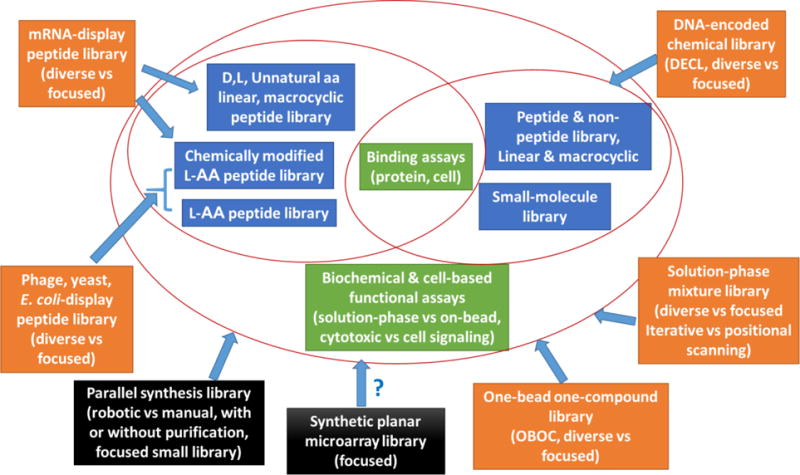
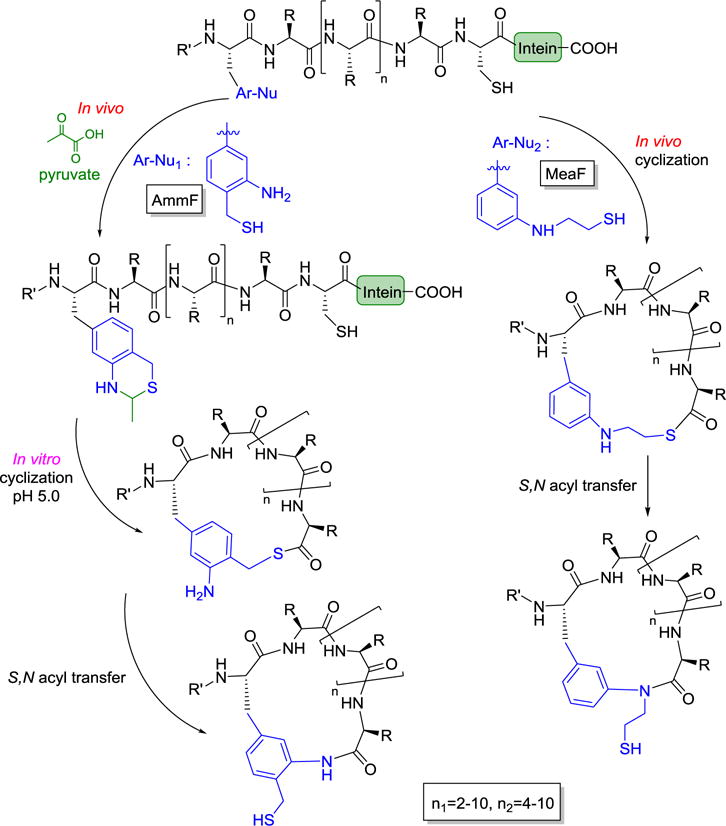
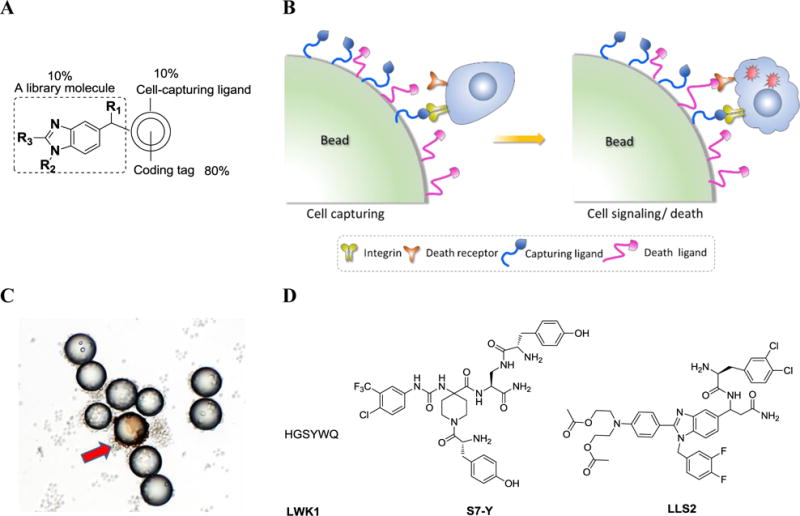
Several combinatorial methods have been developed to create focused or diverse chemical libraries with a wide range of linear or macrocyclic chemical molecules: peptides, non-peptide oligomers, peptidomimetics, small-molecules, and natural product-like organic molecules. Each combinatorial approach has its own unique high-throughput screening and encoding strategy. In this article, we provide a brief overview of combinatorial chemistry in drug discovery with emphasis on recently developed new technologies for design, synthesis, screening and decoding of combinatorial library. Examples of successful application of combinatorial chemistry in hit discovery and lead optimization are given. The limitations and strengths of combinatorial chemistry are also briefly discussed. We are now in a better position to truly leverage the power of combinatorial technologies for the discovery and development of next-generation drugs.
Copyright © 2017 Elsevier Ltd. All rights reserved.
Figures
Comment in
-
Letter to the Editor.Curr Opin Chem Biol. 2018 Feb;42:186. doi: 10.1016/j.cbpa.2018.01.010. Epub 2018 Feb 14. Curr Opin Chem Biol. 2018. PMID: 29452735 No abstract available.
-
Reply to Letter to the Editor.Curr Opin Chem Biol. 2018 Feb;42:187. doi: 10.1016/j.cbpa.2018.01.011. Epub 2018 Feb 14. Curr Opin Chem Biol. 2018. PMID: 29452736 No abstract available.
References
-
- Lam KS, Salmon SE, Hersh EM, Hruby VJ, Kazmierski WM, Knapp RJ. A new type of synthetic peptide library for identifying ligand-binding activity. Nature. 1991;354:82–84. - PubMed
-
- Houghten RA, Pinilla C, Blondelle SE, Appel JR, Dooley CT, Cuervo JH. Generation and use of synthetic peptide combinatorial libraries for basic research and drug discovery. Nature. 1991;354:84–86. - PubMed
-
- Bunin BA, Ellman JA. A general and expedient method for the solid-phase synthesis of 1,4-benzodiazepine derivatives. J Am Chem Soc. 1992;114:10997–10998.
Publication types
MeSH terms
Grants and funding
LinkOut - more resources
Full Text Sources
Other Literature Sources
