Endoscopic Management of Peri-Pancreatic Fluid Collections
- PMID: 28494574
- PMCID: PMC5593321
- DOI: 10.5009/gnl16178
Endoscopic Management of Peri-Pancreatic Fluid Collections
Abstract
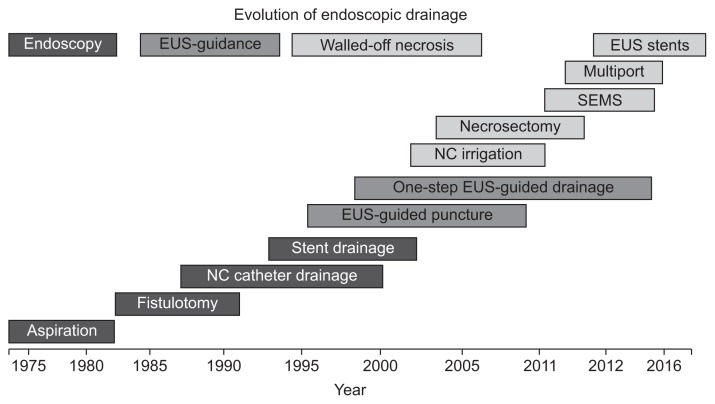
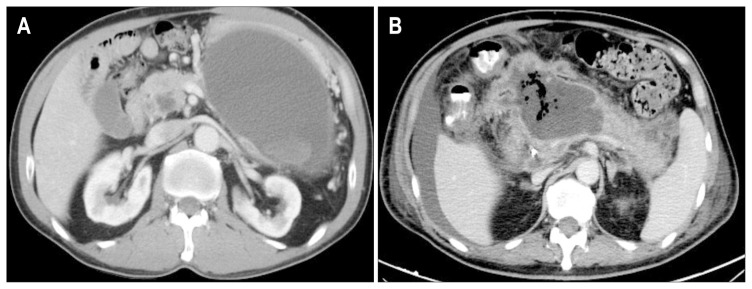
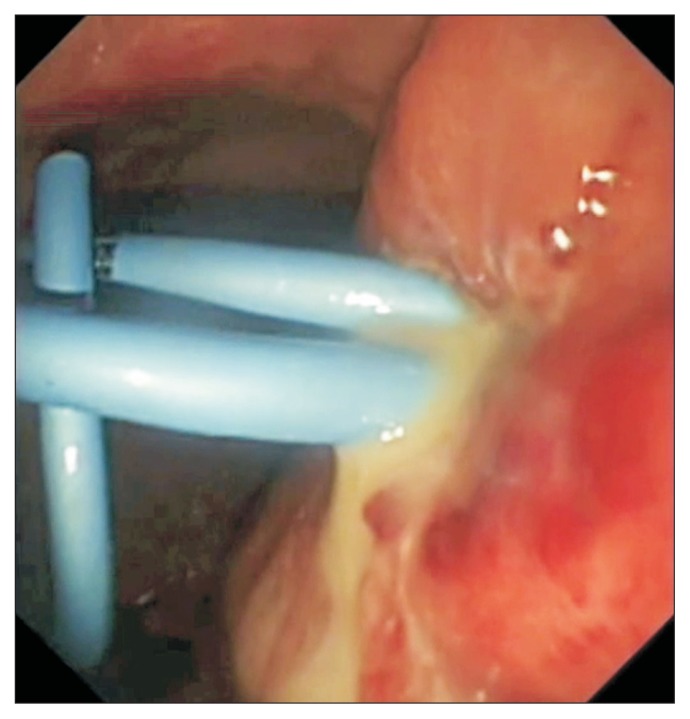
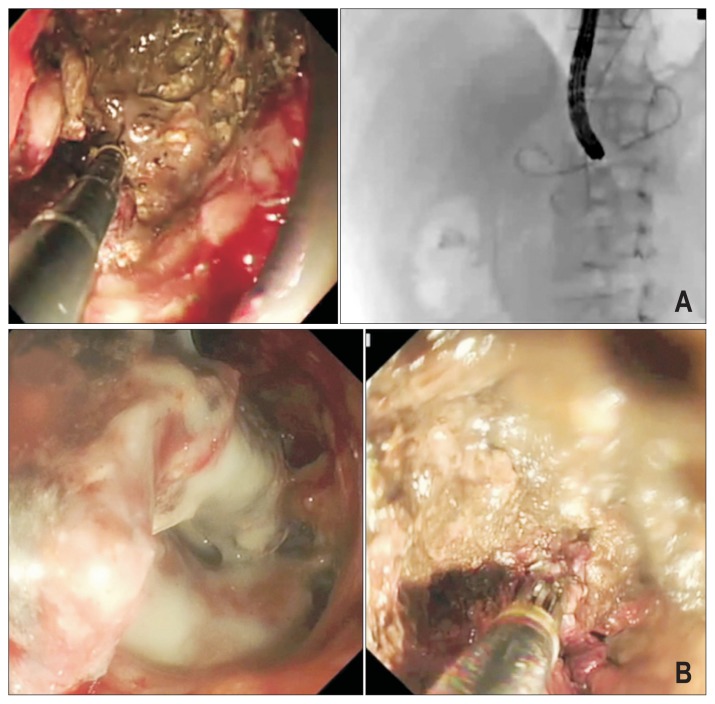
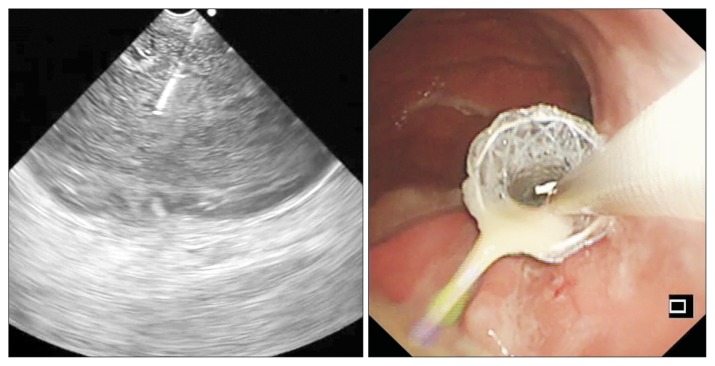
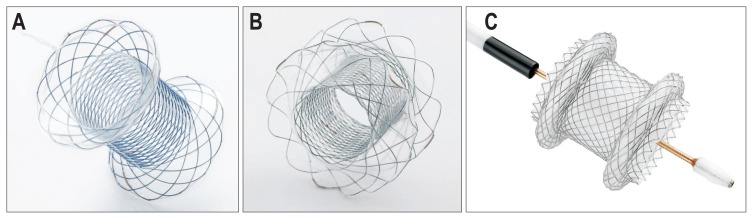
In the past decade, there has been a progressive paradigm shift in the management of peri-pancreatic fluid collections after acute pancreatitis. Refinements in the definitions of fluid collections from the updated Atlanta classification have enabled better communication amongst physicians in an effort to formulate optimal treatments. Endoscopic ultrasound (EUS)-guided drainage of pancreatic pseudocysts has emerged as the procedure of choice over surgical cystogastrostomy. The approach provides similar success rates with low complications and better quality of life compared with surgery. However, an endoscopic "step up" approach in the management of pancreatic walled-off necrosis has also been advocated. Both endoscopic and percutaneous drainage routes may be used depending on the anatomical location of the collections. New-generation large diameter EUS-specific stent systems have also recently been described. The device allows precise and effective drainage of the collections and permits endoscopic necrosectomy through the stents.
Keywords: Endoscopic necrosectomy; Endoscopic ultrasound-guided pseudocyst drainage; Endosonography; Pancreatic necrosis; Pancreatic pseudocyst.
Conflict of interest statement
No potential conflict of interest relevant to this article was reported.
Figures
References
-
- Kourtesis G, Wilson SE, Williams RA. The clinical significance of fluid collections in acute pancreatitis. Am Surg. 1990;56:796–799. - PubMed
-
- Diculescu M, Ciocîrlan M, Ciocîrlan M, Stănescu D, Ciprut T, Marinescu T. Predictive factors for pseudocysts and peripancreatic collections in acute pancreatitis. Rom J Gastroenterol. 2005;14:129–134. - PubMed
Publication types
MeSH terms
LinkOut - more resources
Full Text Sources
Other Literature Sources
Medical
Miscellaneous