


Rapid separation of very low concentrations of bacteria from blood
- PMID: 28495585
- PMCID: PMC5533616
- DOI: 10.1016/j.mimet.2017.05.004
Rapid separation of very low concentrations of bacteria from blood
Abstract
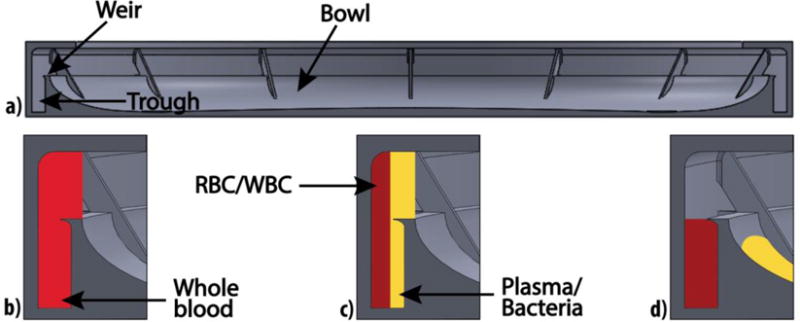
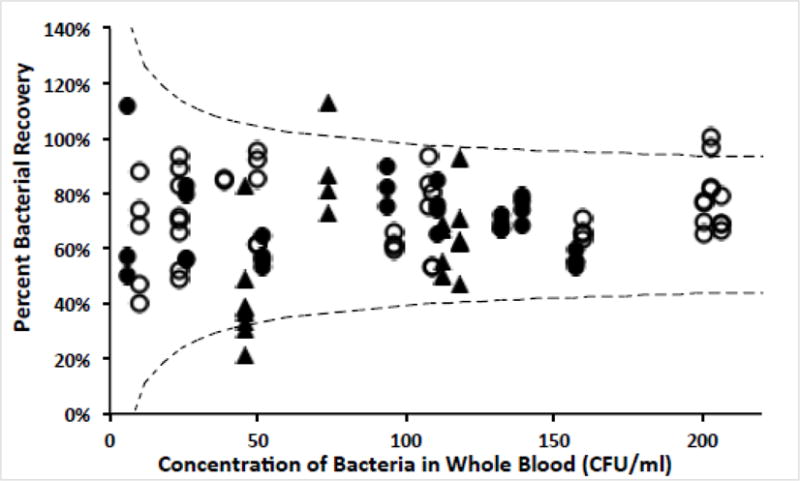
A rapid and accurate diagnosis of the species and antibiotic resistance of bacteria in septic blood is vital to increase survival rates of patients with bloodstream infections, particularly those with carbapenem-resistant enterobacteriaceae (CRE) infections. The extremely low levels in blood (1 to 100CFU/ml) make rapid diagnosis difficult. In this study, very low concentrations of bacteria (6 to 200CFU/ml) were separated from 7ml of whole blood using rapid sedimentation in a spinning hollow disk that separated plasma from red and white cells, leaving most of the bacteria suspended in the plasma. Following less than a minute of spinning, the disk was slowed, the plasma was recovered, and the bacteria were isolated by vacuum filtration. The filters were grown on nutrient plates to determine the number of bacteria recovered from the blood. Experiments were done without red blood cell (RBC) lysis and with RBC lysis in the recovered plasma. While there was scatter in the data from blood with low bacterial concentrations, the mean average recovery was 69%. The gender of the blood donor made no statistical difference in bacterial recovery. These results show that this rapid technique recovers a significant amount of bacteria from blood containing clinically relevant low levels of bacteria, producing the bacteria in minutes. These bacteria could subsequently be identified by molecular techniques to quickly identify the infectious organism and its resistance profile, thus greatly reducing the time needed to correctly diagnose and treat a blood infection.
Keywords: Bacterial infection; Blood sepsis; Carbapenem-resistant enterobacteriaceae; E. coli; Rapid diagnosis; Sedimentation.
Copyright © 2017 Elsevier B.V. All rights reserved.
Conflict of interest statement
There are no conflicts of interest.
Figures
References
-
- Sprenger M, Fukuda K. Antimicrobial Resistance. New mechanisms, new worries. Science. 2016;351:1263–4. - PubMed
-
- Patel G, Huprikar S, Factor SH, Jenkins SG, Calfee DP. Outcomes of carbapenem-resistant Klebsiella pneumoniae infection and the impact of antimicrobial and adjunctive therapies. Infect Control Hosp Epidemiol. 2008;29:1099–106. - PubMed
MeSH terms
Substances
Grants and funding
LinkOut - more resources
Full Text Sources
Other Literature Sources
Medical
