


Poor human olfaction is a 19th-century myth
- PMID: 28495701
- PMCID: PMC5512720
- DOI: 10.1126/science.aam7263
Poor human olfaction is a 19th-century myth
Abstract
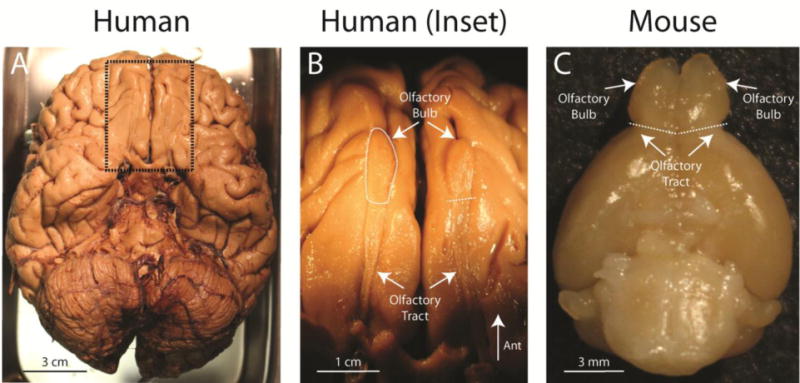
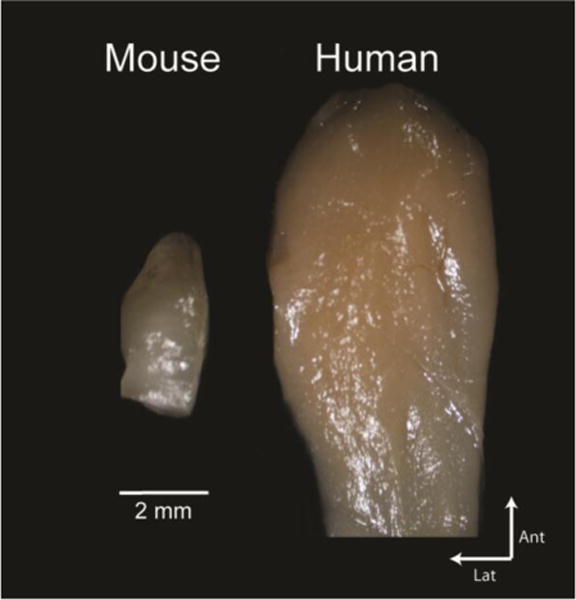
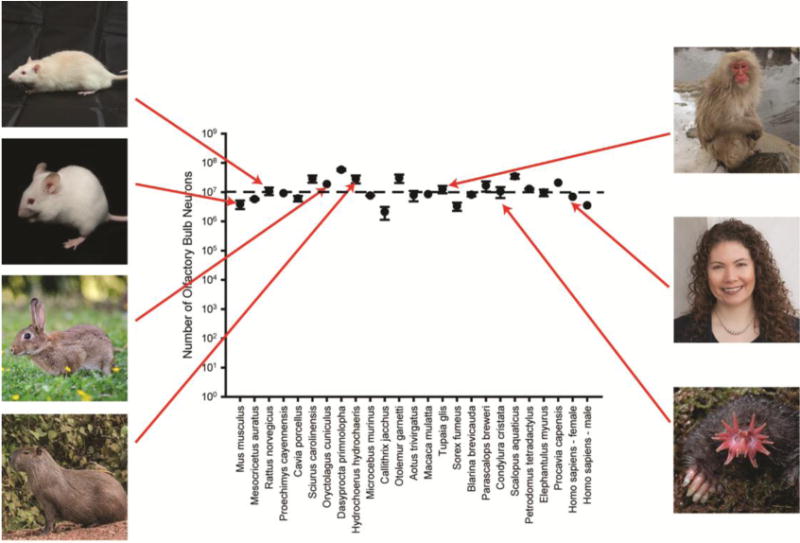
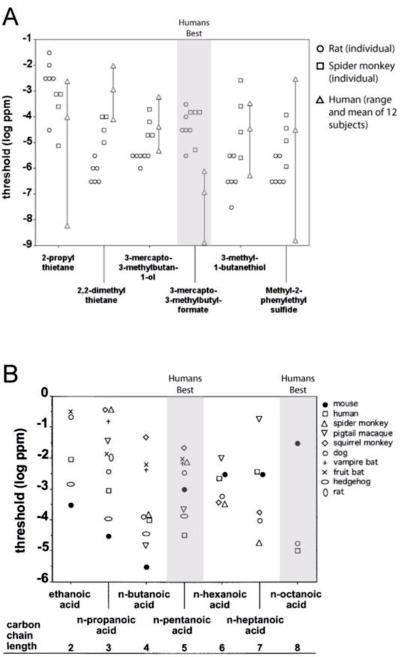
It is commonly believed that humans have a poor sense of smell compared to other mammalian species. However, this idea derives not from empirical studies of human olfaction but from a famous 19th-century anatomist's hypothesis that the evolution of human free will required a reduction in the proportional size of the brain's olfactory bulb. The human olfactory bulb is actually quite large in absolute terms and contains a similar number of neurons to that of other mammals. Moreover, humans have excellent olfactory abilities. We can detect and discriminate an extraordinary range of odors, we are more sensitive than rodents and dogs for some odors, we are capable of tracking odor trails, and our behavioral and affective states are influenced by our sense of smell.
Copyright © 2017, American Association for the Advancement of Science.
Figures
References
-
- Golgi C. Sulla fina struttura dei bulbi olfactorii. Rivista Sperimentale di Freniatria e Medicina Legale. 1875;1:405.
-
-
A more pronounced atrophy [of the olfactory bulb] is found in primates, but by an entirely different model. It coincides with excessive development of the frontal lobe. This lobe, enlarged at the expense of the others, grabbed the cerebral hegemony; the intellectual life is centralized there; it is no longer the sense of smell that guides the animal: it’s intelligence enlightened by all the senses…. Having lost its true function, its autonomous action, the olfactory apparatus was reduced to the modest role of an organ of transmission. All that exceeded the needs of this humble function became useless. This is the cause of the atrophy of the olfactory apparatus of primates.” (page 390–391, translation by the author)
- Broca MP. Recherches sur les centres olfactifs. Revue D’Anthropologie. 1879;2:385.
-
-
- Leydig F. Lehrbuch der Histologie des Menschen und der Tiere. 1857 Frankfurt.
-
- Schiller F. Paul Broca. University of California Press; Berkeley, CA: 1979.
Publication types
MeSH terms
Grants and funding
LinkOut - more resources
Full Text Sources
Other Literature Sources
