


Application of minimal important differences in degenerative knee disease outcomes: a systematic review and case study to inform BMJ Rapid Recommendations
- PMID: 28495818
- PMCID: PMC5777462
- DOI: 10.1136/bmjopen-2016-015587
Application of minimal important differences in degenerative knee disease outcomes: a systematic review and case study to inform BMJ Rapid Recommendations
Abstract
Objectives: To identify the most credible anchor-based minimal important differences (MIDs) for patient important outcomes in patients with degenerative knee disease, and to inform BMJ Rapid Recommendations for arthroscopic surgery versus conservative management DESIGN: Systematic review.
Outcome measures: Estimates of anchor-based MIDs, and their credibility, for knee symptoms and health-related quality of life (HRQoL).
Data sources: MEDLINE, EMBASE and PsycINFO.
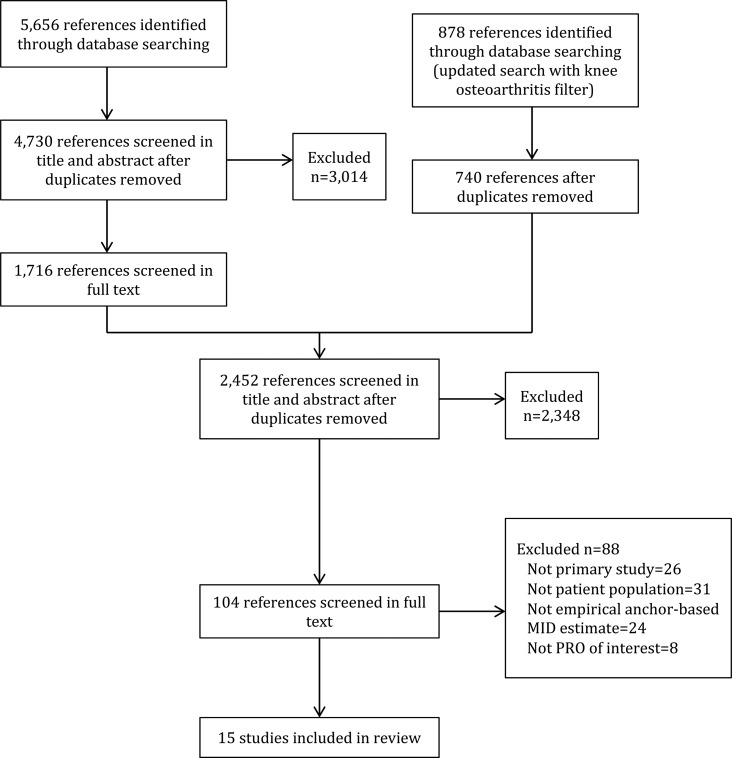
Eligibility criteria: We included original studies documenting the development of anchor-based MIDs for patient-reported outcomes (PROs) reported in randomised controlled trials included in the linked systematic review and meta-analysis and judged by the parallel BMJ Rapid Recommendations panel as critically important for informing their recommendation: measures of pain, function and HRQoL.
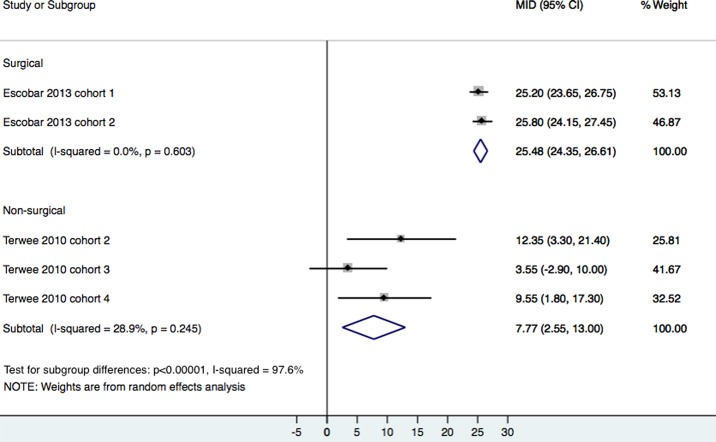
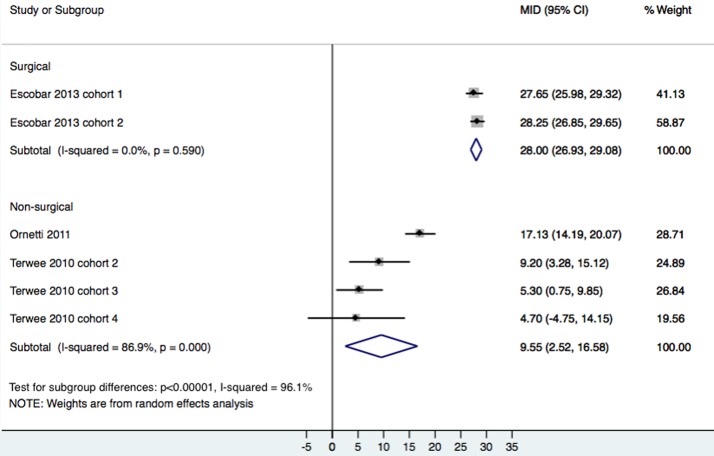
Results: 13 studies reported 95 empirically estimated anchor-based MIDs for 8 PRO instruments and/or their subdomains that measure knee pain, function or HRQoL. All studies used a transition rating (global rating of change) as the anchor to ascertain the MID. Among PROs with more than 1 estimated MID, we found wide variation in MID values. Many studies suffered from serious methodological limitations. We identified the following most credible MIDs: Western Ontario and McMaster University Osteoarthritis Index (WOMAC; pain: 12, function: 13), Knee injury and Osteoarthritis Outcome Score (KOOS; pain: 12, activities of daily living: 8) and EuroQol five dimensions Questionnaire (EQ-5D; 0.15).
Conclusions: We were able to distinguish between more and less credible MID estimates and provide best estimates for key instruments that informed evidence presentation in the associated systematic review and judgements made by the Rapid Recommendation panel.
Trial registration number: CRD42016047912.
Keywords: Minimal Important difference; Minimal clinically important difference; degenerative knee disease; osteoarthritis; patient reported outcomes.
Published by the BMJ Publishing Group Limited. For permission to use (where not already granted under a licence) please go to http://www.bmj.com/company/products-services/rights-and-licensing/.
Conflict of interest statement
Competing interests: None declared.
Figures
References
-
- Bellamy N, Kirwan J, Boers M, et al. Recommendations for a core set of outcome measures for future phase III clinical trials in knee, hip, and hand osteoarthritis. Consensus development at OMERACT III. J Rheumatol 1997;24:799–802. - PubMed
Publication types
MeSH terms
Grants and funding
LinkOut - more resources
Full Text Sources
Other Literature Sources
Miscellaneous
