


Cognitive Impairment in Chronic Kidney Disease: Vascular Milieu and the Potential Therapeutic Role of Exercise
- PMID: 28503567
- PMCID: PMC5414492
- DOI: 10.1155/2017/2726369
Cognitive Impairment in Chronic Kidney Disease: Vascular Milieu and the Potential Therapeutic Role of Exercise
Abstract
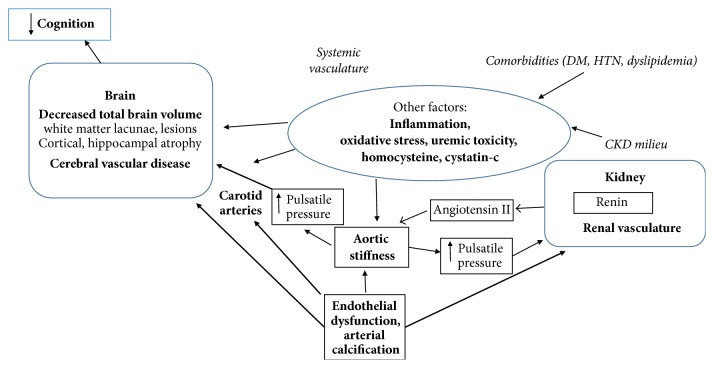
Chronic kidney disease (CKD) is considered a model of accelerated aging. More specifically, CKD leads to reduced physical functioning and increased frailty, increased vascular dysfunction, vascular calcification and arterial stiffness, high levels of systemic inflammation, and oxidative stress, as well as increased cognitive impairment. Increasing evidence suggests that the cognitive impairment associated with CKD may be related to cerebral small vessel disease and overall impairment in white matter integrity. The triad of poor physical function, vascular dysfunction, and cognitive impairment places patients living with CKD at an increased risk for loss of independence, poor health-related quality of life, morbidity, and mortality. The purpose of this review is to discuss the available evidence of cerebrovascular-renal axis and its interconnection with early and accelerated cognitive impairment in patients with CKD and the plausible role of exercise as a therapeutic modality. Understanding the cerebrovascular-renal axis pathophysiological link and its interconnection with physical function is important for clinicians in order to minimize the risk of loss of independence and improve quality of life in patients with CKD.
Figures
References
-
- U.S. Renal Data System. USRDS 2013 annual data report. Atlas of Chronic Kidney Disease & End Stage Renal Disease in the United States. 2013
-
- Rodriguez-Angarita C. E., Sanabria-Arenas R. M., Vargas-Jaramillo J. D., Ronderos-Botero I. Cognitive impairment and depression in a population of patients with chronic kidney disease in colombia: a prevalence study. Canadian Journal of Kidney Health and Disease. 2016;3, article 26 doi: 10.1186/s40697-016-0116-7. - DOI - PMC - PubMed
Publication types
MeSH terms
LinkOut - more resources
Full Text Sources
Other Literature Sources
Medical
