Catecholaminergic challenge uncovers distinct Pavlovian and instrumental mechanisms of motivated (in)action
- PMID: 28504638
- PMCID: PMC5432212
- DOI: 10.7554/eLife.22169
Catecholaminergic challenge uncovers distinct Pavlovian and instrumental mechanisms of motivated (in)action
Abstract
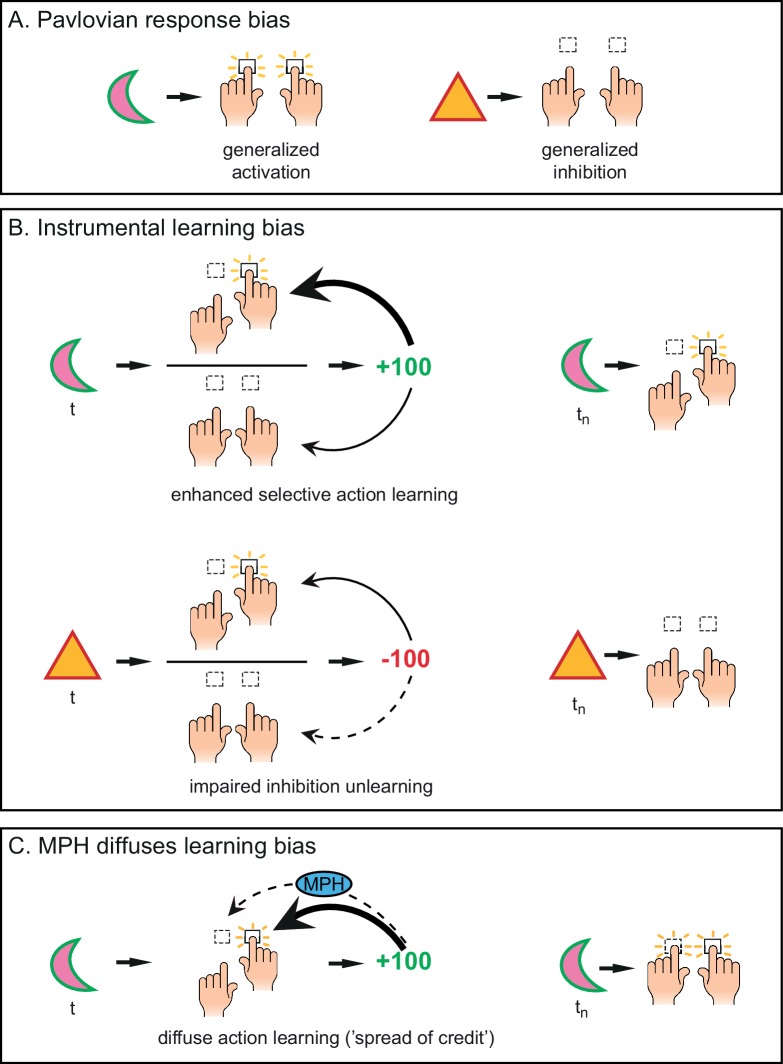
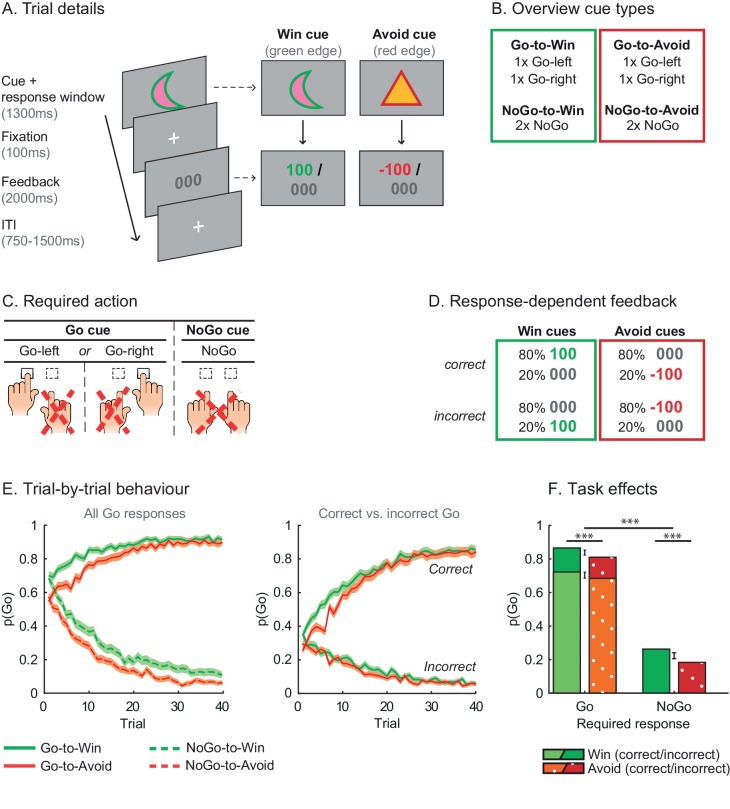
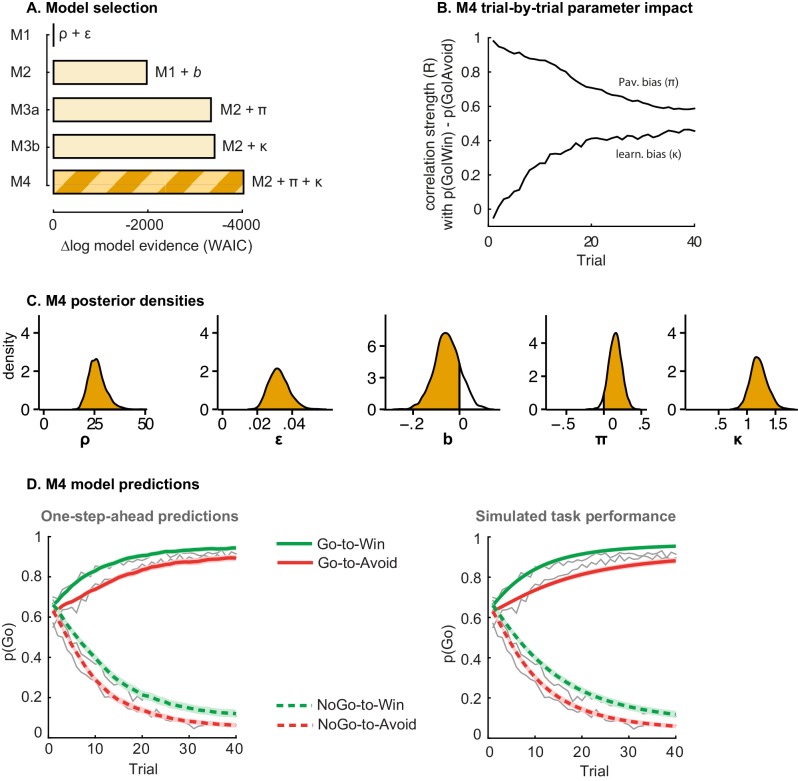
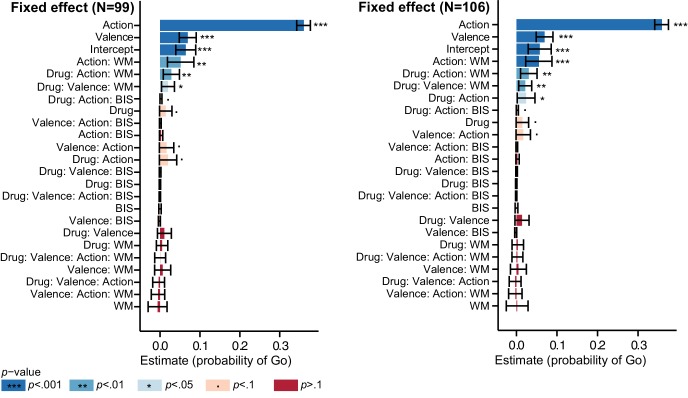
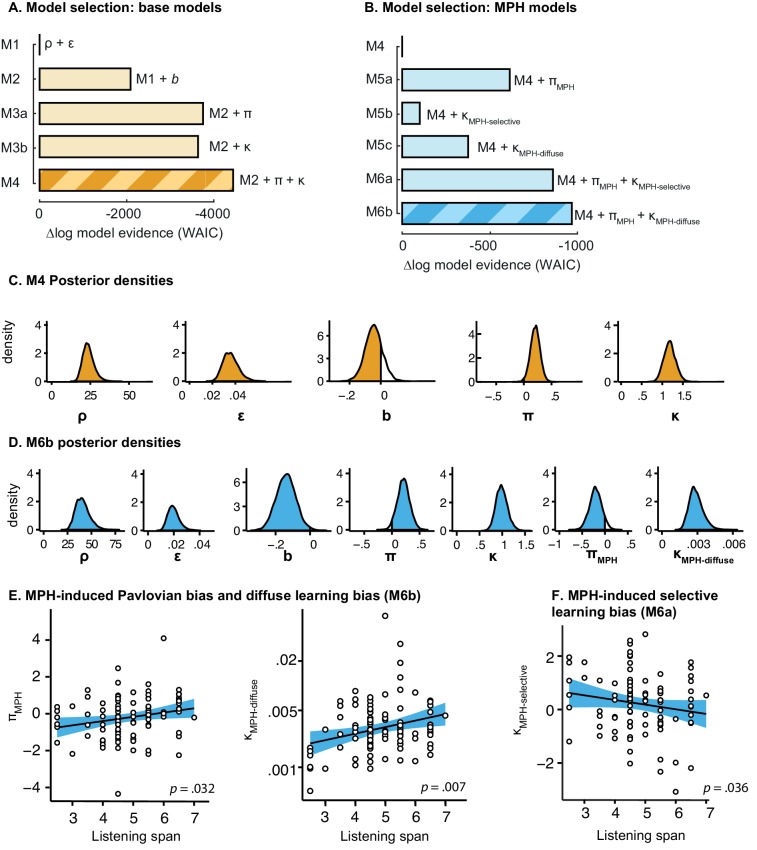
Catecholamines modulate the impact of motivational cues on action. Such motivational biases have been proposed to reflect cue-based, 'Pavlovian' effects. Here, we assess whether motivational biases may also arise from asymmetrical instrumental learning of active and passive responses following reward and punishment outcomes. We present a novel paradigm, allowing us to disentangle the impact of reward and punishment on instrumental learning from Pavlovian response biasing. Computational analyses showed that motivational biases reflect both Pavlovian and instrumental effects: reward and punishment cues promoted generalized (in)action in a Pavlovian manner, whereas outcomes enhanced instrumental (un)learning of chosen actions. These cue- and outcome-based biases were altered independently by the catecholamine enhancer melthylphenidate. Methylphenidate's effect varied across individuals with a putative proxy of baseline dopamine synthesis capacity, working memory span. Our study uncovers two distinct mechanisms by which motivation impacts behaviour, and helps refine current models of catecholaminergic modulation of motivated action.
Keywords: dopamine; human; learning; motivational biases; neuroscience.
Conflict of interest statement
MJF: Reviewing editor,
HEMdO: HEMdO has acted as a consultant for Eleusis benefit corps, but does not own shares.
The other authors declare that no competing interests exist.
Figures
References
-
- Arnsten AF, Dudley AG. Methylphenidate improves prefrontal cortical cognitive function through alpha2 adrenoceptor and dopamine D1 receptor actions: relevance to therapeutic effects in attention deficit hyperactivity disorder. Behavioral and Brain Functions. 2005;1:2. doi: 10.1186/1744-9081-1-2. - DOI - PMC - PubMed
-
- Barratt W. The Barratt Simplified Measure of Social Status (BSMSS): Measuring SES. Indiana State University; 2006.
-
- Bates D, Maechler M, Bolker B, Walker S. lme4: Linear mixed-effects models using Eigen and S4. R package version 1.1-7http://CRAN.R-project.org/package=lme4 2014
Publication types
MeSH terms
Substances
Grants and funding
LinkOut - more resources
Full Text Sources
Other Literature Sources
Medical