


Peritoneal lavage examination as a prognostic tool in cases of gastric cancer
- PMID: 28507577
- PMCID: PMC5420630
- DOI: 10.5114/aoms.2016.64044
Peritoneal lavage examination as a prognostic tool in cases of gastric cancer
Abstract
Introduction: Peritoneal tumor seeding is a common form of recurrence after gastric cancer surgery. The finding of free tumor cells and/or elevation of tumor markers in the peritoneal fluid could predict intraperitoneal tumor recurrence. The results of these examination can be used for indication of aggressive treatment modalities such as hyperthermic intraperitoneal chemotherapy (HIPEC).
Material and methods: We have operated on 105 patients suffering from gastric cancer. The control group consisted of 12 patients without malignant disease. Peritoneal lavage fluid or ascites was collected immediately after laparotomy and examined by cytology and biochemistry (levels of carcinoembryonic antigen (CEA) and Ca 19-9). Sensitivity, specificity, stage correlation and overall survival were observed.
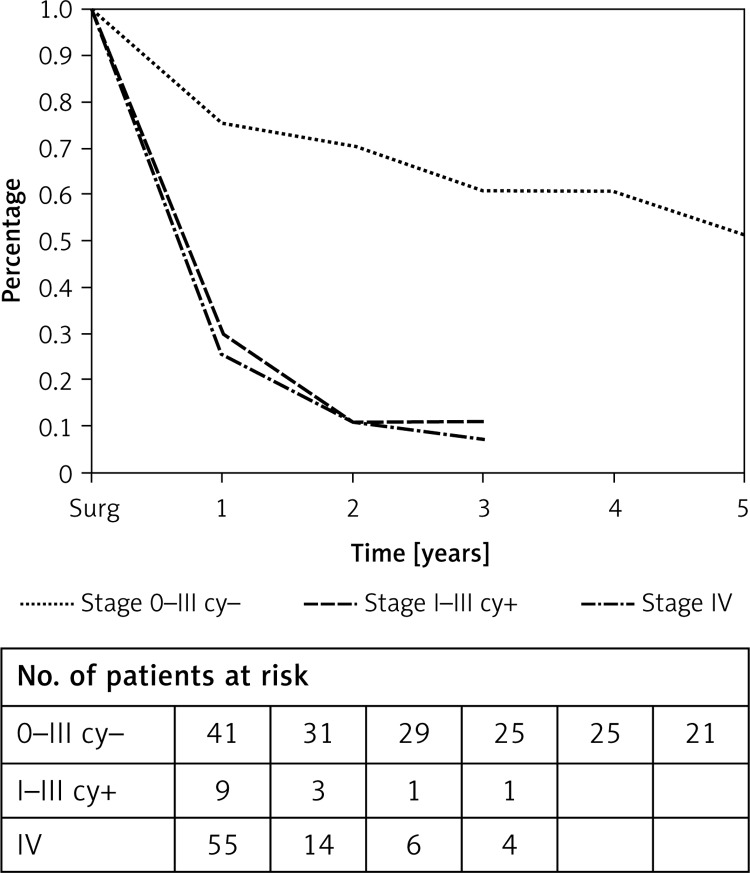
Results: Elevation of tumor markers or the finding of free intraperitoneal tumor cells predicts recurrence. The prognosis of these patients is same as in stage IV TNM classification with median survival time less than 1 year (p = 0.713). Patients with negative cytology have median survival time 5 years contrary to them with positive cytology (p < 0.001). Sensitivity of the cytology was 34% and specificity was 85%. Sensitivity of biochemistry was 53% (combination of both markers) and specificity was 100%.
Conclusions: This study confirms the importance of peritoneal fluid examination for the prognosis. We cannot recommend routine use as an indicator for HIPEC due to low sensitivity, but the result of cytological examination is an independent factor for patient survival.
Keywords: gastric cancer; peritoneal biochemistry; peritoneal cytology.
Conflict of interest statement
The authors declare no conflict of interest.
References
-
- Aiko T, Sasako M. The new Japanese clasification of gastric carcinoma: points to be revised. Gastric Cancer. 1998;1:25–30. - PubMed
-
- Washington K. 7thEdition of the AJCC Cancer Staging Manual: Stomach. Ann Surg Oncol. 2010;17:3077–9. - PubMed
-
- Makary MA, Warshaw AL, Centeno BA, Willett CG, Rattner DW, del Castillo CF. Implications of peritoneal cytology for pancreatic cancer management. Arch Surg. 1998;133:361–5. - PubMed
-
- Marutsuka T, Shimda S, Shiomori K, Ogawa M. Peritoneal metastasis after operation for non-serosa-invasive gastric carcinoma and prophylatic strategy for peritoneal dissemination. International Congress Series. 2003;1255:103–7. - PubMed
LinkOut - more resources
Full Text Sources
Other Literature Sources
