Relationship between Gait Parameters and Postural Stability in Early and Late Parkinson's Disease and Visual Feedback-Based Balance Training Effects
- PMID: 28507630
- PMCID: PMC5420776
- DOI: 10.3889/oamjms.2017.051
Relationship between Gait Parameters and Postural Stability in Early and Late Parkinson's Disease and Visual Feedback-Based Balance Training Effects
Abstract
Background: Gait disorders or postural instability has been done before. However, lack of reviews has addressed the relation between gait and postural stability in Parkinson's disease (PD).
Aim: The aim was to evaluate the relation between gait parameters and postural stability in early and late stages of PD.
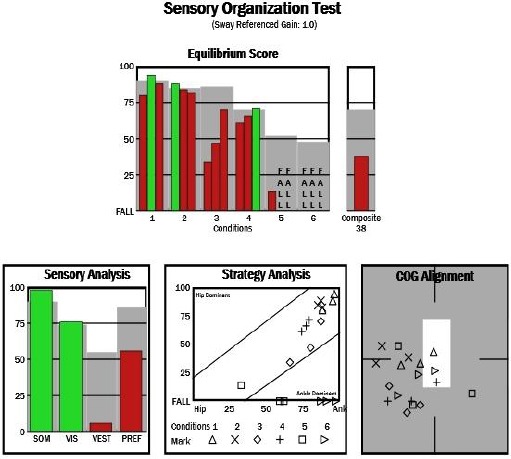
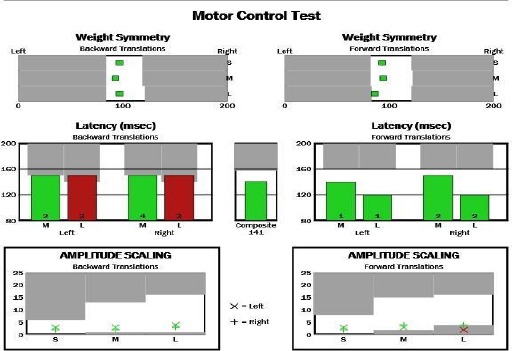
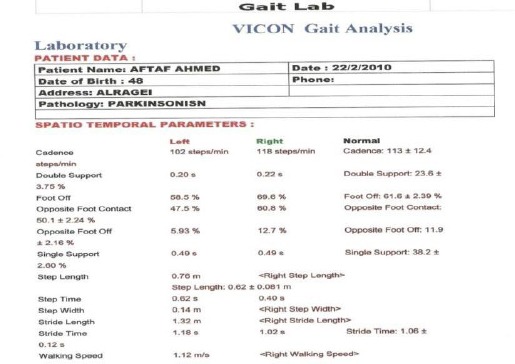
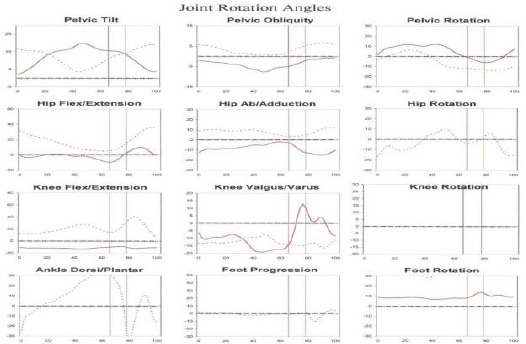
Materials and methods: The forty-one idiopathic PD patients were divided into two groups into a group (A) considered as early PD and group (B) considered as late ambulant PD. They were evaluated for postural stability by computerised dynamic posturography (CDP) device and gait analysis using an 8 m-camera Vicon 612 data capturing system set.
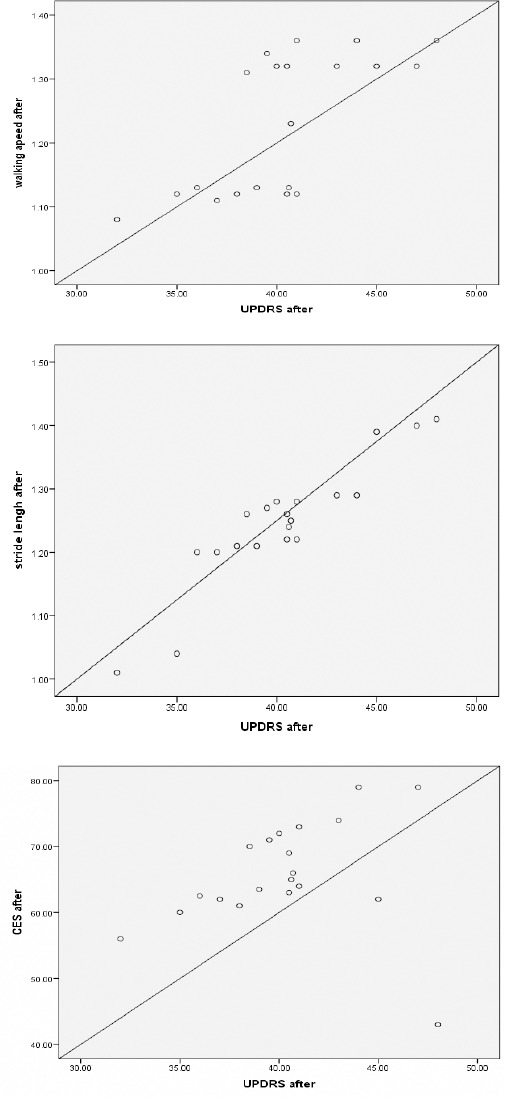
Results: There was a statistically significant improvement of composite equilibrium score, the composite latency of motor response, walking speed and cadence after treatment as compared to before training (p < 0.05) in early PD. However, in the late PD, there was a non-significant change of previous parameters after treatment as compared to before training (p > 0.05). There was a significant correlation between UPDRS motor part score, walking speed and composite equilibrium score after training in early PD (p > 0.05).
Conclusions: Both gait analysis and CDP are important quantitative assessment tools of gait and posture instability.
Keywords: Computerized Dynamic Posturography (CDP); Parkinson’s disease (PD); kinetic and kinematic gait and Rehabilitation.
Figures
References
-
- Morris ME. Movement disorders in people with Parkinson disease: a model for physical therapy. Phys Ther. 2000;80(6):578–597. PMid:10842411. - PubMed
-
- Chen P-H, Wang R-L, Liou D-J, Shaw J-S. Gait Disorders in Parkinson’s disease: Assessment and Management. International Journal of Gerontology. 2013;7:189e193.
-
- Zeng W, Liu F, Wang Q, Wang Y, Ma L, Zhang Y. Parkinson’s disease classification using gait analysis via deterministic learning. Neurosci Lett. 2016;633:268–278. https://doi.org/10.1016/j.neulet.2016.09.043 . PMid:27693437. - PubMed
-
- Mak MK, Pang MY. Balance confidence and functional mobilityare independently associated with falls in people with Parkin-son’s disease. J Neurol. 2009;256(5):742–9. https://doi.org/10.1007/s00415-009-5007-8 . PMid:19240961. - PubMed
-
- Ebersbach G, Baas H, Csoti I, Müngersdorf M, Deuschl G. Scales in Parkinson’s disease. J Neurol. 2006;253(Suppl 4):IV32–5. https://doi.org/10.1007/s00415-006-4008-0 . PMid:16944355. - PubMed
LinkOut - more resources
Full Text Sources
Other Literature Sources