


Role of the aryl hydrocarbon receptor in carcinogenesis and potential as an anti-cancer drug target
- PMID: 28508231
- PMCID: PMC6357772
- DOI: 10.1007/s00204-017-1981-2
Role of the aryl hydrocarbon receptor in carcinogenesis and potential as an anti-cancer drug target
Erratum in
-
Erratum to: Role of the aryl hydrocarbon receptor in carcinogenesis and potential as an anti-cancer drug target.Arch Toxicol. 2017 Sep;91(9):3209. doi: 10.1007/s00204-017-2026-6. Arch Toxicol. 2017. PMID: 28695231 No abstract available.
Abstract
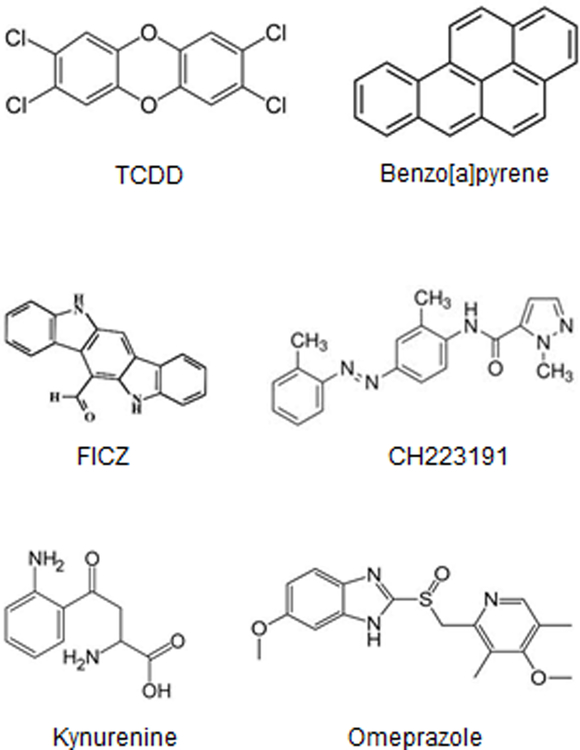
The aryl hydrocarbon receptor (AhR) was initially identified as the receptor that binds and mediates the toxic effects induced by 2,3,7,8-tetrachlorodibenzo-p-dioxin (TCDD) and structurally related halogenated aromatics. Other toxic compounds including some polynuclear aromatic hydrocarbons act through the AhR; however, during the last 25 years, it has become apparent that the AhR plays an essential role in maintaining cellular homeostasis. Moreover, the scope of ligands that bind the AhR includes endogenous compounds such as multiple tryptophan metabolites, other endogenous biochemicals, pharmaceuticals and health-promoting phytochemicals including flavonoids, indole-3-carbinol and its metabolites. It has also been shown that like other receptors, the AhR is a drug target for multiple diseases including cancer, where both AhR agonists and antagonists effectively block many of the critical hallmarks of cancer in multiple tumor types. This review describes the anti-cancer activities of AhR ligands and demonstrates that it is time to separate the AhR from TCDD and exploit the potential of the AhR as a novel target for cancer chemotherapy.
Keywords: Ah receptor; Cancer; Drug target; Ligands.
Figures

References
-
- American Cancer Society (2016) Cancer Facts and Figures 2016 American Cancer Society, Atlanta, GA
-
- Andersson P, Rubio C, Poellinger L, Hanberg A (2005) Gastric hamartomatous tumours in a transgenic mouse model expressing an activated dioxin/Ah receptor. Anticancer Res 25(2A):903–11 - PubMed
Publication types
MeSH terms
Substances
Grants and funding
LinkOut - more resources
Full Text Sources
Other Literature Sources
