


Categorization and theoretical comparison of quantitative methods for assessing QT/RR hysteresis
- PMID: 28510313
- PMCID: PMC6931730
- DOI: 10.1111/anec.12463
Categorization and theoretical comparison of quantitative methods for assessing QT/RR hysteresis
Abstract
Background: In the human electrocardiogram, there is a lag of adaptation of the QT interval to heart rate changes, usually termed QT/RR hysteresis (QT-hys). Subject-specific quantifiers of QT-hys have been proposed as potential biomarkers, but there is no consensus on the choice of the quantifier.
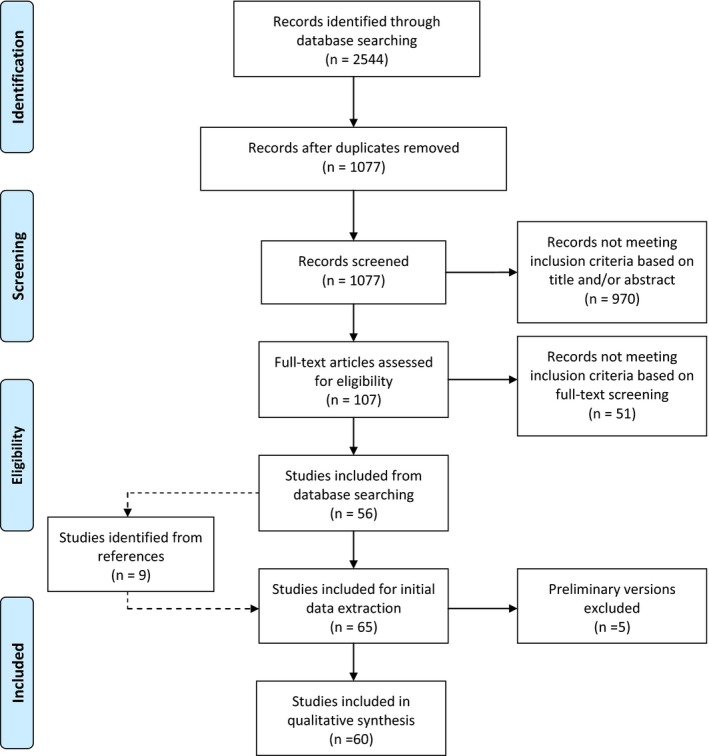
Methods: A comprehensive literature search was conducted to identify original articles reporting quantifiers of repolarization hysteresis from the surface ECG in humans.
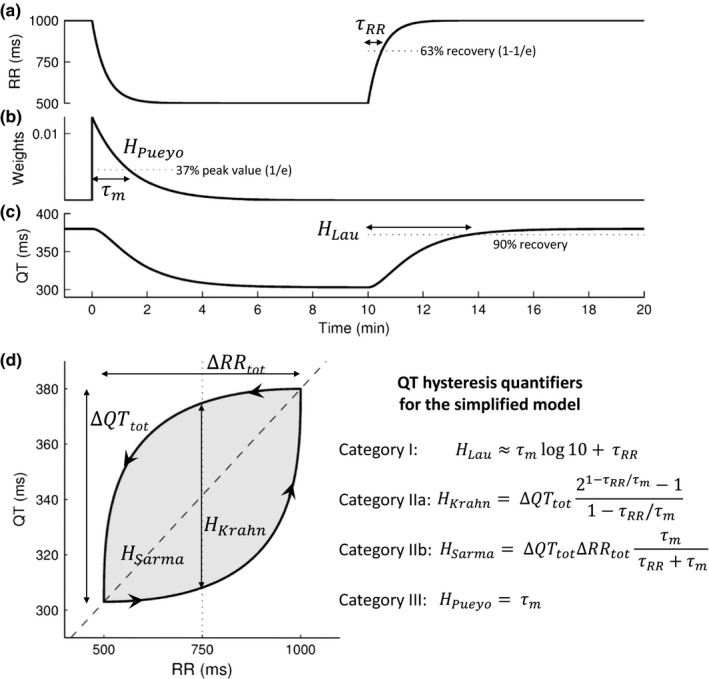
Results: Sixty articles fulfilled our inclusion criteria. Reported biomarkers were grouped under four categories. A simple mathematical model of QT/RR loop was used to illustrate differences between the methods. Category I quantifiers use direct measurement of QT time course of adaptation. They are limited to conditions where RR intervals are under strict control. Category IIa and IIb quantifiers compare QT responses during consecutive heart rate acceleration and deceleration. They are relevant when a QT/RR loop is observed, typically during exercise and recovery, but are not robust to protocol variations. Category III quantifiers evaluate the optimum RR memory in dynamic QT/RR relationship modeling. They estimate an intrinsic memory parameter independent from the nature of RR changes, but their reliability remains to be confirmed when multiple memory parameters are estimated. Promising approaches include the differentiation of short-term and long-term memory and adaptive estimation of memory parameters.
Conclusion: Model-based approaches to QT-hys assessment appear to be the most versatile, as they allow separate quantification of QT/RR dependency and QT-hys, and can be applied to a wide range of experimental settings.
Keywords: QT adaptation; QT hysteresis; quantitative ECG; repolarization.
© 2017 Wiley Periodicals, Inc.
Figures
References
-
- Arnold, L. , Page, J. , Attwell, D. , Cannell, M. , & Eisner, D. A. (1982). The dependence on heart‐rate of the human ventricular action‐potential duration. Cardiovascular Research, 16, 547–551. - PubMed
-
- Baumert, M. , Lambert, G. W. , Dawood, T. , Lambert, E. A. , Esler, M. D. , McGrane, M. , … Nalivaiko, E. (2008). QT interval variability and cardiac norepinephrine spillover in patients with depression and panic disorder. American Journal of Physiology‐Heart and Circulatory Physiology, 295, H962–H968. - PubMed
-
- Baumert, M. , Seeck, A. , Faber, R. , Nalivaiko, E. , & Voss, A. (2010). Longitudinal changes in QT interval variability and rate adaptation in pregnancies with normal and abnormal uterine perfusion. Hypertension Research, 33, 555–560. - PubMed
-
- Bazett, H. C. (1920). An analysis of the time relations of electrocardiograms. Heart, 7, 353–370.
Publication types
MeSH terms
LinkOut - more resources
Full Text Sources
Other Literature Sources
