


Influence of Morbid Obesity on the Pharmacokinetics of Morphine, Morphine-3-Glucuronide, and Morphine-6-Glucuronide
- PMID: 28510797
- PMCID: PMC5694499
- DOI: 10.1007/s40262-017-0544-2
Influence of Morbid Obesity on the Pharmacokinetics of Morphine, Morphine-3-Glucuronide, and Morphine-6-Glucuronide
Abstract
Introduction: Obesity is associated with many pathophysiological changes that may result in altered drug metabolism. The aim of this study is to investigate the influence of obesity on the pharmacokinetics of morphine, morphine-3-glucuronide (M3G), and morphine-6-glucuronide (M6G) through a combined analysis in morbidly obese patients and non-obese healthy volunteers.
Methods: In this analysis, data from 20 morbidly obese patients [mean body mass index 49.9 kg/m2 (range 37.6-78.6 kg/m2) and weight 151.3 kg (range 112-251.9 kg)] and 20 healthy volunteers [mean weight 70.6 kg (range 58-85 kg)] were included. Morbidly obese patients received 10 mg of intravenous (I.V.) morphine after gastric bypass surgery, with additional morphine I.V. doses as needed. Healthy volunteers received an I.V. bolus of morphine of 0.1 mg/kg followed by an infusion of 0.030 mg kg-1 h-1 for 1 h. Population pharmacokinetic modeling was performed using NONMEM 7.2.
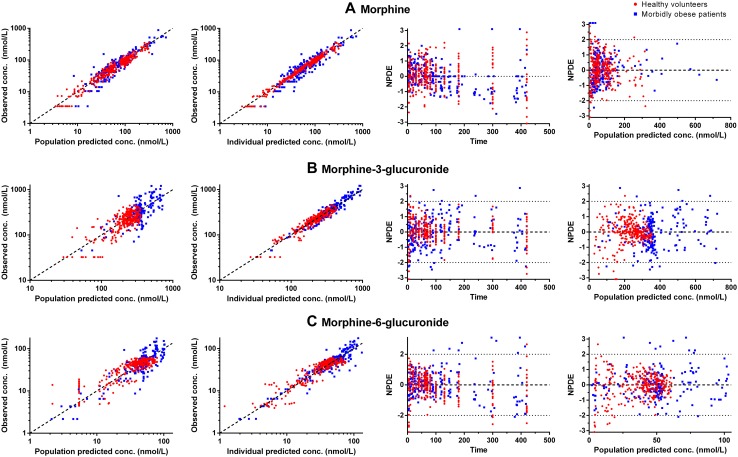
Results: In morbidly obese patients, elimination clearance of M3G and M6G was decreased substantially compared with healthy volunteers (p < 0.001). Regarding glucuronidation, only a slight decrease in the formation of M6G and a delay in the formation of M3G was found (both p < 0.001). Obesity was also identified as a covariate for the peripheral volume of distribution of morphine (p < 0.001).
Conclusion: Metabolism of morphine is not altered in morbidly obese patients. However, decreased elimination of both M3G and M6G is evident, resulting in a substantial increase in exposure to these two metabolites. A rational explanation of this finding is that it results from alterations in membrane transporter function and/or expression in the liver. ClinicalTrials.gov identifier: NCT01097148.
Conflict of interest statement
Funding
No sources of funding were used in the preparation of this article.
Conflict of Interest
Sjoerd de Hoogd, Pyry A. J. Välitalo, Albert Dahan, Simone van Kralingen, Michael M. W. Coughtrie, Eric P. A. van Dongen, Bert van Ramshorst, and Catherijne A. J. Knibbe have no conflicts of interest directly relevant to the content of this article.
Ethics Approval
All procedures performed in studies involving human participants were in accordance with the ethical standards of the institutional and/or national research committee and with the 1964 Helsinki Declaration and its later amendments or comparable ethical standards. Informed consent was obtained from all individual participants included in the study.
Figures



References
-
- World Health Organization. Fact sheet on obesity and overweight. January 2015. http://www.who.int/mediacentre/factsheets/fs311/en/. Accessed 3 Feb 2016
Publication types
MeSH terms
Substances
Associated data
LinkOut - more resources
Full Text Sources
Other Literature Sources
Medical
