An Updated Nationwide Epidemiology of Primary Brain Tumors in Republic of Korea, 2013
- PMID: 28516074
- PMCID: PMC5433946
- DOI: 10.14791/btrt.2017.5.1.16
An Updated Nationwide Epidemiology of Primary Brain Tumors in Republic of Korea, 2013
Abstract
Background: This report aims to provide accurate nationwide epidemiologic data on primary brain and central nervous system (CNS) tumors in the Republic of Korea. We updated the data by analyzing primary brain and CNS tumors diagnosed in 2013 using the data from the national cancer incidence database.
Methods: Data on primary brain and CNS tumors diagnosed in 2013 were collected from the Korean Central Cancer Registry. Crude and age-standardized rates were calculated in terms of gender, age, and histological type.
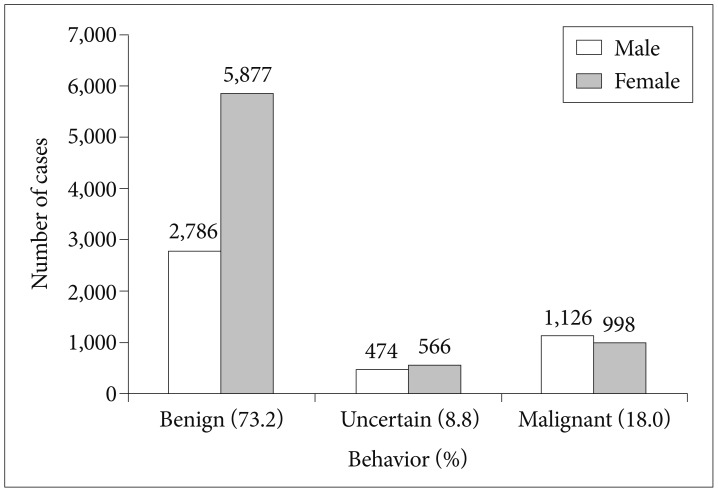
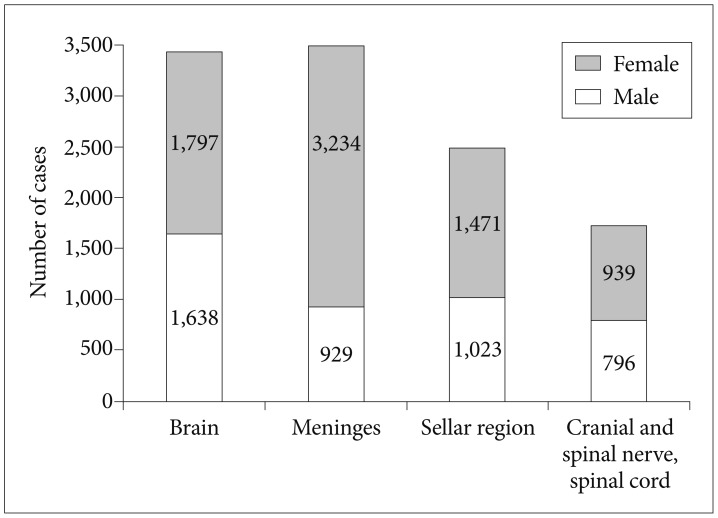
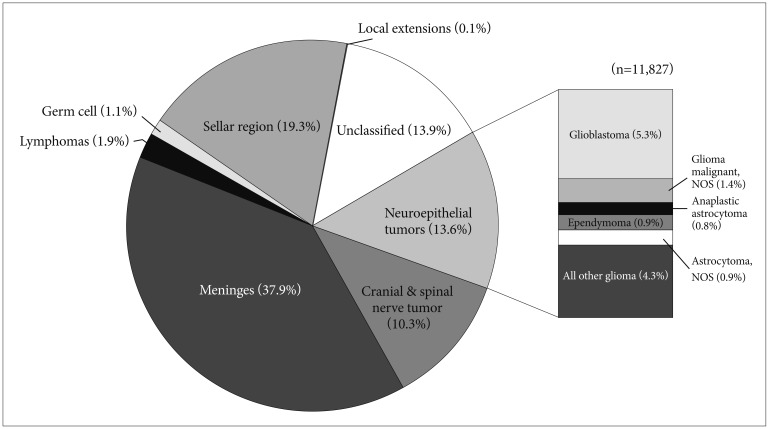
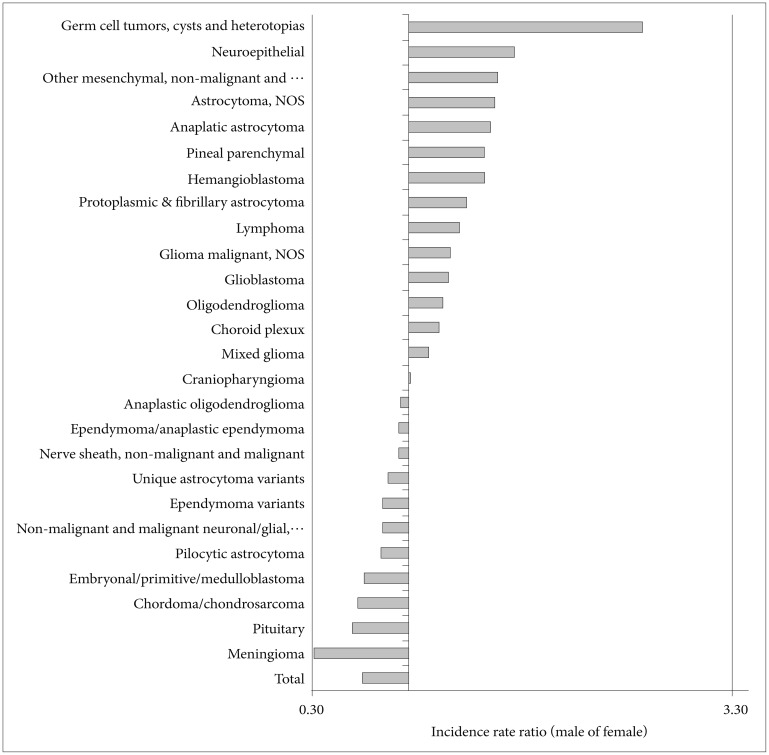
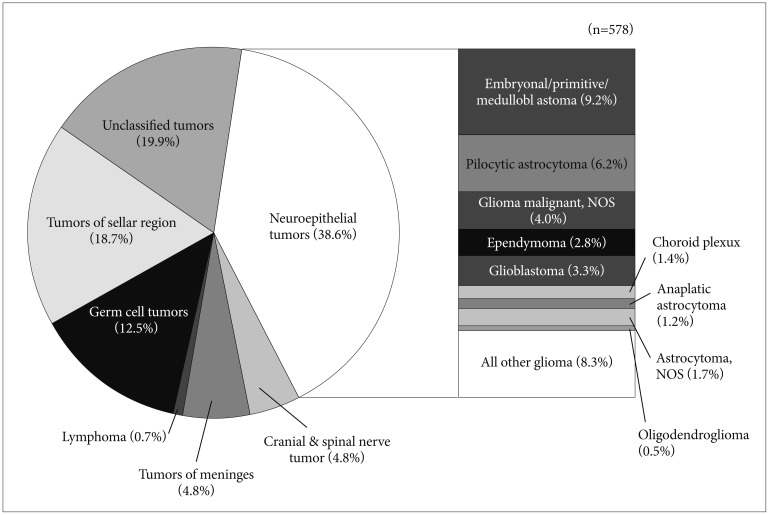
Results: A total of 11,827 patients were diagnosed with primary brain and CNS tumors in 2013. Brain and CNS tumors occurred in females more often than in males (female:male, 1.70:1). The most common tumor was meningioma (37.3%). Pituitary tumors (18.0%), gliomas (12.7%), and nerve sheath tumors (12.3%) followed in incidence. Glioblastomas accounted for 41.8% of all gliomas. In children (<19 years), sellar region tumors (pituitary and craniopharyngioma), embryonal/primitive/medulloblastoma, and germ cell tumors were the most common tumors.
Conclusion: This study should provide valuable information regarding the primary brain tumor epidemiology in Republic of Korea.
Keywords: Brain; Central nervous system; Epidemiology; Korea; Registries; Tumors.
Conflict of interest statement
Conflicts of Interest: The authors have no financial conflicts of interest.
Figures
References
-
- Fritz A, Percy C, Jack A, et al. International classification of diseases for oncology. 3rd ed. Geneva: World Health Organizatiol; 2000.
-
- Bauchet L, Rigau V, Mathieu-Daudé H, et al. French brain tumor data bank: methodology and first results on 10,000 cases. J Neurooncol. 2007;84:189–199. - PubMed
-
- Kaneko S, Nomura K, Yoshimura T, Yamaguchi N. Trend of brain tumor incidence by histological subtypes in Japan: estimation from the Brain Tumor Registry of Japan, 1973-1993. J Neurooncol. 2002;60:61–69. - PubMed
LinkOut - more resources
Full Text Sources
Other Literature Sources