


Red blood cell storage time and transfusion: current practice, concerns and future perspectives
- PMID: 28518049
- PMCID: PMC5448828
- DOI: 10.2450/2017.0345-16
Red blood cell storage time and transfusion: current practice, concerns and future perspectives
Abstract
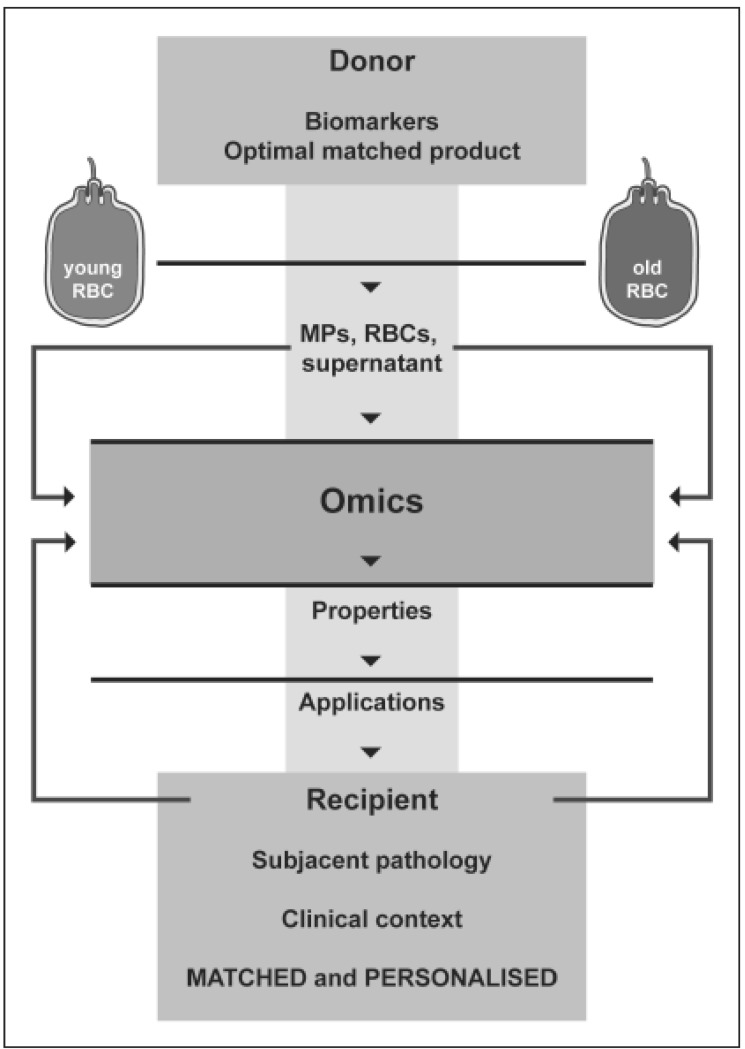
Red blood cells (RBCs) units are the most requested transfusion product worldwide. Indications for transfusion include symptomatic anaemia, acute sickle cell crisis, and acute blood loss of more than 30% of the blood volume, with the aim of restoring tissue oxygen delivery. However, stored RBCs from donors are not a qualitative equal product, and, in many ways, this is a matter of concern in the transfusion practice. Besides donor-to-donor variation, the storage time influences the RBC unit at the qualitative level, as RBCs age in the storage bag and are exposed to the so-called storage lesion. Several studies have shown that the storage lesion leads to post-transfusion enhanced clearance, plasma transferrin saturation, nitric oxide scavenging and/or immunomodulation with potential unwanted transfusion-related clinical outcomes, such as acute lung injury or higher mortality rate. While, to date, several studies have claimed the risk or deleterious effects of "old" vs "young" RBC transfusion regimes, it is still a matter of debate, and consideration should be taken of the clinical context. Transfusion-dependent patients may benefit from transfusion with "young" RBC units, as it assures longer inter-transfusion periods, while transfusion with "old" RBC units is not itself harmful. Unbiased Omics approaches are being applied to the characterisation of RBC through storage, to better understand the (patho)physiological role of microparticles (MPs) that are found naturally, and also on stored RBC units. Perhaps RBC storage time is not an accurate surrogate for RBC quality and there is a need to establish which parameters do indeed reflect optimal efficacy and safety. A better Omics characterisation of components of "young" and "old" RBC units, including MPs, donor and recipient, might lead to the development of new therapies, including the use of engineered RBCs or MPs as cell-based drug delivering tools, or cost-effective personalised transfusion strategies.
Conflict of interest statement
The Authors declare no conflicts of interest.
Figures
References
-
- Arese P, Turrini F, Schwarzer E. Band 3/complement-mediated recognition and removal of normally senescent and pathological human erythrocytes. Cell Physiol Biochem. 2005;16:133–46. - PubMed
-
- Willekens FL, Werre JM, Groenen-Dopp YA, et al. Erythrocyte vesiculation: a self-protective mechanism? Br J Haematol. 2008;141:549–56. - PubMed
Publication types
MeSH terms
LinkOut - more resources
Full Text Sources
Other Literature Sources
