


Comparison and optimization of in silico algorithms for predicting the pathogenicity of sodium channel variants in epilepsy
- PMID: 28518218
- PMCID: PMC5505324
- DOI: 10.1111/epi.13798
Comparison and optimization of in silico algorithms for predicting the pathogenicity of sodium channel variants in epilepsy
Abstract
Objective: Variants in neuronal voltage-gated sodium channel α-subunits genes SCN1A, SCN2A, and SCN8A are common in early onset epileptic encephalopathies and other autosomal dominant childhood epilepsy syndromes. However, in clinical practice, missense variants are often classified as variants of uncertain significance when missense variants are identified but heritability cannot be determined. Genetic testing reports often include results of computational tests to estimate pathogenicity and the frequency of that variant in population-based databases. The objective of this work was to enhance clinicians' understanding of results by (1) determining how effectively computational algorithms predict epileptogenicity of sodium channel (SCN) missense variants; (2) optimizing their predictive capabilities; and (3) determining if epilepsy-associated SCN variants are present in population-based databases. This will help clinicians better understand the results of indeterminate SCN test results in people with epilepsy.
Methods: Pathogenic, likely pathogenic, and benign variants in SCNs were identified using databases of sodium channel variants. Benign variants were also identified from population-based databases. Eight algorithms commonly used to predict pathogenicity were compared. In addition, logistic regression was used to determine if a combination of algorithms could better predict pathogenicity.
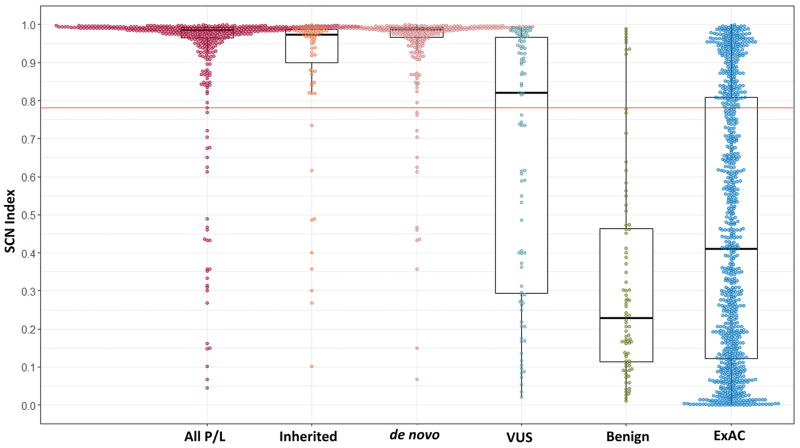
Results: Based on American College of Medical Genetic Criteria, 440 variants were classified as pathogenic or likely pathogenic and 84 were classified as benign or likely benign. Twenty-eight variants previously associated with epilepsy were present in population-based gene databases. The output provided by most computational algorithms had a high sensitivity but low specificity with an accuracy of 0.52-0.77. Accuracy could be improved by adjusting the threshold for pathogenicity. Using this adjustment, the Mendelian Clinically Applicable Pathogenicity (M-CAP) algorithm had an accuracy of 0.90 and a combination of algorithms increased the accuracy to 0.92.
Significance: Potentially pathogenic variants are present in population-based sources. Most computational algorithms overestimate pathogenicity; however, a weighted combination of several algorithms increased classification accuracy to >0.90.
Keywords: Epileptic encephalopathy; SCN1A; SCN2A; SCN8A.
Wiley Periodicals, Inc. © 2017 International League Against Epilepsy.
Conflict of interest statement
Katherine Holland has received support from the National Institutes of Health. The remaining authors have no conflicts of interest. We confirm that we have read the Journal’s position on issues involved in ethical publication and affirm that this report is consistent with those guidelines.
Figures
References
-
- Mercimek-Mahmutoglu S, Patel J, Cordeiro D, et al. Diagnostic yield of genetic testing in epileptic encephalopathy in childhood. Epilepsia. 2015;56:707–716. - PubMed
Publication types
MeSH terms
Substances
Grants and funding
LinkOut - more resources
Full Text Sources
Other Literature Sources
Medical
Miscellaneous
