


The impact of an m-Health financial incentives program on the physical activity and diet of Australian truck drivers
- PMID: 28521767
- PMCID: PMC5437648
- DOI: 10.1186/s12889-017-4380-y
The impact of an m-Health financial incentives program on the physical activity and diet of Australian truck drivers
Abstract
Background: Chronic diseases are high in truck drivers and have been linked to work routines that promote inactivity and poor diets. This feasibility study examined the extent to which an m-Health financial incentives program facilitated physical activity and healthy dietary choices in Australian truck drivers.
Methods: Nineteen men (mean [SD] age = 47.5 [9.8] years; BMI = 31.2 [4.6] kg/m2) completed the 20-week program, and used an activity tracker and smartphone application (Jawbone UP™) to regulate small positive changes in occupational physical activity, and fruit, vegetable, saturated fat and processed/refined sugar food/beverage choices. Measures (baseline, end-program, 2-months follow-up; April-December 2014) were accelerometer-determined proportions of work time spent physically active, and a workday dietary questionnaire. Statistical (repeated measures ANOVA) and thematic (interviews) analyses assessed program impact.
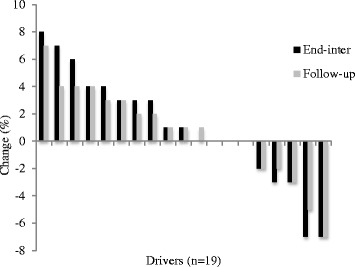
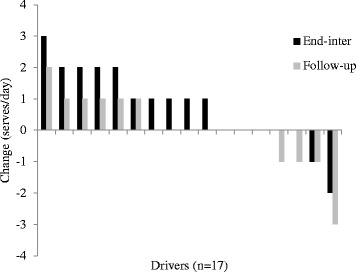
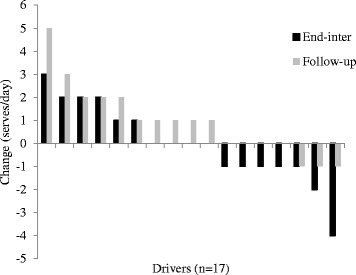
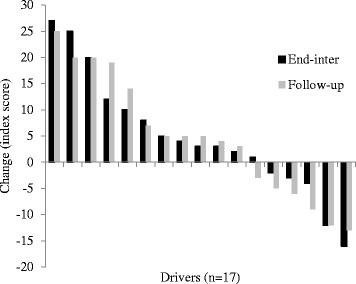
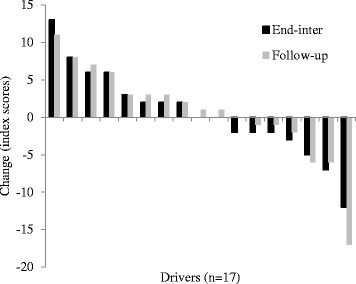
Results: Non-significant increases in the mean proportions of work time spent physically active were found at end-program and follow-up (+1%; 7 mins/day). Fruit (p = 0.023) and vegetable (p = 0.024) consumption significantly increased by one serve/day at end-program. Non-significant improvements in saturated fat (5%) and processed/refined sugar (1%) food/beverage choices were found at end-program and follow-up. Overall, 65% (n = 11) of drivers demonstrated positive changes in physical activity, and at least one dietary choice (e.g. saturated fat) at follow-up. Drivers found the financial incentives component of the program to be a less effective facilitator of change than the activity tracker and smartphone application, although this technology was easier to use for monitoring of physical activity than healthy dietary choices.
Conclusions: Not all drivers benefitted from the program. However, positive changes for different health behaviours were observed in the majority of participants. Outcomes from this feasibility study inform future intervention development for studies with larger samples.
Trial registration: ANZCTR12616001513404 . Registered November 2nd, 2016 (retrospectively registered).
Keywords: Diet; Financial incentives; Physical activity; Small changes; Truck drivers; m-Health intervention.
Figures
References
-
- Industry Skills Council . Environmental E-scan: transport and logistics. Canberra: Australian Government, Department of Education and Training; 2015.
-
- Angeles R, McDonough B, Howard M, Dolovich L, Marzanek-Lefebvre F, Qian H, et al. Primary care needs for a priority population: a survey of professional truck drivers. Work. 2013; doi:10.3233/WOR-131649. - PubMed
MeSH terms
Associated data
LinkOut - more resources
Full Text Sources
Other Literature Sources
Medical
Miscellaneous
