


Impact of Temperature and Nutrients on Carbon: Nutrient Tissue Stoichiometry of Submerged Aquatic Plants: An Experiment and Meta-Analysis
- PMID: 28523005
- PMCID: PMC5416745
- DOI: 10.3389/fpls.2017.00655
Impact of Temperature and Nutrients on Carbon: Nutrient Tissue Stoichiometry of Submerged Aquatic Plants: An Experiment and Meta-Analysis
Abstract
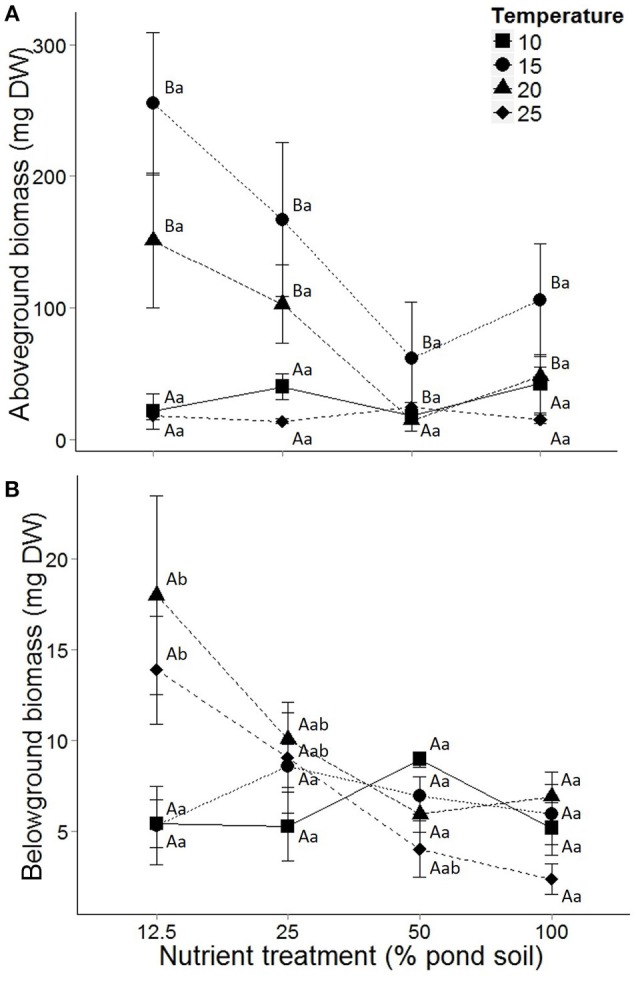
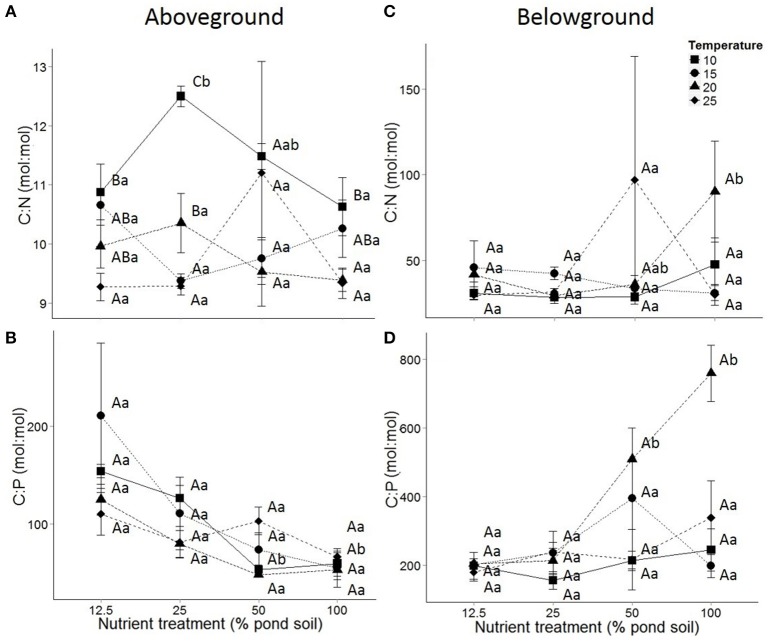
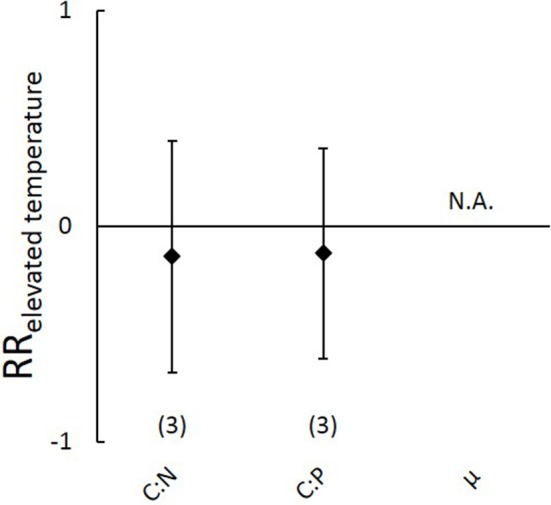
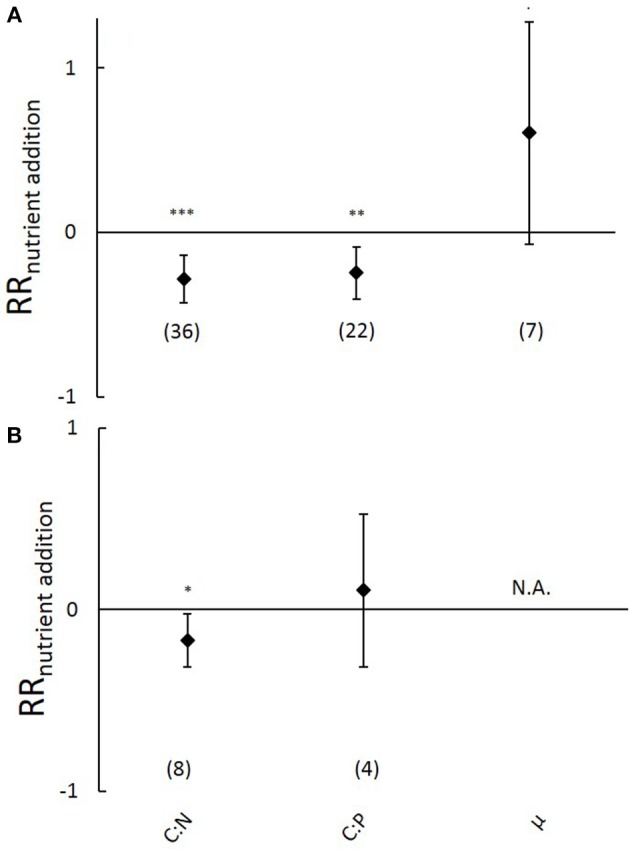
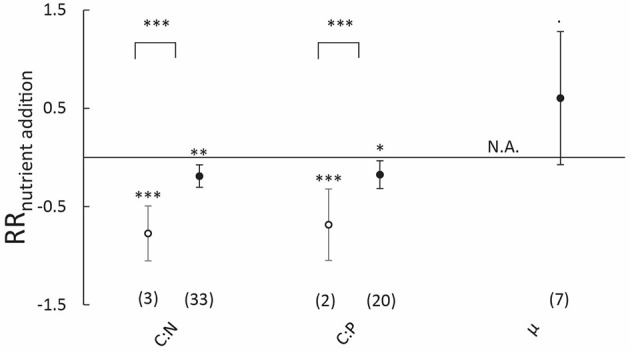
Human activity is currently changing our environment rapidly, with predicted temperature increases of 1-5°C over the coming century and increased nitrogen and phosphorus inputs in aquatic ecosystems. In the shallow parts of these ecosystems, submerged aquatic plants enhance water clarity by resource competition with phytoplankton, provide habitat, and serve as a food source for other organisms. The carbon:nutrient stoichiometry of submerged aquatic plants can be affected by changes in both temperature and nutrient availability. We hypothesized that elevated temperature leads to higher carbon:nutrient ratios through enhanced nutrient-use efficiency, while nutrient addition leads to lower carbon:nutrient ratios by the luxurious uptake of nutrients. We addressed these hypotheses with an experimental and a meta-analytical approach. We performed a full-factorial microcosm experiment with the freshwater plant Elodea nuttallii grown at 10, 15, 20, and 25°C on sediment consisting of pond soil/sand mixtures with 100, 50, 25, and 12.5% pond soil. To address the effect of climatic warming and nutrient addition on the carbon:nutrient stoichiometry of submerged freshwater and marine plants we performed a meta-analysis on experimental studies that elevated temperature and/or added nutrients (nitrogen and phosphorus). In the microcosm experiment, C:N ratios of Elodea nuttallii decreased with increasing temperature, and this effect was most pronounced at intermediate nutrient availability. Furthermore, higher nutrient availability led to decreased aboveground C:P ratios. In the meta-analysis, nutrient addition led to a 25, 22, and 16% reduction in aboveground C:N and C:P ratios and belowground C:N ratios, accompanied with increased N content. No consistent effect of elevated temperature on plant stoichiometry could be observed, as very few studies were found on this topic and contrasting results were reported. We conclude that while nutrient addition consistently leads to decreased carbon:nutrient ratios, elevated temperature does not change submerged aquatic plant carbon:nutrient stoichiometry in a consistent manner. This effect is rather dependent on nutrient availability and may be species-specific. As changes in the carbon:nutrient stoichiometry of submerged aquatic plants can impact the transfer of energy to higher trophic levels, these results suggest that eutrophication may enhance plant consumption and decomposition, which could in turn have consequences for carbon sequestration.
Keywords: Elodea nuttallii; carbon:nutrient stoichiometry; eutrophication; global warming; growth rate; meta-analysis; microcosm experiment; submerged freshwater and marine macrophytes.
Figures
References
-
- Aerts R., Chapin F. S., III. (2000). The mineral nutrition of wild plants revisited: a re-evaluation of processes and patterns. Adv. Ecol. Res. 30, 1–67. 10.1016/S0065-2504(08)60016-1 - DOI
-
- An Y., Wan S., Zhou X., Subedar A. A., Wallace L. L., Luo Y. (2005). Plant nitrogen concentration, use efficiency, and contents in a tallgrass prairie ecosystem under experimental warming. Glob. Chang. Biol. 11, 1733–1744. 10.1111/j.1365-2486.2005.01030.x - DOI
-
- Armitage A. R., Fourqurean J. W. (2016). Carbon storage in seagrass soils: long-term nutrient history exceeds the effects of near-term nutrient enrichment. Biogeosciences 13, 313–321. 10.5194/bg-13-313-2016 - DOI
LinkOut - more resources
Full Text Sources
Other Literature Sources
Research Materials
