


Beneficial Soil Bacterium Pseudomonas frederiksbergensis OS261 Augments Salt Tolerance and Promotes Red Pepper Plant Growth
- PMID: 28523010
- PMCID: PMC5415621
- DOI: 10.3389/fpls.2017.00705
Beneficial Soil Bacterium Pseudomonas frederiksbergensis OS261 Augments Salt Tolerance and Promotes Red Pepper Plant Growth
Abstract
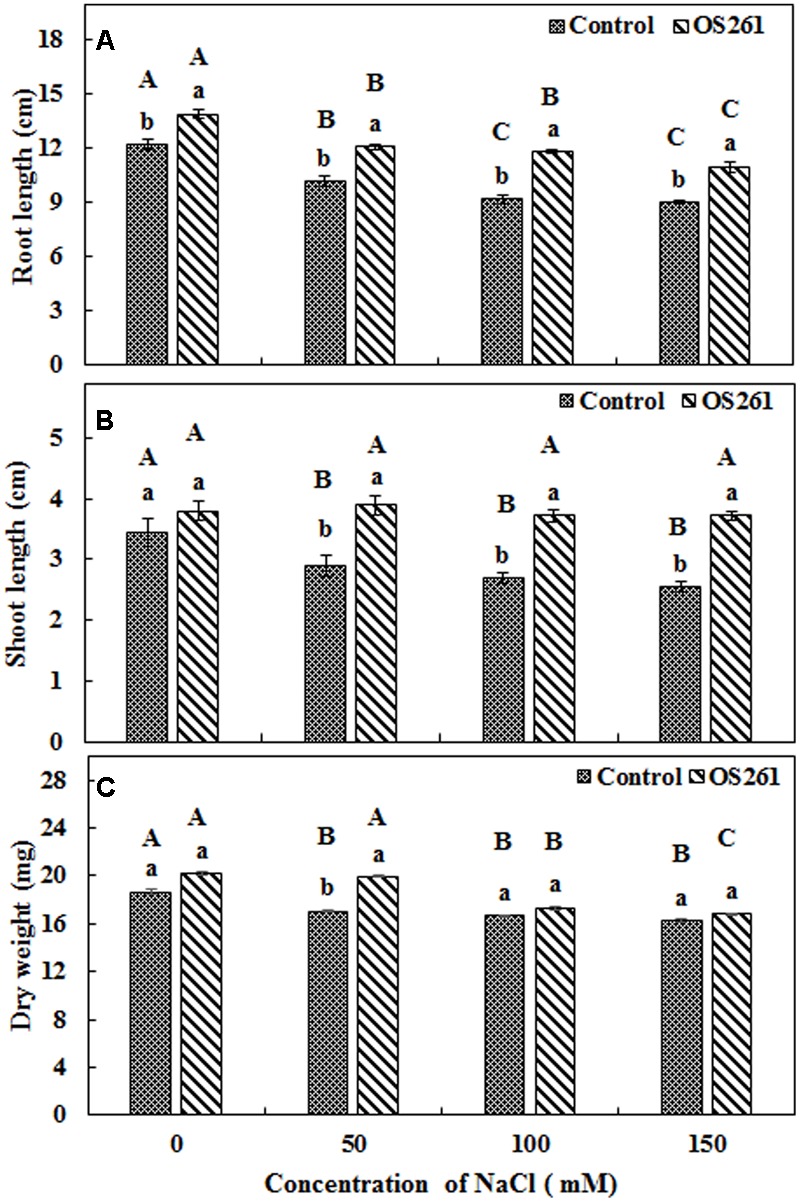
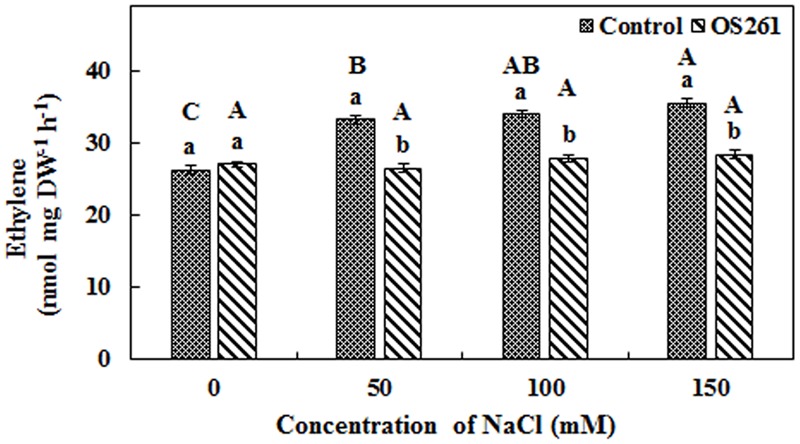
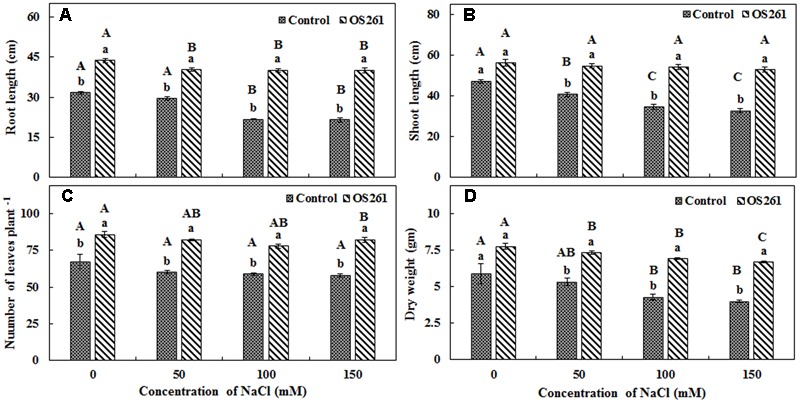
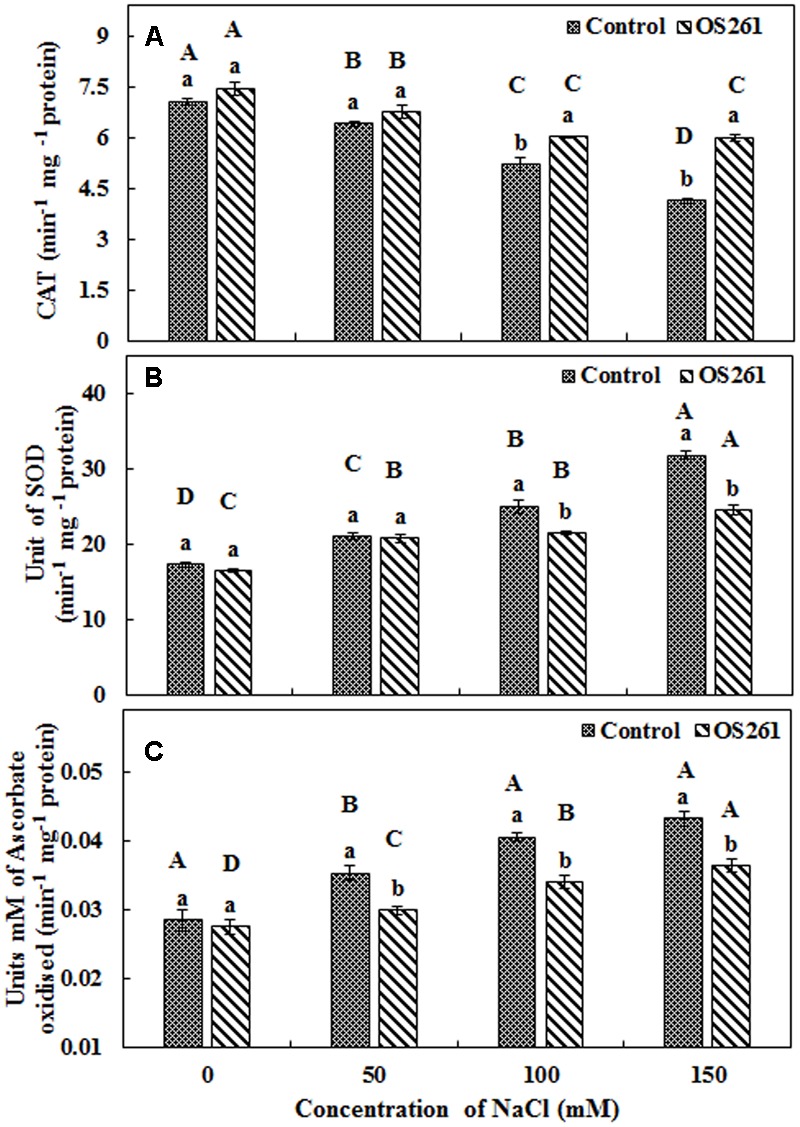
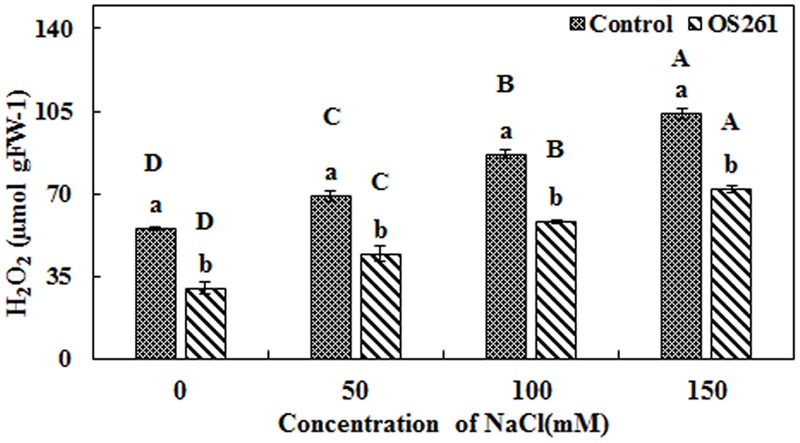
Soil salinity, being a part of natural ecosystems, is an increasing problem in agricultural soils throughout the world. Pseudomonas frederiksbergensis OS261 has already been proved to be an effective bio-inoculant for enhancing cold stress tolerance in plants, however, its effect on salt stress tolerance is unknown. The main aim of the present study was to elucidate P. frederiksbergensis OS261 mediated salt stress tolerance in red pepper. The plants were exposed to a salt stress using NaCl at the concentrations of 50, 100, and 150 mM after 12 days of transplantation, while plant growth and enzyme activity were estimated 50 days after sowing. The height in P. frederiksbergensis OS261 inoculated plants was significantly increased by 19.05, 34.35, 57.25, and 61.07% compared to un-inoculated controls at 0, 50, 100, and 150 mM of NaCl concentrations, respectively, under greenhouse conditions. The dry biomass of the plants increased by 31.97, 37.47, 62.67, and 67.84% under 0, 50, 100, and 150 mM of NaCl concentrations, respectively. A high emission of ethylene was observed in un-inoculated red pepper plants under salinity stress. P. frederiksbergensis OS261 inoculation significantly reduced ethylene emission by 20.03, 18.01, and 20.07% at 50, 100, and 150 mM of NaCl concentrations, respectively. Furthermore, the activity of antioxidant enzymes (ascorbate peroxidase, superoxide dismutase, and catalase) also varied in the inoculated red pepper plants. Salt stress resistance in the bacterized plants was evident from the improved antioxidant activity in leaf tissues and the decreased hydrogen ion concentration. Thus, we conclude that P. frederiksbergensis OS261 possesses stress mitigating property which can enhance plant growth under high soil salinity by reducing the emission of ethylene and regulating antioxidant enzymes.
Keywords: Pseudomonas frederiksbergensis; antioxidant enzyme; bio-fertilizer; plant growth promotion; salt stress.
Figures
References
-
- Abbas T., Pervez M. A., Ayyub C. M., Ahmad R. (2013). Assessment of morphological, antioxidant, biochemical and ionic responses of salt-tolerant and salt-sensitive okra (Abelmoschus esculentus) under saline regime. Pakistan J. Life Soc. Sci. 11 147–153.
-
- Abeles F. B., Morgan P. W., Saltveit M. E., Jr. (1992). Ethylene in Plant Biology 2nd Edn. San Diego, CA: Academic Press Inc.
-
- Ahmad M., Zahir Z. A., Asghar H. N., Arshad M. (2012). The combined application of rhizobial strains and plant growth promoting rhizobacteria improves growth and productivity of mung bean (Vigna radiata L.) under salt-stressed conditions. Ann. Microbiol. 62 1321–1330. 10.1007/s13213-011-0380-9 - DOI
LinkOut - more resources
Full Text Sources
Other Literature Sources
