


Impact of a Patient Navigator Program on Hospital-Based and Outpatient Utilization Over 180 Days in a Safety-Net Health System
- PMID: 28523476
- PMCID: PMC5570741
- DOI: 10.1007/s11606-017-4074-2
Impact of a Patient Navigator Program on Hospital-Based and Outpatient Utilization Over 180 Days in a Safety-Net Health System
Abstract
Background: With emerging global payment structures, medical systems need to understand longer-term impacts of care transition strategies.
Objective: To determine the effect of a care transition program using patient navigators (PNs) on health service utilization among high-risk safety-net patients over a 180-day period.
Design: Randomized controlled trial conducted October 2011 through April 2013.
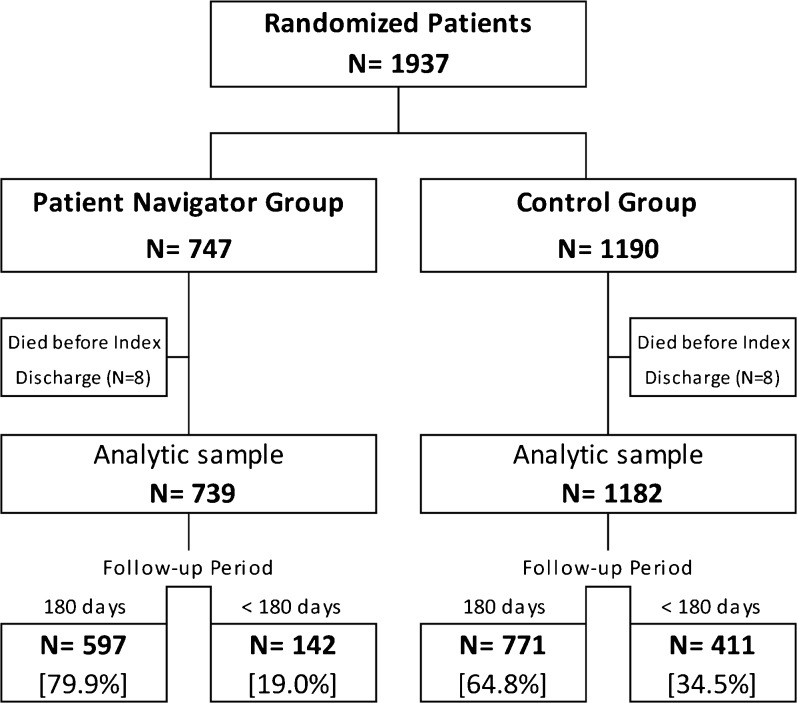
Participants: Patients admitted to the general medicine service with ≥1 readmission risk factor: (1) age ≥ 60; (2) in-network inpatient admission within prior 6 months; (3) index length of stay ≥ 3 days; or (4) admission diagnosis of heart failure or (5) chronic obstructive pulmonary disease. The analytic sample included 739 intervention patients, 1182 controls.
Interventions: Through hospital visits and 30 days of post-discharge telephone outreach, PNs provided coaching and assistance with medications, appointments, transportation, communication with primary care, and self-care.
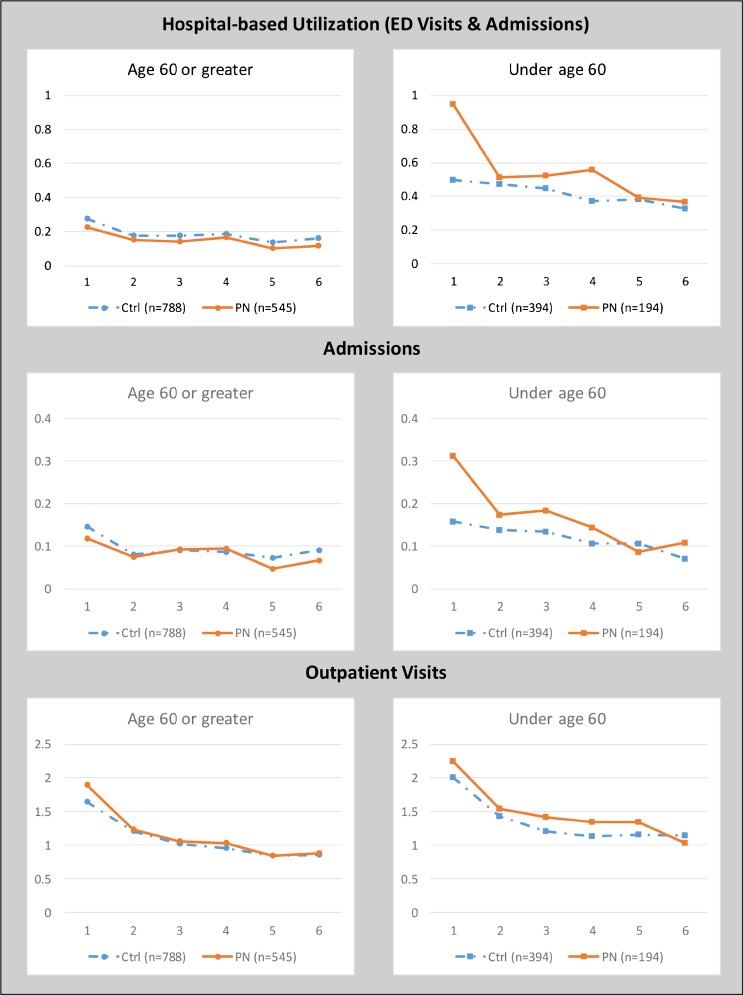
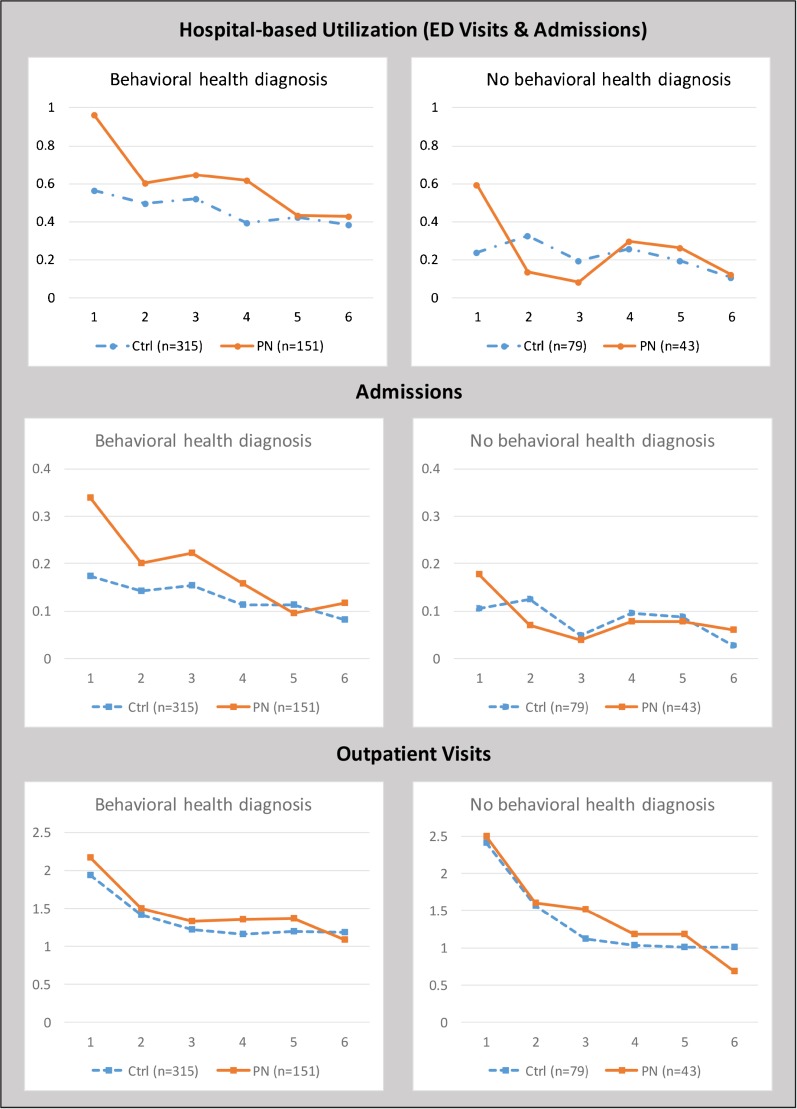
Main measures: Primary outcomes: (1) hospital-based utilization, a composite of ED visits and hospital admissions; (2) hospital admissions; (3) ED visits; and (4) outpatient visits. We evaluated outcomes following an index discharge, stratified by patient age (≥ 60 and < 60 years), using a 180-day time frame divided into six 30-day periods.
Key results: The PN program produced starkly different outcomes by patient age. Among older PN patients, hospital-based utilization was consistently lower than controls, producing an 18.7% cumulative decrease at 180 days (p = 0.038); outpatient visits increased in the critical first 30-day period (p = 0.006). Among younger PN patients, hospital-based utilization was 31.7% (p = 0.038) higher at 180 days, largely reflecting sharply higher utilization in the initial 30 days (p = 0.002), with non-significant changes thereafter; outpatient visits experienced no significant changes.
Conclusions: A PN program serving high-risk safety-net patients differentially impacted patients based on age, and among younger patients, outcomes varied over time. Our findings highlight the importance for future research to evaluate care transition programs among different subpopulations and over longer time periods.
Keywords: care transitions; continuity of care; health care delivery; patient safety; underserved populations.
Conflict of interest statement
Funders
This study was funded by the Agency for Healthcare Research and Quality (1R01HS020628-01A1). A pilot study was funded by Partners Community Healthcare, Inc., and the Department of Population Medicine at Harvard Medical School.
Prior Presentations
None.
Conflict of Interest
The authors declare that they do not have a conflict of interest.
Figures
Comment in
-
Capsule Commentary on Balaban et al., Impact of a Patient Navigator Program on Hospital-Based and Outpatient Utilization Over 180 Days in a Safety-Net Health System.J Gen Intern Med. 2017 Sep;32(9):1025. doi: 10.1007/s11606-017-4102-2. J Gen Intern Med. 2017. PMID: 28634904 Free PMC article. No abstract available.
References
-
- National Quality Forum. Measuring Performance. 2017. http://www.qualityforum.org/Measuring_Performance/Measuring_Performance..... Accessed Jan 10, 2017.
-
- Hospital Compare. 2016. https://www.cms.gov/medicare/quality-initiatives-patient-assessment-inst.... Accessed Jan 10, 2017.
Publication types
MeSH terms
Grants and funding
LinkOut - more resources
Full Text Sources
Other Literature Sources
Miscellaneous
