


Elicitation as a tool to improve the profiles of high-value secondary metabolites and pharmacological properties of Hypericum perforatum
- PMID: 28523644
- PMCID: PMC6585710
- DOI: 10.1111/jphp.12743
Elicitation as a tool to improve the profiles of high-value secondary metabolites and pharmacological properties of Hypericum perforatum
Abstract
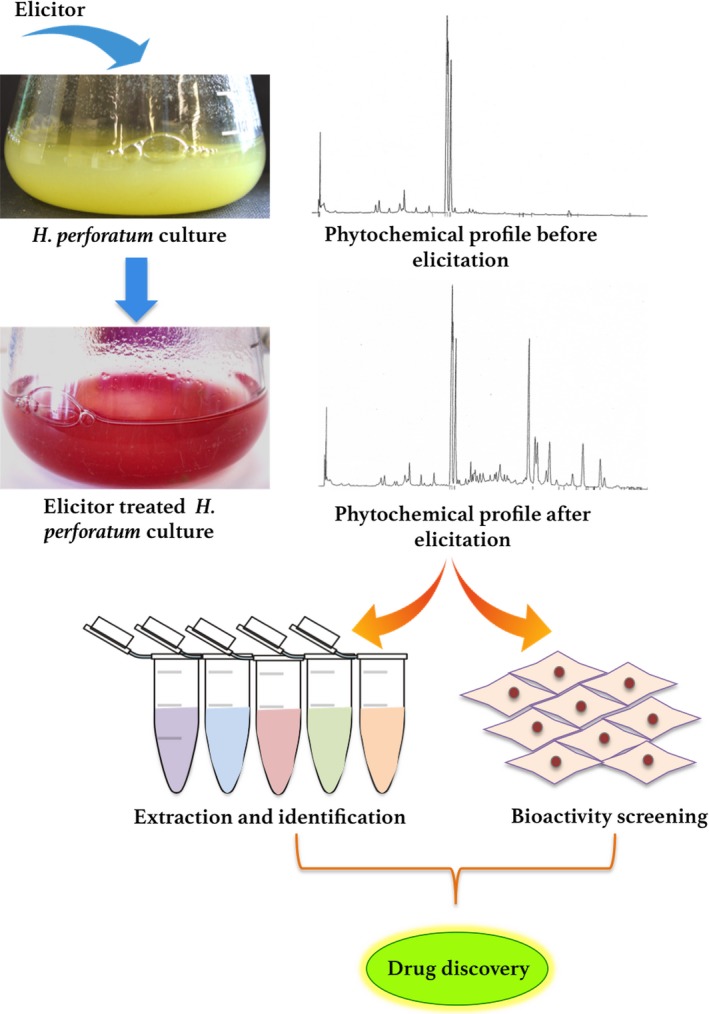
Objectives: In this review, we aim at updating the available information on the improvement of the Hypericum perforatum L. (Hypericaceae) phytochemical profile and pharmacological properties via elicitation.
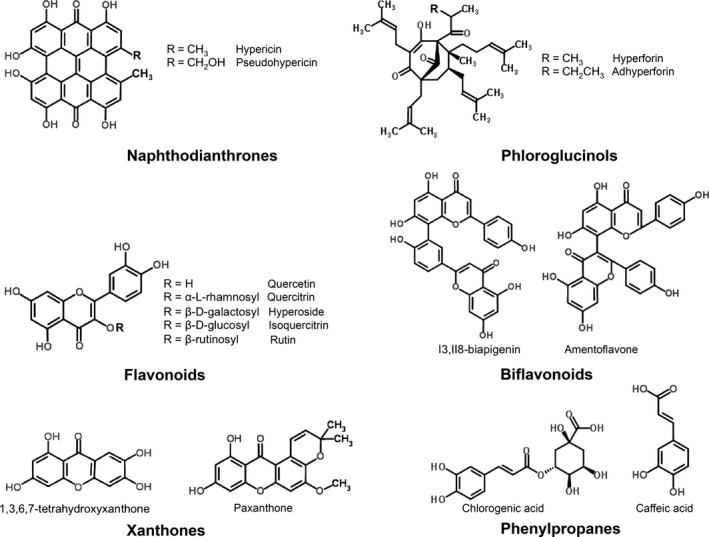
Key findings: Hypericum perforatum seedlings, shoots, roots, calli and cell suspension cultures were treated with diverse elicitors to induce the formation of secondary metabolites. The extracts of the elicitor-treated plant material containing naphthodianthrones, phloroglucinols, xanthones, flavonoids and other new compounds were quantitatively analysed and tested for their bioactivities. While hypericins were mainly produced in H. perforatum cultures containing dark nodules, namely shoots and seedlings, other classes of compounds such as xanthones, phloroglucinols and flavonoids were formed in all types of cultures. The extracts obtained from elicitor-treated samples generally possessed better bioactivities compared to the extract of control biomass.
Summary: Although elicitation is an excellent tool for the production of valuable secondary metabolites in H. perforatum cell and tissue cultures, its exploitation is still in its infancy mainly due to the lack of reproducibility and difficulties in scaling up biomass production.
Keywords: Hypericum perforatum; elicitation; in vitro cultures; nanoparticles; plant secondary metabolism.
© 2017 The Authors. Journal of Pharmacy and Pharmacology published by John Wiley & Sons Ltd on behalf of Royal Pharmaceutical Society.
Figures
References
-
- Shelton RC. St John's wort (Hypericum perforatum) in major depression. J Clin Psychiatry 2009; 70(Suppl 5): 23–27. - PubMed
-
- Franchi GG et al Composition and antioxidant activity in vitro of different St. Johns wort (Hypericum perforatum L.) extracts. J Med Plants Res 2011; 5: 4349–4353.
-
- Klemow KM et al 11 Medical Attributes of St. John's Wort (Hypericum perforatum). Lester Packer, PhD. 2011: 211. - PubMed
-
- Silva BA et al Phytochemical and antioxidant characterization of Hypericum perforatum alcoholic extracts. Food Chem 2005; 90: 157–167.
Publication types
MeSH terms
Substances
Grants and funding
LinkOut - more resources
Full Text Sources
Other Literature Sources
