Functional dissociation of stimulus intensity encoding and predictive coding of pain in the insula
- PMID: 28524817
- PMCID: PMC5470871
- DOI: 10.7554/eLife.24770
Functional dissociation of stimulus intensity encoding and predictive coding of pain in the insula
Abstract
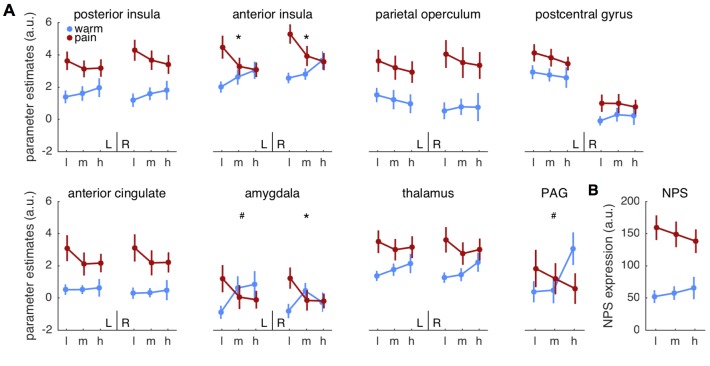
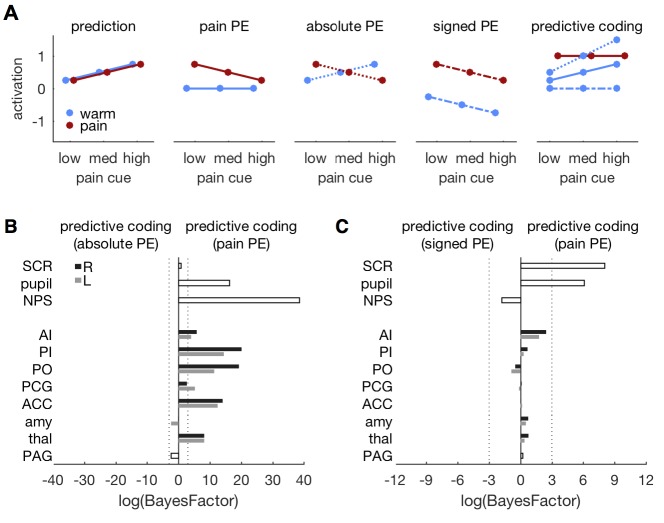
The computational principles by which the brain creates a painful experience from nociception are still unknown. Classic theories suggest that cortical regions either reflect stimulus intensity or additive effects of intensity and expectations, respectively. By contrast, predictive coding theories provide a unified framework explaining how perception is shaped by the integration of beliefs about the world with mismatches resulting from the comparison of these beliefs against sensory input. Using functional magnetic resonance imaging during a probabilistic heat pain paradigm, we investigated which computations underlie pain perception. Skin conductance, pupil dilation, and anterior insula responses to cued pain stimuli strictly followed the response patterns hypothesized by the predictive coding model, whereas posterior insula encoded stimulus intensity. This novel functional dissociation of pain processing within the insula together with previously observed alterations in chronic pain offer a novel interpretation of aberrant pain processing as disturbed weighting of predictions and prediction errors.
Keywords: expectations; fMRI; human; neuroscience; pain; predictive coding; somatosensory perception.
Conflict of interest statement
The authors declare that no competing interests exist.
Figures






References
-
- Apkarian AV, Krauss BR, Fredrickson BE, Szeverenyi NM. Imaging the pain of low back pain: functional magnetic resonance imaging in combination with monitoring subjective pain perception allows the study of clinical pain states. Neuroscience Letters. 2001;299:57–60. doi: 10.1016/S0304-3940(01)01504-X. - DOI - PubMed
Publication types
MeSH terms
LinkOut - more resources
Full Text Sources
Other Literature Sources
Medical