


XLF-mediated NHEJ activity in hepatocellular carcinoma therapy resistance
- PMID: 28526069
- PMCID: PMC5437682
- DOI: 10.1186/s12885-017-3345-y
XLF-mediated NHEJ activity in hepatocellular carcinoma therapy resistance
Abstract
Background: DNA repair pathways are used by cancer cells to overcome many standard anticancer treatments, causing therapy resistance. Here, we investigated the role of XRCC4-like factor (XLF), a core member of the non-homologous end joining (NHEJ) repair pathway, in chemoresistance in hepatocellular carcinoma (HCC).
Methods: qRT-PCR analysis and western blotting were performed to detect expression levels of genes and proteins related to NHEJ. NHEJ repair capacity was assessed in vitro (cell-free) and in vivo by monitoring the activity of the NHEJ pathway. Cell viability and IC50 assays were used to measure sensitivity to drug therapy. A xenograft HCC model was used to develop methods of targeting XLF-induced chemosensitization. Clinicopathological analysis was conducted on patients with HCC treated with transarterial chemoembolization (TACE).
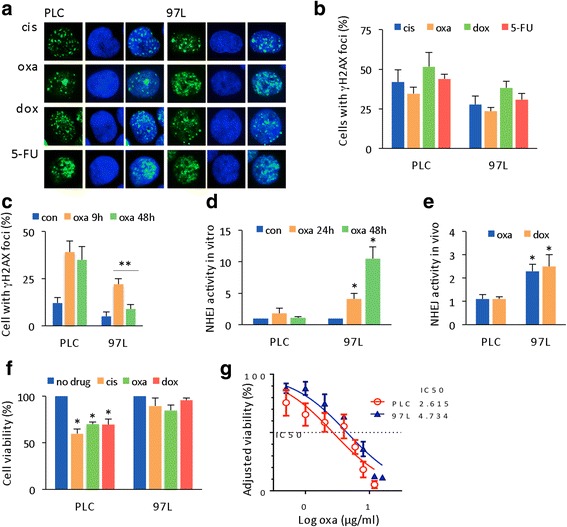
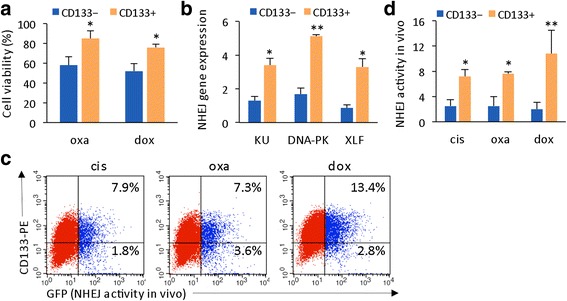
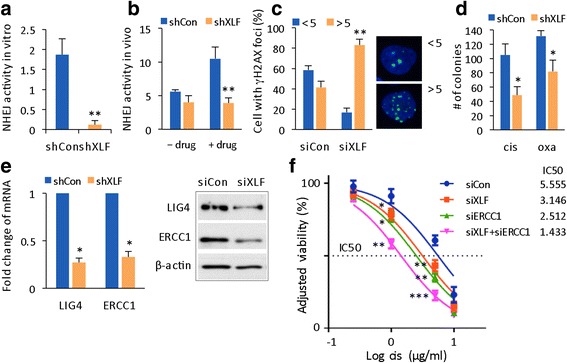
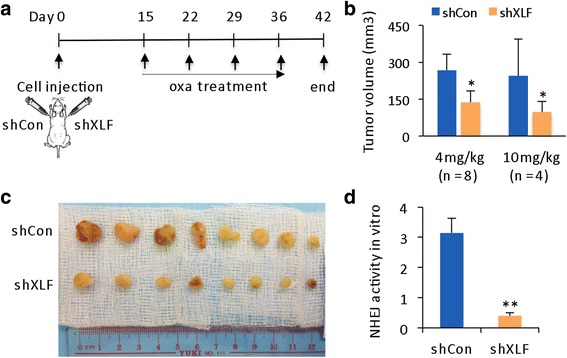
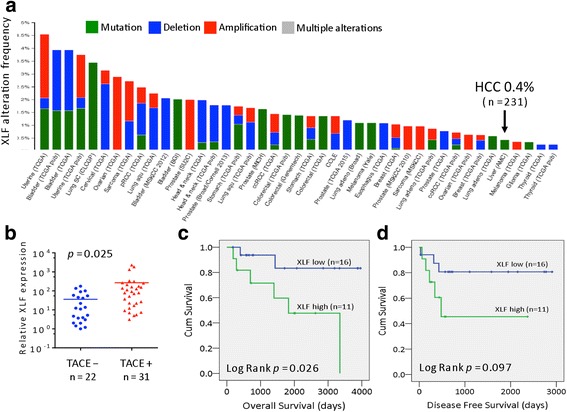
Results: Many conventional cancer chemotherapeutics induce DNA double-strand breaks (DSBs). HCC cells respond to these breaks by increasing their NHEJ activity, resulting in resistance. XLF-knockdown cells show an inhibition of NHEJ activity in both cell-free and live-cell assays as well as a high level of unrepaired cellular DSBs. These results indicate that XLF facilitates DNA end-joining and therefore promotes NHEJ activity in cancer cells. Consequently, knockdown of XLF significantly chemosensitized resistant cells both in vitro and in xenograft tumors. A low rate of XLF genomic alteration was found in patients with primary HCC, but XLF expression was induced after drug treatment. Clinically, a high level of XLF expression is significantly associated with advanced HCC and shorter overall survival.
Conclusion: Chemotherapy-induced overexpression of XLF and XLF-mediated enhancements in NHEJ activity contribute to chemoresistance in HCC cells and patients with HCC. Targeting XLF to modulate DSB repair could enhance drug sensitivity and may be a therapeutically useful addition to conventional therapy.
Keywords: Chemoresistance; DNA repair; HCC; NHEJ activity; XLF.
Figures
References
MeSH terms
Substances
LinkOut - more resources
Full Text Sources
Other Literature Sources
Medical
Molecular Biology Databases
Miscellaneous
