


Genome-Based Identification of Heterotic Patterns in Rice
- PMID: 28527137
- PMCID: PMC5438337
- DOI: 10.1186/s12284-017-0163-4
Genome-Based Identification of Heterotic Patterns in Rice
Abstract
Background: Hybrid rice breeding facilitates to increase grain yield and yield stability. Long-term success of hybrid breeding depends on the recognition of high-yielding complementary heterotic patterns, which is lacking in crops like rice.
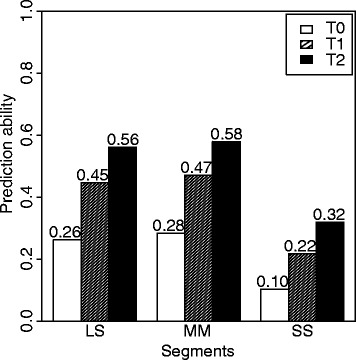
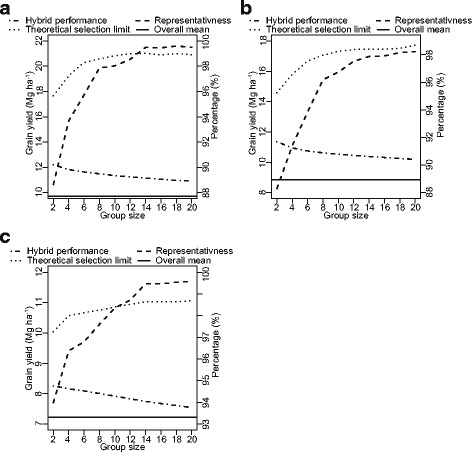
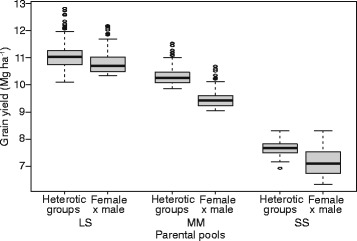
Result: The main goal of this study was to evaluate the potential and limits to use genomics for establishing heterotic patterns in rice. For this purpose, data of a commercial hybrid rice breeding program targeted to India was analyzed, including 1,960 phenotyped hybrids from three market segments and 262 genotyped parental lines. Our cross-validation study revealed that grain yield of all potential single-crosses can be accurately predicted. Based on the full matrix of hybrid performances, high-yielding heterotic patterns were identified. These heterotic patterns increased grain yield up to 9% compared to the currently employed groups. Heterotic groups of around 14 individuals reflect a good compromise between long-term and short-term selection response.
Conclusions: Our findings clearly underlined the benefits of a genome-based establishment of heterotic patterns in rice as a requirement for a sustainable long-term success of hybrid rice breeding.
Keywords: Genome-Wide Predictions; Heterotic Groups; Heterotic Pattern; Hybrid Rice.
Figures
References
-
- Barclay A. Hybridizing the world. Rice Today. 2010;9(4):32–5.
-
- Cheng S-H, Cao L-Y, Zhuang J-Y, Chen S-G, Zhan X-D, Fan Y-Y, Zhu D-F, Min S-K. Super Hybrid Rice Breeding in China: Achievements and Prospects. J Integr Plant Biol. 2007;49:805–10. doi: 10.1111/j.1744-7909.2007.00514.x. - DOI
LinkOut - more resources
Full Text Sources
Other Literature Sources
