


Clinical and Psychosocial Predictors of Urological Chronic Pelvic Pain Symptom Change in 1 Year: A Prospective Study from the MAPP Research Network
- PMID: 28528930
- PMCID: PMC5720154
- DOI: 10.1016/j.juro.2017.05.065
Clinical and Psychosocial Predictors of Urological Chronic Pelvic Pain Symptom Change in 1 Year: A Prospective Study from the MAPP Research Network
Abstract
Purpose: We examined baseline clinical and psychosocial characteristics that predict 12-month symptom change in men and women with urological chronic pelvic pain syndromes.
Materials and methods: A total of 221 female and 176 male patients with urological chronic pelvic pain syndromes were recruited from 6 academic medical centers in the United States and evaluated at baseline with a comprehensive battery of symptom, psychosocial and illness-impact measures. Based on biweekly symptom reports, a functional clustering procedure classified participant outcome as worse, stable or improved on pain and urinary symptom severity. Cumulative logistic modeling was used to examine individual predictors associated with symptom change as well as multiple predictor combinations and interactions.
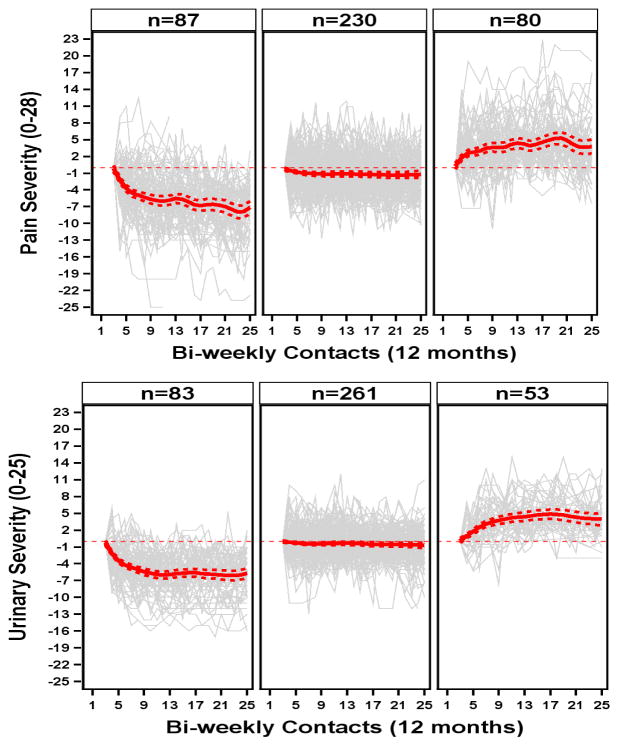
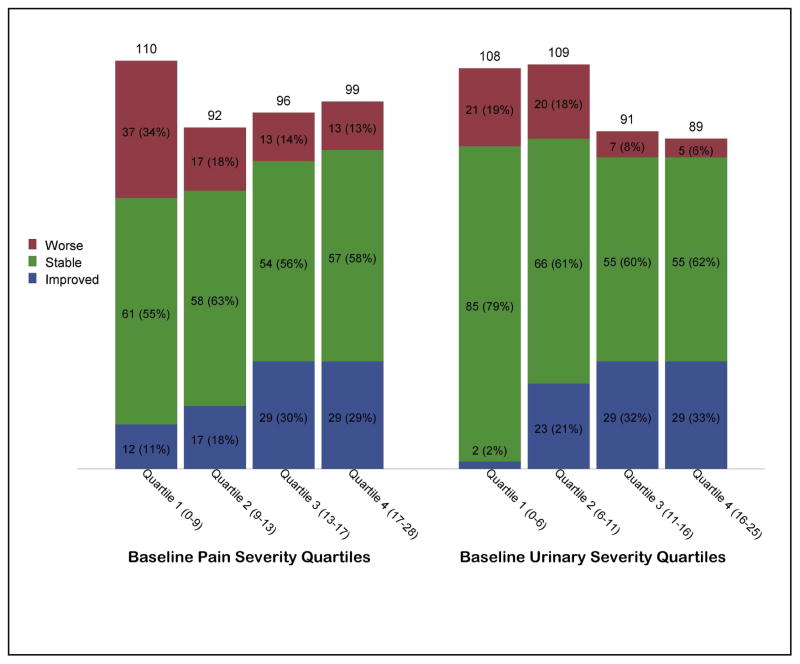
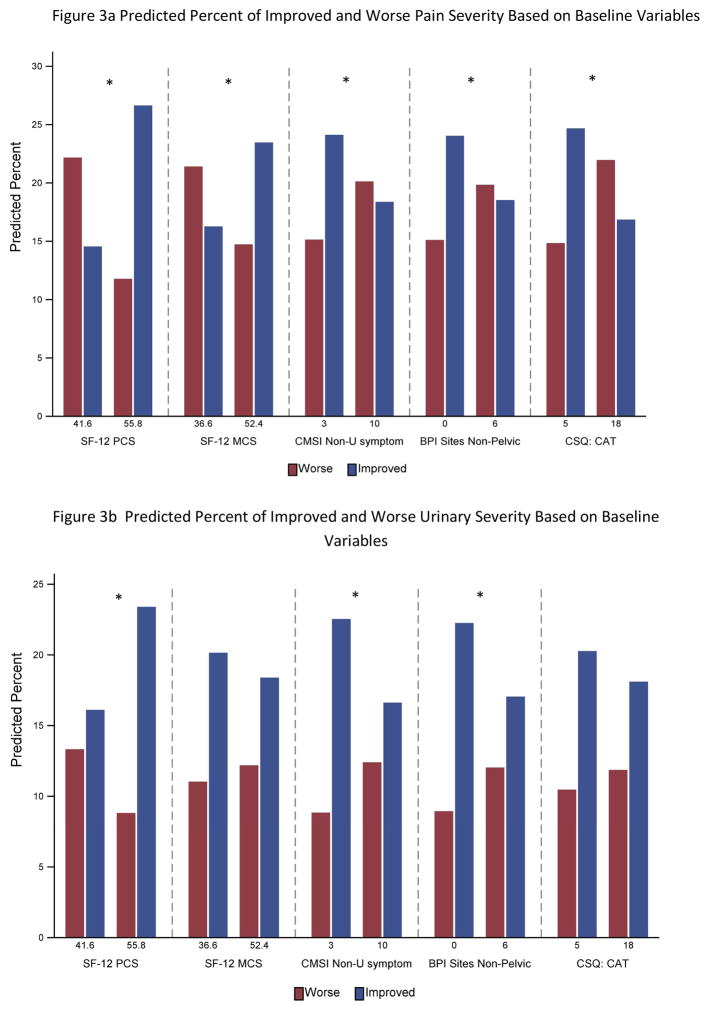
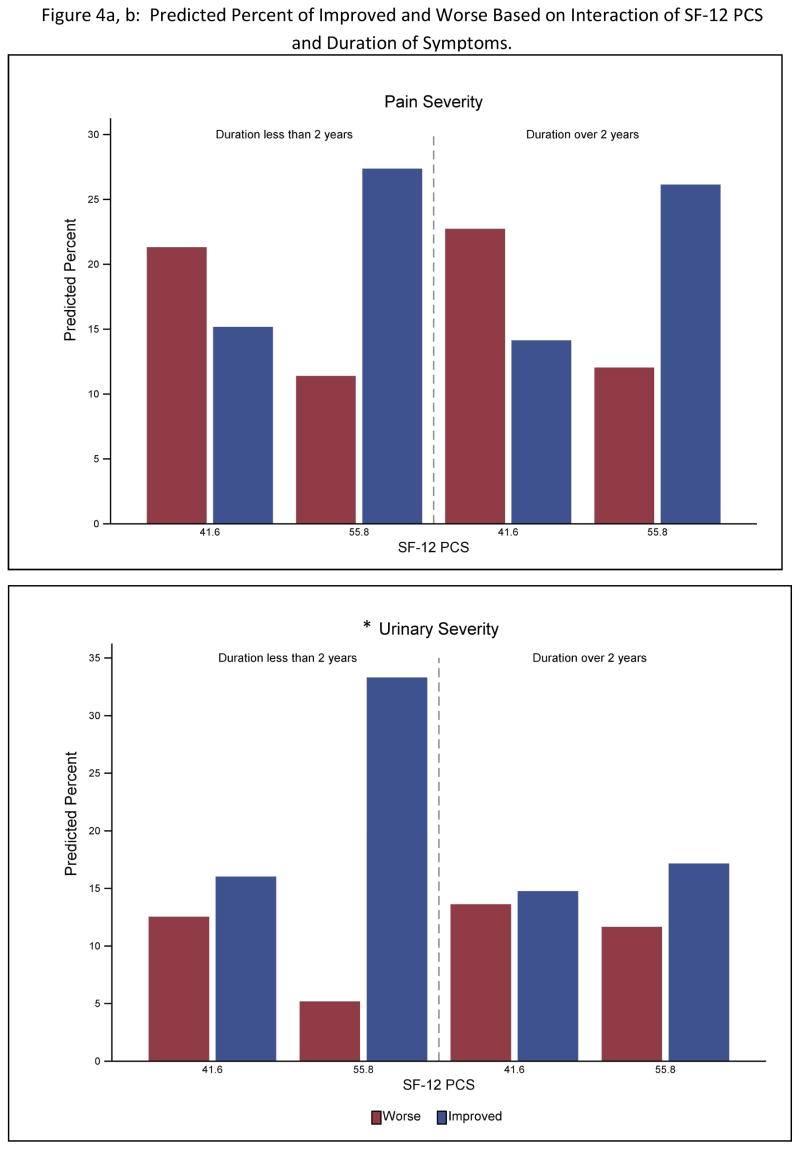
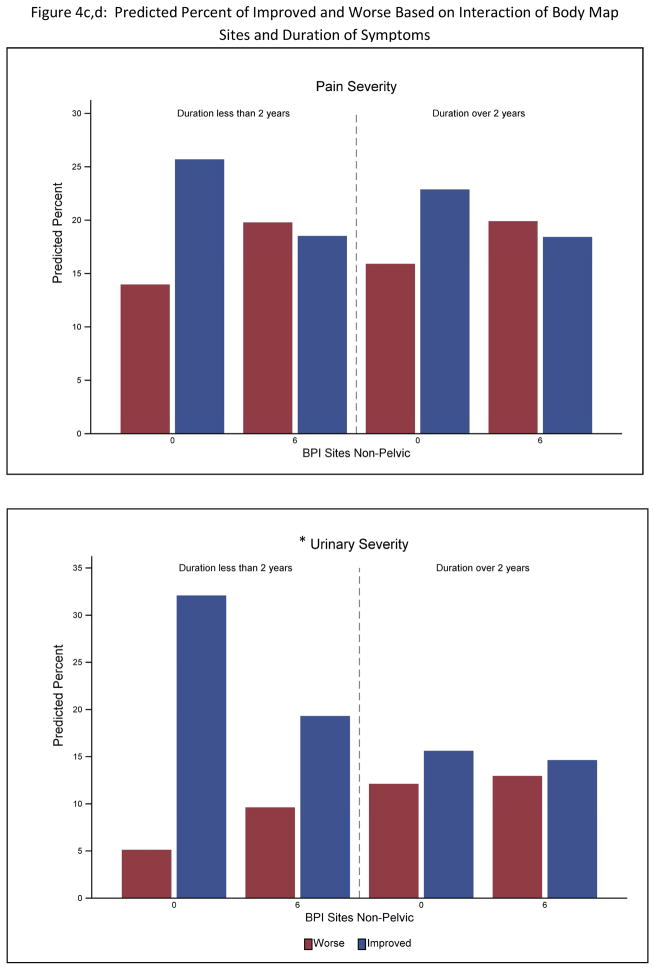
Results: About 60% of participants had stable symptoms with smaller numbers (13% to 22%) showing clear symptom worsening or improvement. For pain and urinary outcomes the extent of widespread pain, amount of nonurological symptoms and poorer overall health were predictive of worsening outcomes. Anxiety, depression and general mental health were not significant predictors of outcomes but pain catastrophizing and self-reported stress were associated with pain outcome. Prediction models did not differ between men and women and for the most part they were independent of symptom duration and age.
Conclusions: These results demonstrate for the first time in a large multisite prospective study that presence of widespread pain, nonurological symptoms and poorer general health are risk factors for poorer pain and urinary outcomes in men and women. The results point to the importance of broad based assessment for urological chronic pelvic pain syndromes and future studies of the mechanisms that underlie these findings.
Keywords: cystitis; interstitial; pelvic pain; prostate; prostatitis; urinary bladder.
Copyright © 2017 American Urological Association Education and Research, Inc. Published by Elsevier Inc. All rights reserved.
Figures
Comment in
-
Editorial Comment.J Urol. 2017 Oct;198(4):856-857. doi: 10.1016/j.juro.2017.05.082. Epub 2017 Jul 5. J Urol. 2017. PMID: 28686877 No abstract available.
References
-
- Krieger JN, Nyberg L, Jr, Nickel JC. NIH consensus definition and classification of prostatitis. Jama. 1999;282:236–7. - PubMed
Publication types
MeSH terms
Grants and funding
LinkOut - more resources
Full Text Sources
Other Literature Sources
Medical
