


Determining the Association between Language and Cognitive Tests in Poststroke Aphasia
- PMID: 28529495
- PMCID: PMC5418218
- DOI: 10.3389/fneur.2017.00149
Determining the Association between Language and Cognitive Tests in Poststroke Aphasia
Abstract
Background: Individuals with aphasia are often excluded from studies exploring poststroke cognition because so many of the standard cognitive assessments rely on language ability. Our primary objective was to examine the association between performance on cognitive tests and performance on comprehension and naming tests in poststroke aphasia. Second, we aimed to determine the association between language performance and a real-life measure of cognition (Kettle Test). Third, we explored the feasibility of administering cognitive tests in aphasia.
Methods: Thirty-six participants with poststroke aphasia and 32 controls were assessed on a battery of pen-and-paper cognitive tests recommended in stroke. Auditory comprehension was measured using the Comprehensive Aphasia Test and naming was measured using the Boston Naming Test. Twenty-two community dwelling participants with aphasia and controls were also asked to complete the Kettle Test. Multiple linear regressions were used to explore the relationship between language performance and performance on the cognitive tests. Feasibility was determined by quantifying missing data.
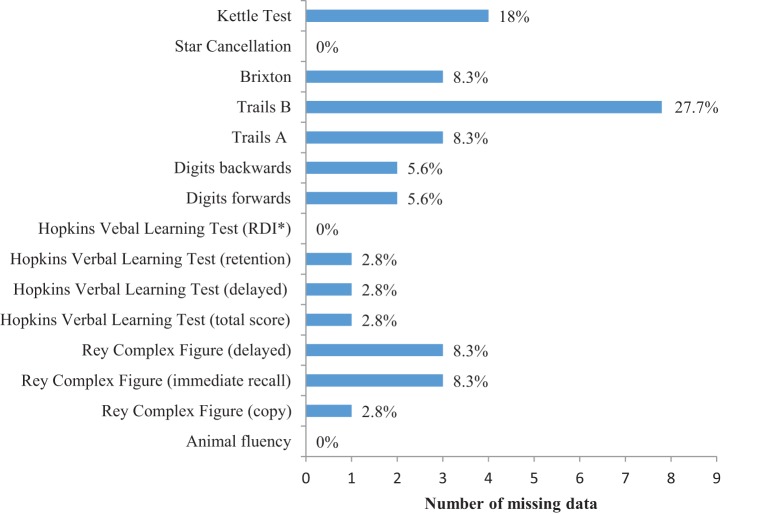
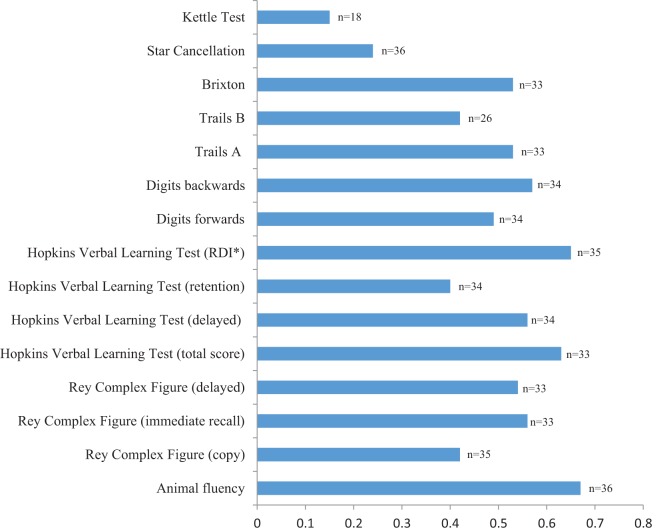
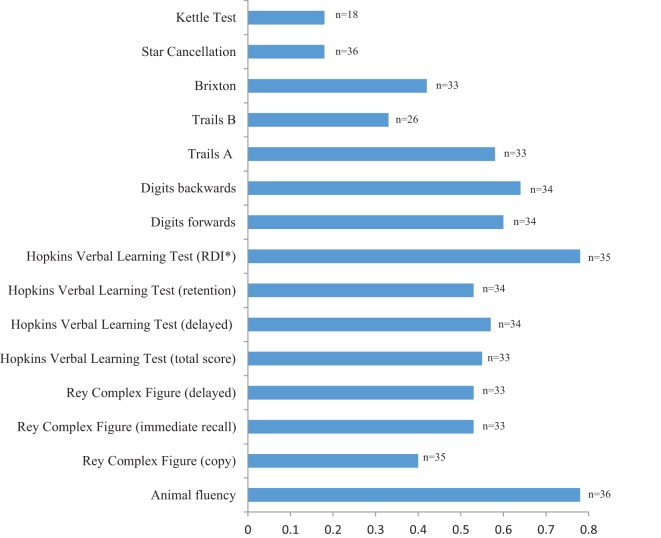
Results: The cognitive tests with the highest variance accounted for by auditory comprehension and naming were animal fluency (R2 = 0.67, R2 = 0.78) and the Hopkins Verbal Learning Test (recognition discrimination index) (R2 = 0.65, R2 = 0.78). All cognitive tests were significantly associated with auditory comprehension and naming, except for the Star Cancellation Test and the Kettle Test. Thirty-three percent of participants with aphasia were unable to complete all the cognitive tests.
Conclusion: Language and non-linguistic cognitive processes are often interrelated. Most pen-and-paper cognitive tests were significantly associated with both auditory comprehension and naming, even in tests that do not require a verbal response. Language performance was not significantly associated with a real-life cognitive performance measure. Task instructions, stimuli, and responses for completion need to be tailored for individuals with aphasia to minimize the influence of language deficits when testing non-linguistic cognitive performance.
Keywords: aphasia; cognition; cognitive impairments; neuropsychological tests; pen-and-paper tests; stroke.
Figures
References
LinkOut - more resources
Full Text Sources
Other Literature Sources
