


Endoglin controls blood vessel diameter through endothelial cell shape changes in response to haemodynamic cues
- PMID: 28530658
- PMCID: PMC5455977
- DOI: 10.1038/ncb3528
Endoglin controls blood vessel diameter through endothelial cell shape changes in response to haemodynamic cues
Abstract
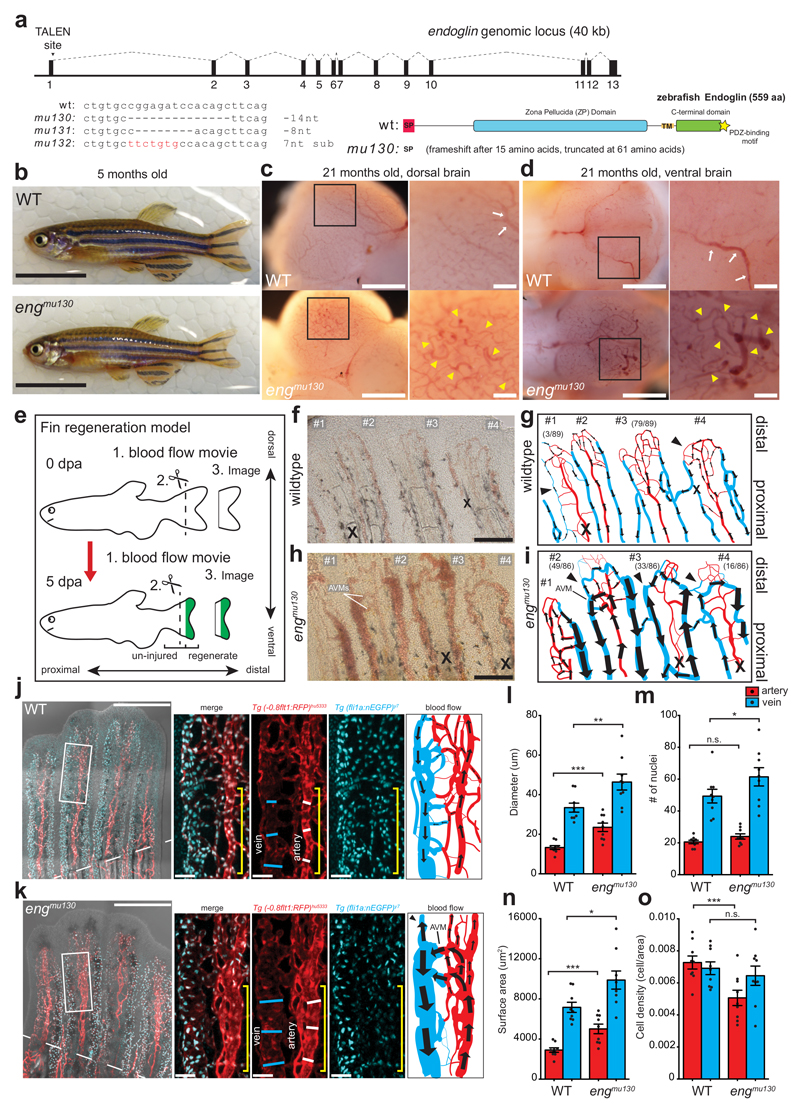
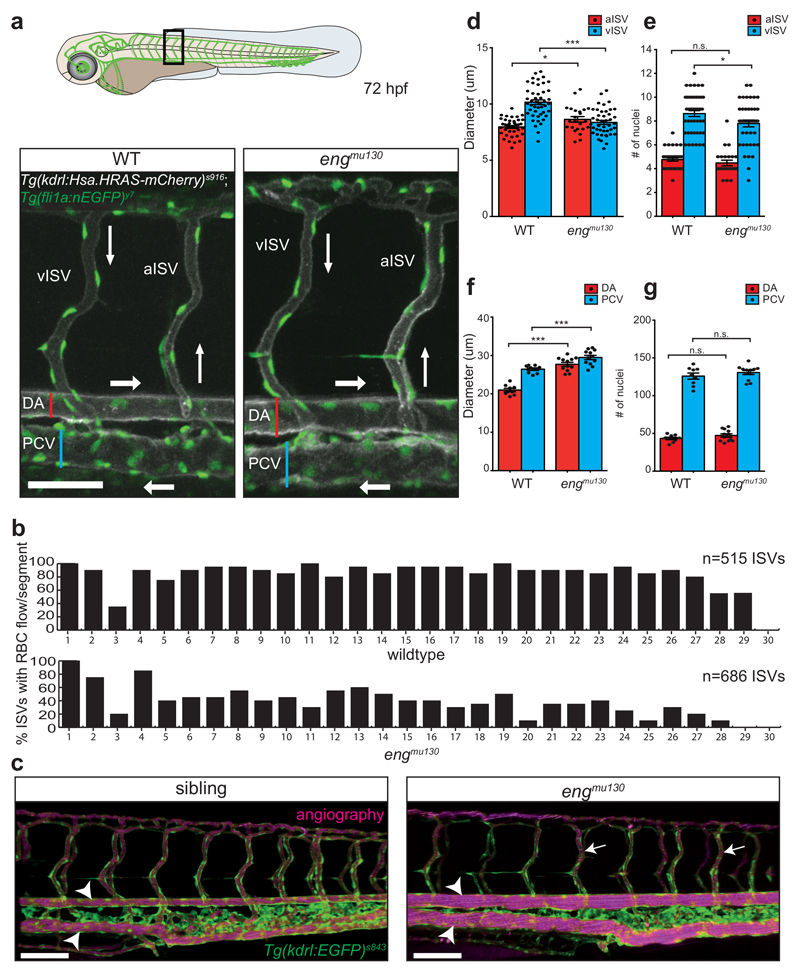
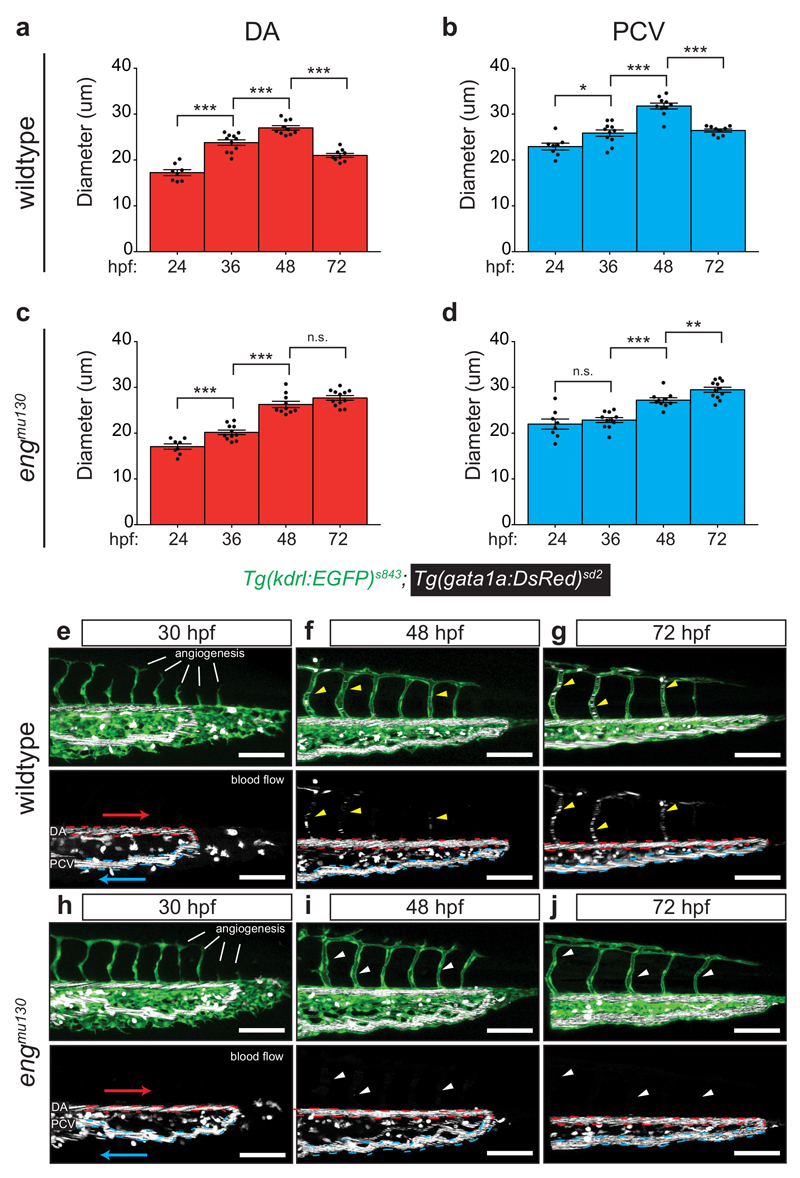
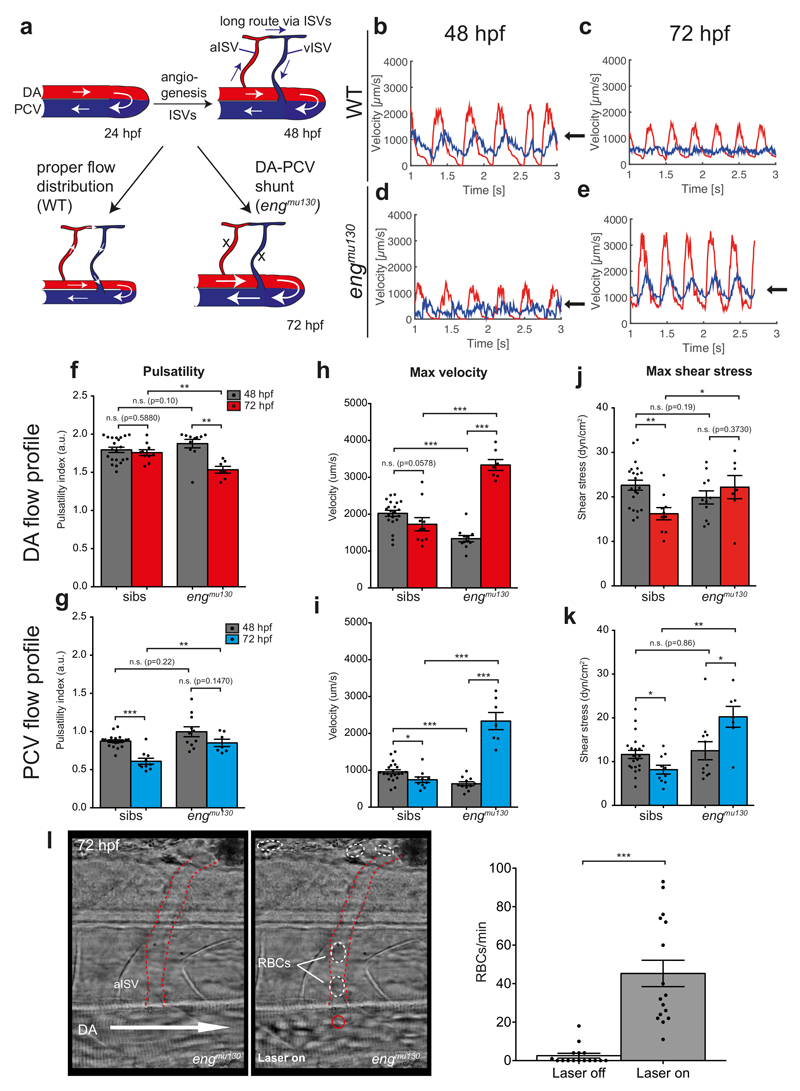
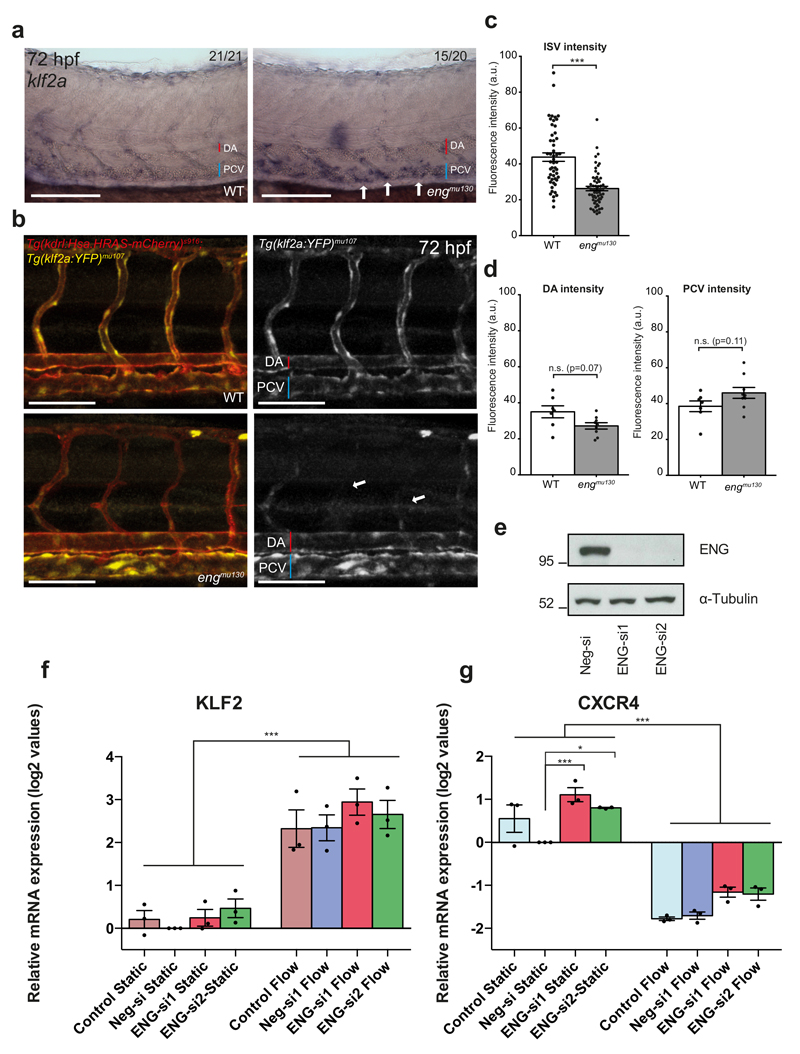
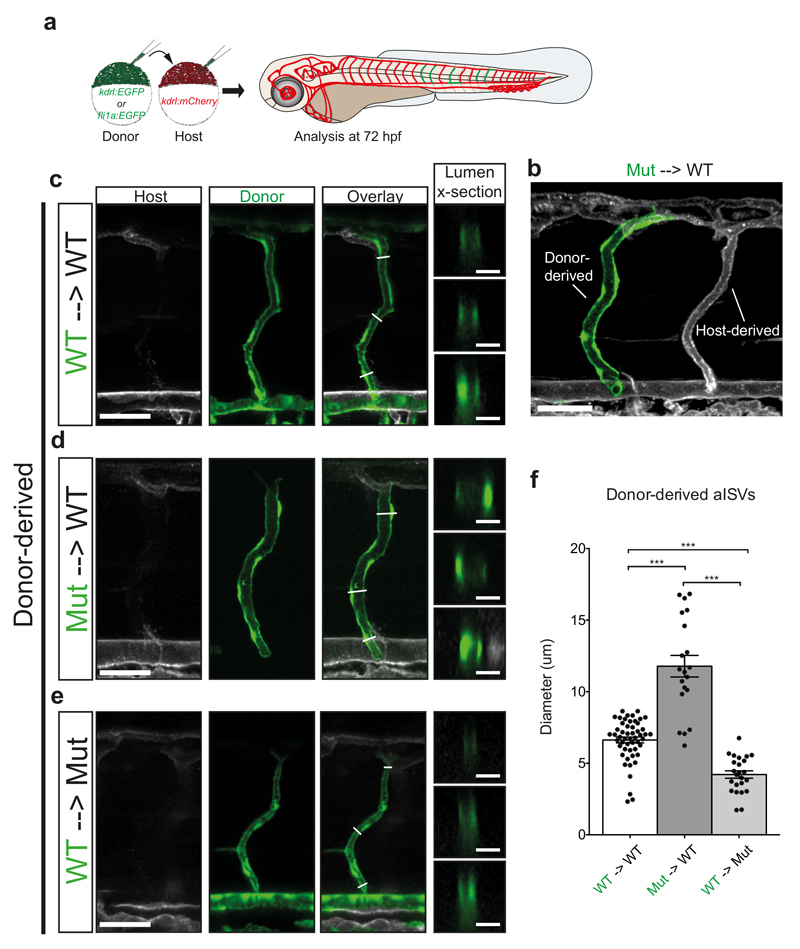
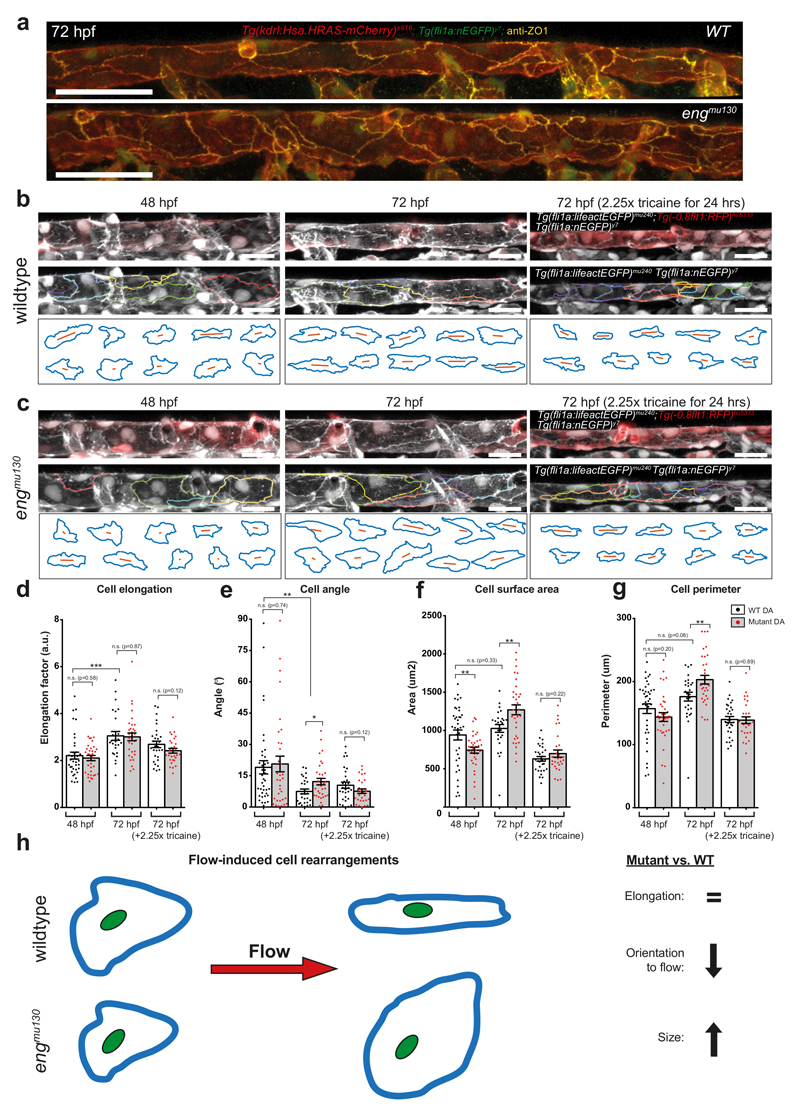
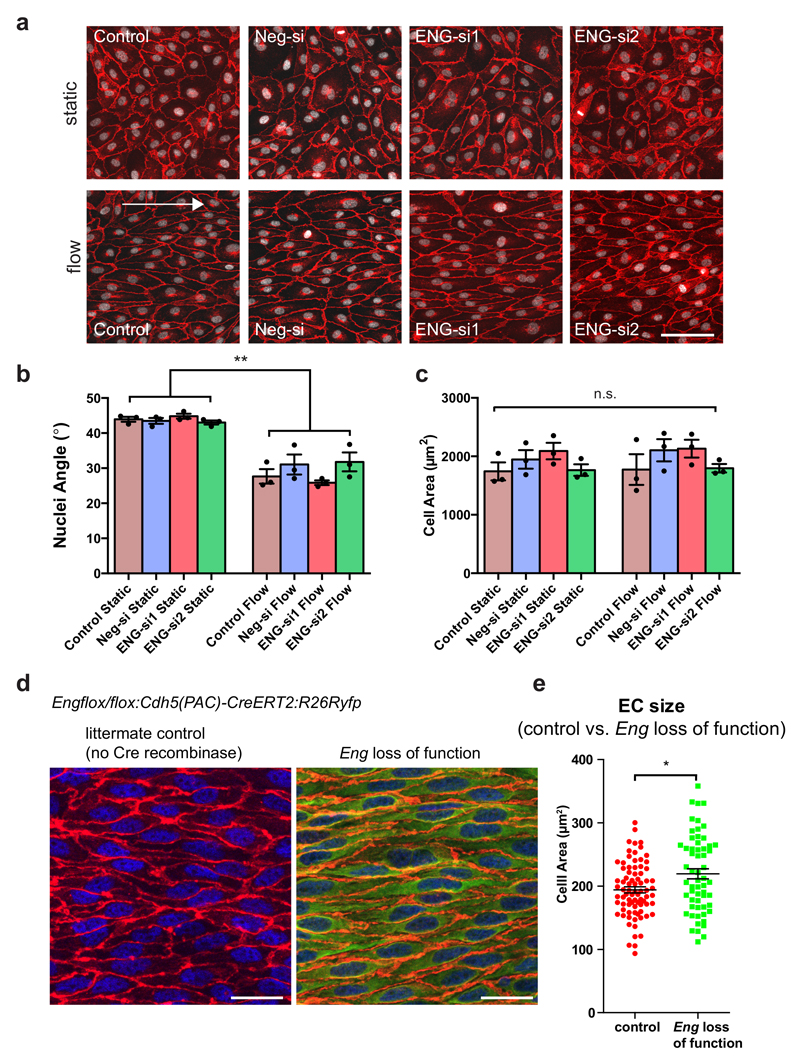
The hierarchical organization of properly sized blood vessels ensures the correct distribution of blood to all organs of the body, and is controlled via haemodynamic cues. In current concepts, an endothelium-dependent shear stress set point causes blood vessel enlargement in response to higher flow rates, while lower flow would lead to blood vessel narrowing, thereby establishing homeostasis. We show that during zebrafish embryonic development increases in flow, after an initial expansion of blood vessel diameters, eventually lead to vessel contraction. This is mediated via endothelial cell shape changes. We identify the transforming growth factor beta co-receptor endoglin as an important player in this process. Endoglin mutant cells and blood vessels continue to enlarge in response to flow increases, thus exacerbating pre-existing embryonic arterial-venous shunts. Together, our data suggest that cell shape changes in response to biophysical cues act as an underlying principle allowing for the ordered patterning of tubular organs.
Conflict of interest statement
The authors declare no competing financial interests.
Figures
Comment in
-
Morph or Move? How Distinct Endothelial Cell Responses to Blood Flow Shape Vascular Networks.Dev Cell. 2017 Jun 19;41(6):574-576. doi: 10.1016/j.devcel.2017.06.008. Dev Cell. 2017. PMID: 28633012
References
-
- Kamiya A, Togawa T. Adaptive regulation of wall shear stress to flow change in the canine carotid artery. Am J Physiol. 1980;239:H14–21. - PubMed
Publication types
MeSH terms
Substances
Grants and funding
LinkOut - more resources
Full Text Sources
Other Literature Sources
Molecular Biology Databases
