


Multitargeted Imidazoles: Potential Therapeutic Leads for Alzheimer's and Other Neurodegenerative Diseases
- PMID: 28530811
- PMCID: PMC5483893
- DOI: 10.1021/acs.jmedchem.7b00475
Multitargeted Imidazoles: Potential Therapeutic Leads for Alzheimer's and Other Neurodegenerative Diseases
Abstract
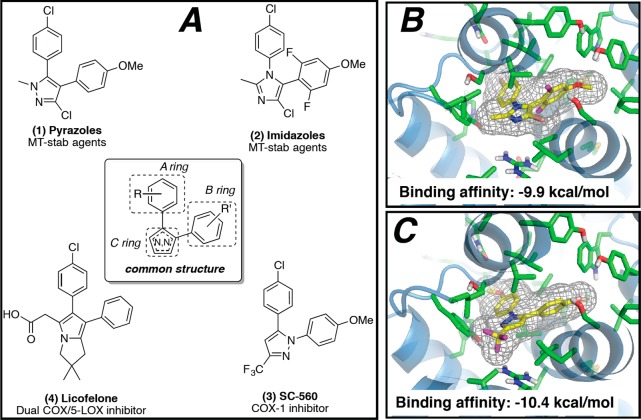
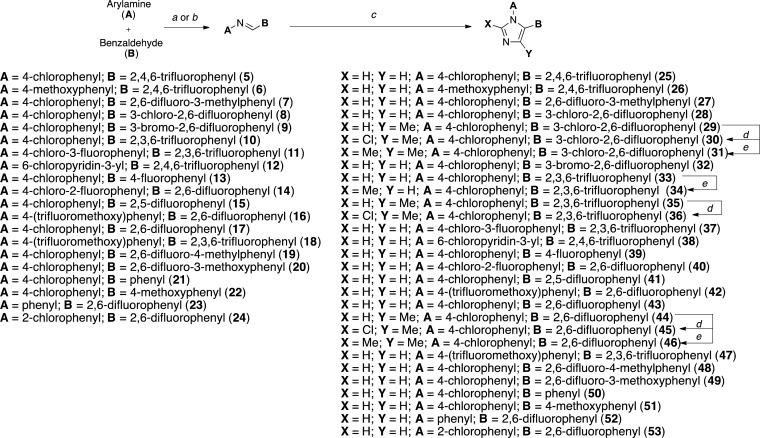
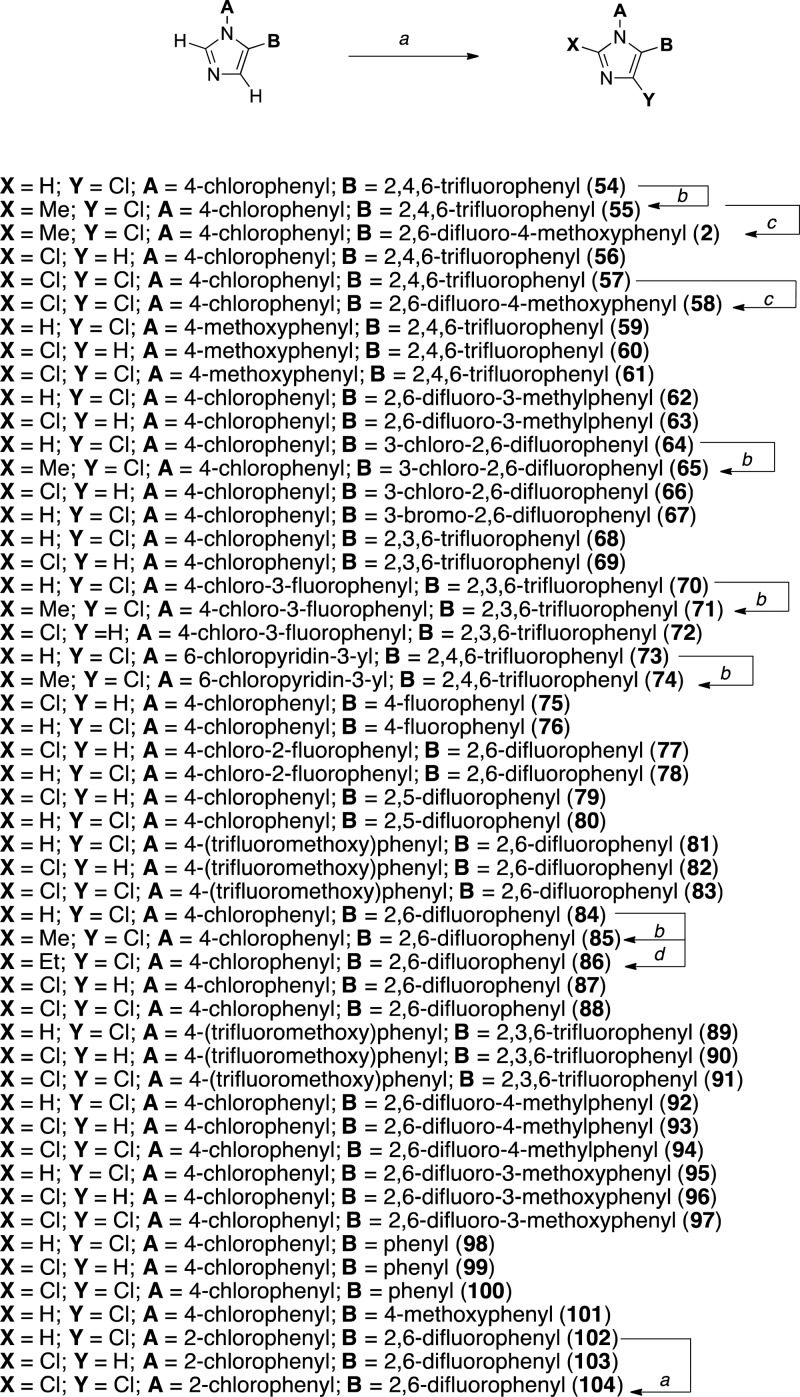
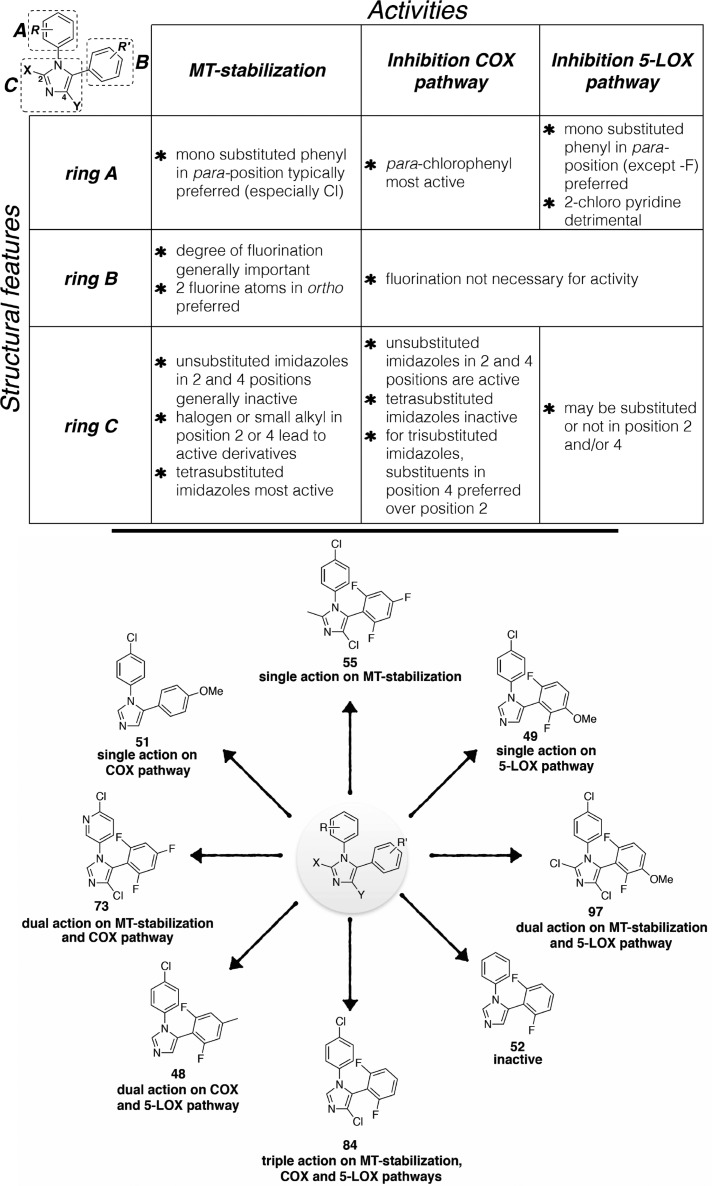
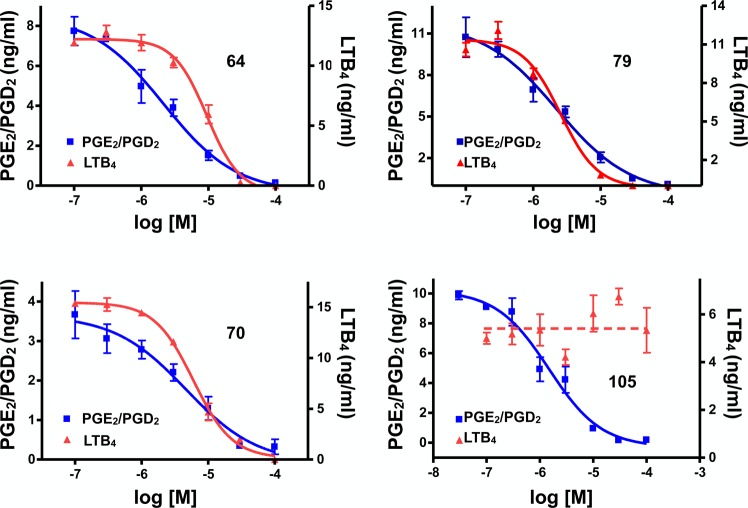
Alzheimer's disease (AD) is a complex, multifactorial disease in which different neuropathological mechanisms are likely involved, including those associated with pathological tau and Aβ species as well as neuroinflammation. In this context, the development of single multitargeted therapeutics directed against two or more disease mechanisms could be advantageous. Starting from a series of 1,5-diarylimidazoles with microtubule (MT)-stabilizing activity and structural similarities with known NSAIDs, we conducted structure-activity relationship studies that led to the identification of multitargeted prototypes with activities as MT-stabilizing agents and/or inhibitors of the cyclooxygenase (COX) and 5-lipoxygenase (5-LOX) pathways. Several examples are brain-penetrant and exhibit balanced multitargeted in vitro activity in the low μM range. As brain-penetrant MT-stabilizing agents have proven effective against tau-mediated neurodegeneration in animal models, and because COX- and 5-LOX-derived eicosanoids are thought to contribute to Aβ plaque deposition, these 1,5-diarylimidazoles provide tools to explore novel multitargeted strategies for AD and other neurodegenerative diseases.
Conflict of interest statement
The authors declare no competing financial interest.
Figures
References
-
- Makani V.; Zhang B.; Han H.; Yao Y.; Lassalas P.; Lou K.; Paterson I.; Lee V. M. Y.; Trojanowski J. Q.; Ballatore C.; Smith A. B. III; Brunden K. R. Evaluation of the brain-penetrant microtubule-stabilizing agent, dictyostatin, in the PS19 tau transgenic mouse model of tauopathy. Acta Neuropathol. Commun. 2016, 4, 106. 10.1186/s40478-016-0378-4. - DOI - PMC - PubMed
-
- Zhang B.; Carroll J.; Trojanowski J. Q.; Yao Y.; Iba M.; Potuzak J. S.; Hogan A. M.; Xie S. X.; Ballatore C.; Smith A. B. III; Lee V. M.; Brunden K. R. The microtubule-stabilizing agent, epothilone D, reduces axonal dysfunction, neurotoxicity, cognitive deficits, and Alzheimer-like pathology in an interventional study with aged tau transgenic mice. J. Neurosci. 2012, 32, 3601–3611. 10.1523/JNEUROSCI.4922-11.2012. - DOI - PMC - PubMed
Publication types
MeSH terms
Substances
Grants and funding
LinkOut - more resources
Full Text Sources
Other Literature Sources
Chemical Information
Medical
Research Materials
