Monitoring the elimination of human African trypanosomiasis: Update to 2014
- PMID: 28531222
- PMCID: PMC5456402
- DOI: 10.1371/journal.pntd.0005585
Monitoring the elimination of human African trypanosomiasis: Update to 2014
Abstract
Background: The World Health Organization (WHO) has targeted the elimination of Human African trypanosomiasis (HAT) 'as a public health problem' by 2020. The selected indicators of elimination should be monitored every two years, and we provide here a comprehensive update to 2014. The monitoring system is underpinned by the Atlas of HAT.
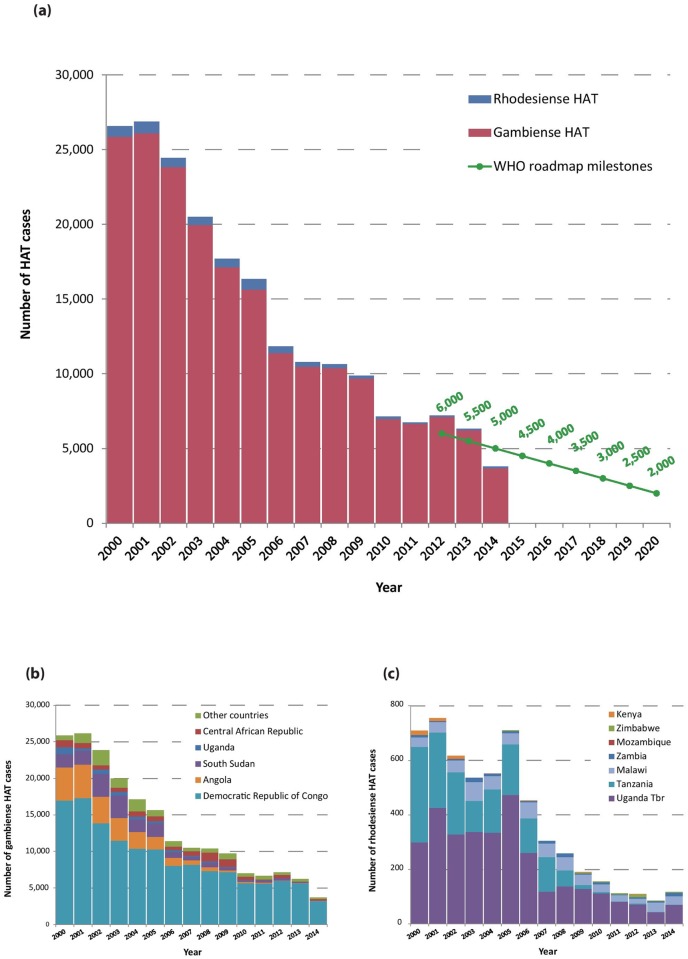
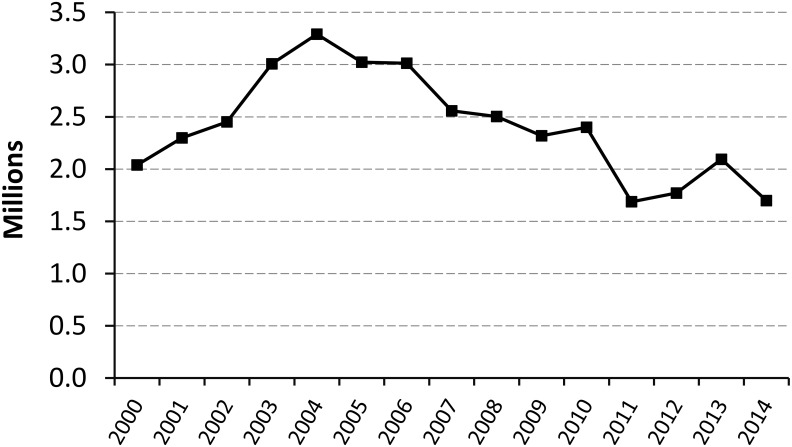
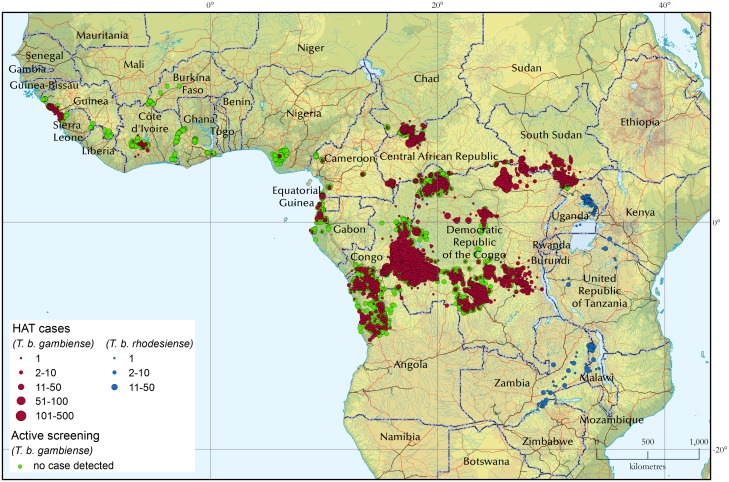
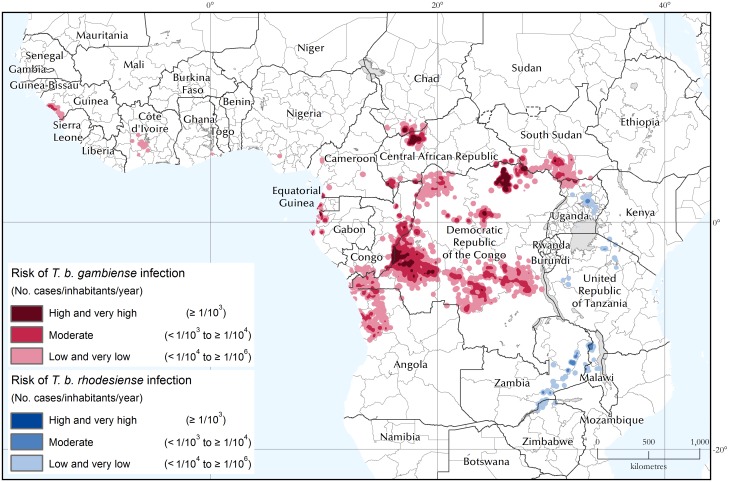
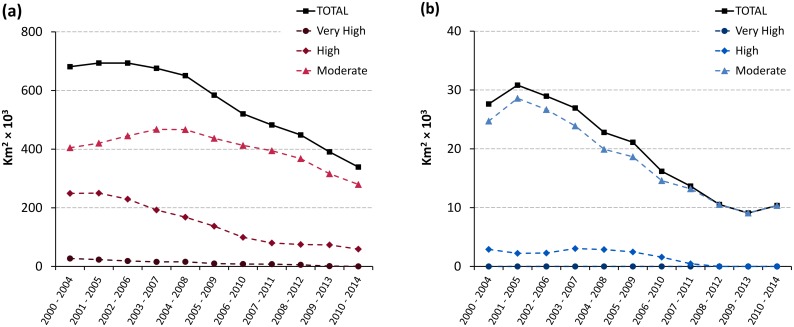
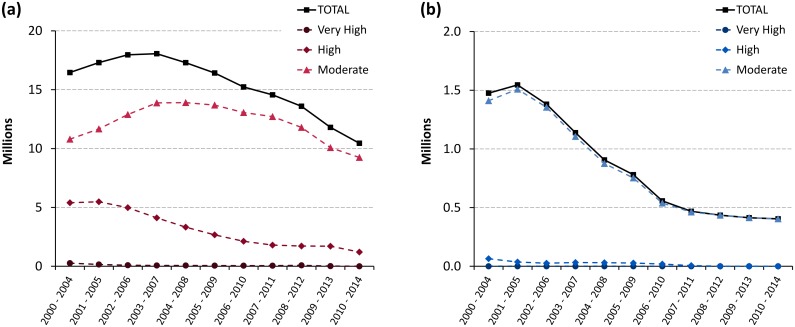
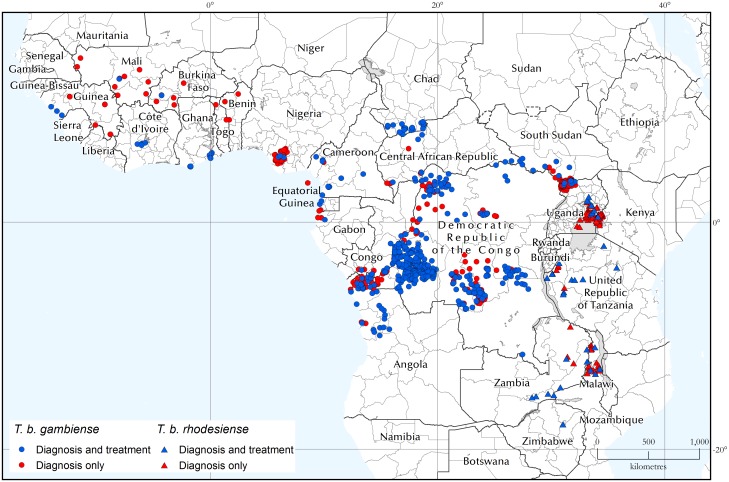
Results: With 3,797 reported cases in 2014, the corresponding milestone (5,000 cases) was surpassed, and the 2020 global target of 'fewer than 2,000 reported cases per year' seems within reach. The areas where HAT is still a public health problem (i.e. > 1 HAT reported case per 10,000 people per year) have halved in less than a decade, and in 2014 they corresponded to 350 thousand km2. The number and potential coverage of fixed health facilities offering diagnosis and treatment for HAT has expanded, and approximately 1,000 are now operating in 23 endemic countries. The observed trends are supported by sustained surveillance and improved reporting.
Discussion: HAT elimination appears to be on track. For gambiense HAT, still accounting for the vast majority of reported cases, progress continues unabated in a context of sustained intensity of screening activities. For rhodesiense HAT, a slow-down was observed in the last few years. Looking beyond the 2020 target, innovative tools and approaches will be increasingly needed. Coordination, through the WHO network for HAT elimination, will remain crucial to overcome the foreseeable and unforeseeable challenges that an elimination process will inevitably pose.
Conflict of interest statement
The authors have declared that no competing interests exist.
Figures
References
-
- WHO (1998) Control and surveillance of African trypanosomiasis. Geneva: World Health Organization; http://whqlibdoc.who.int/trs/WHO_TRS_881.pdf.
-
- Stanghellini A, Josenando T (2001) The situation of sleeping sickness in Angola: a calamity. Trop Med Int Health 6: 330–334. - PubMed
-
- Moore A, Richer M (2001) Re-emergence of epidemic sleeping sickness in southern Sudan. Trop Med Int Health 6: 342–347. - PubMed
MeSH terms
Grants and funding
LinkOut - more resources
Full Text Sources
Other Literature Sources