


Increases in prescription opioid injection abuse among treatment admissions in the United States, 2004-2013
- PMID: 28531769
- PMCID: PMC9244861
- DOI: 10.1016/j.drugalcdep.2017.03.011
Increases in prescription opioid injection abuse among treatment admissions in the United States, 2004-2013
Abstract
Background: The 2015 HIV outbreak in Indiana associated with prescription opioid injection coupled with rising rates of hepatitis C, especially in areas with long-standing opioid abuse, have raised concerns about prescription opioid injection. However, research on this topic is limited. We assessed trends in treatment admissions reporting injection, smoking, and inhalation abuse of prescription opioids and examined characteristics associated with non-oral routes of prescription opioid abuse in the U.S.
Methods: Prescription opioid abuse treatment admissions in the 2004-2013 Treatment Episode Data Set were used to calculate counts and percentages of prescription opioid treatment admissions reporting oral, injection, or smoking/inhalation abuse overall, by sex, age, and race/ethnicity. Multivariable multinomial logistic regression was used to identify demographic and substance use characteristics associated with injection or smoking/inhalation abuse.
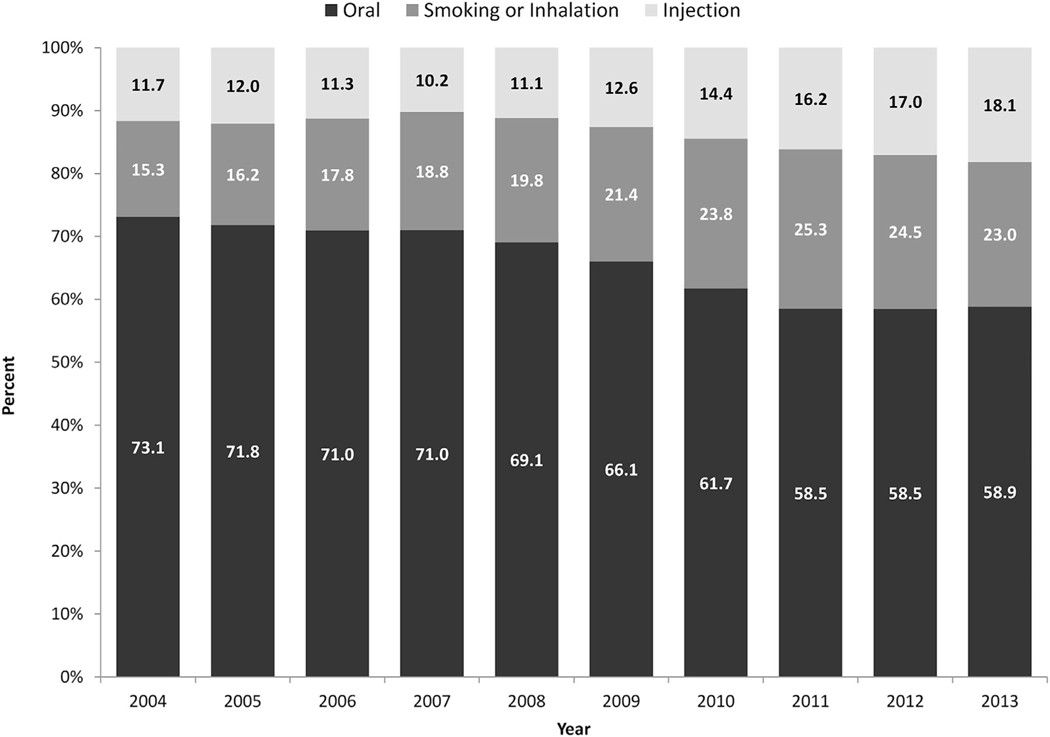
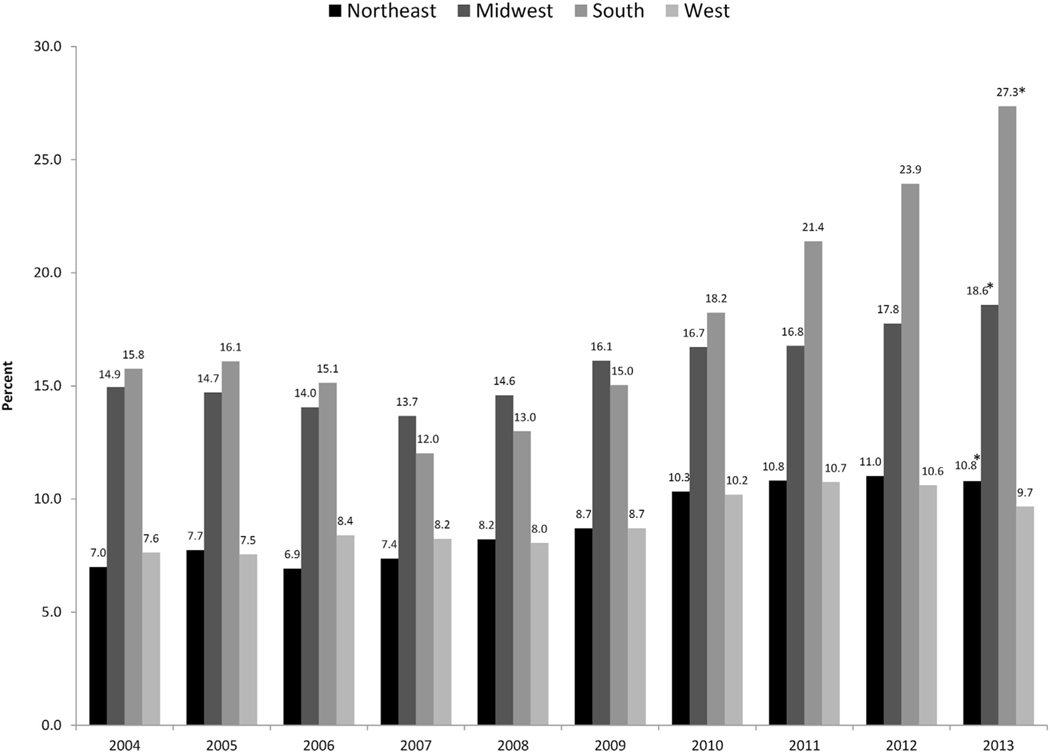
Results: From 2004-2013, oral abuse decreased from 73.1% to 58.9%; injection abuse increased from 11.7% to 18.1%; and smoking/inhalation abuse increased from 15.3% of admissions to 23.0%. Among treatment admissions, the following were associated with injection abuse: male sex, 18-54 year-olds, non-Hispanic whites, non-Hispanic other, homeless or dependent living, less than full-time work, living in the Midwest or South, ≥1 prior treatment episodes, younger age of first opioid use, and reporting use of cocaine/crack, marijuana, heroin, or methamphetamine.
Conclusions: The proportion of treatment admissions reporting prescription opioid injection and smoking/inhalation abuse increased significantly in the U.S. between 2004 and 2013. Expanding prevention efforts as well as access to medication-assisted treatment and risk reduction services for people who inject drugs is urgently needed.
Keywords: Abuse; Injection; Overdose; Prescription opioid.
Published by Elsevier B.V.
Conflict of interest statement
Conflict of interest
The authors report no conflicts.
Figures
References
-
- Black RA, Trudeau KJ, Cassidy TA, Budman SH, Butler SF, 2013. Associations between public health indicators and injecting prescription opioids by prescription opioid abusers in substance abuse treatment. J. Opioid Manag 9, 5–17. - PubMed
-
- Compton WM, Volkow ND, 2006. Abuse of prescription drugs and the risk of addiction. Drug Alcohol Depend. 83, S4–S7. - PubMed
-
- Des Jarlais DC, Nugent A, Solberg A, Feelemyer J, Mermin J, Holtzman D, 2013. Syringe service programs for persons who inject drugs in urban, suburban, and rural areas–United States, 2013. Morb. Mortal. Wkly. Rep 64, 1337–1341. - PubMed
MeSH terms
Substances
Grants and funding
LinkOut - more resources
Full Text Sources
Other Literature Sources
Medical
