


Glutamate excitotoxicity induced by orally administered propionic acid, a short chain fatty acid can be ameliorated by bee pollen
- PMID: 28532421
- PMCID: PMC5440900
- DOI: 10.1186/s12944-017-0485-7
Glutamate excitotoxicity induced by orally administered propionic acid, a short chain fatty acid can be ameliorated by bee pollen
Abstract
Background: Rodent models may guide investigations towards identifying either environmental neuro-toxicants or drugs with neuro-therapeutic effects. This work aims to study the therapeutic effects of bee pollen on brain glutamate excitotoxicity and the impaired glutamine-glutamate- gamma amino butyric acid (GABA) circuit induced by propionic acid (PPA), a short chain fatty acid, in rat pups.
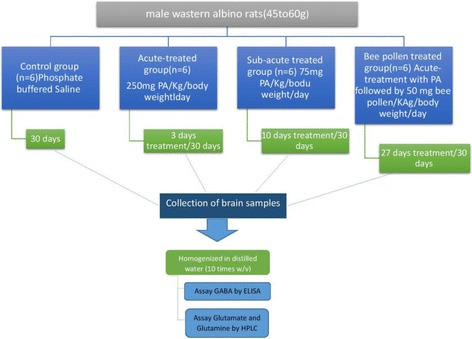
Methods: Twenty-four young male Western Albino rats 3-4 weeks of age, and 45-60 g body weight were enrolled in the present study. They were grouped into four equal groups: Group 1, the control received phosphate buffered saline at the same time of PPA adminstration; Group 2, received 750 mg/kg body weight divided into 3 equal daily doses and served as acute neurotoxic dose of PPA; Group 3, received 750 mg/kg body weight divided in 10 equal doses of 75 mg/kg body weight/day, and served as the sub-acute group; and Group 4, the therapeutic group, was treated with bee pollen (50 mg/kg body weight) for 30 days after acute PPA intoxication. GABA, glutamate and glutamine were measured in the brain homogenates of the four groups.
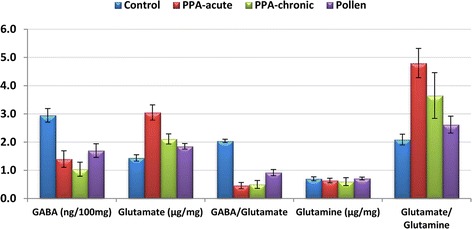
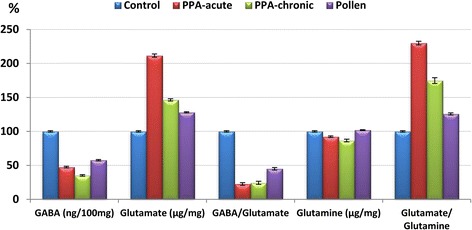
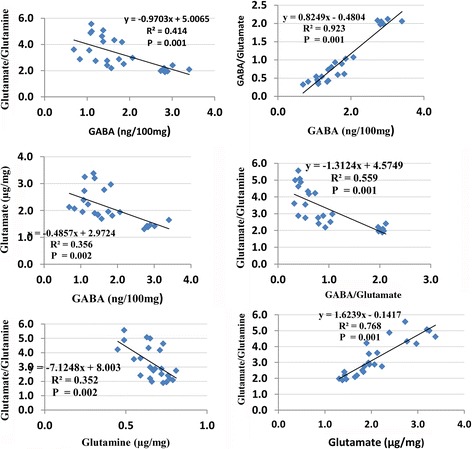
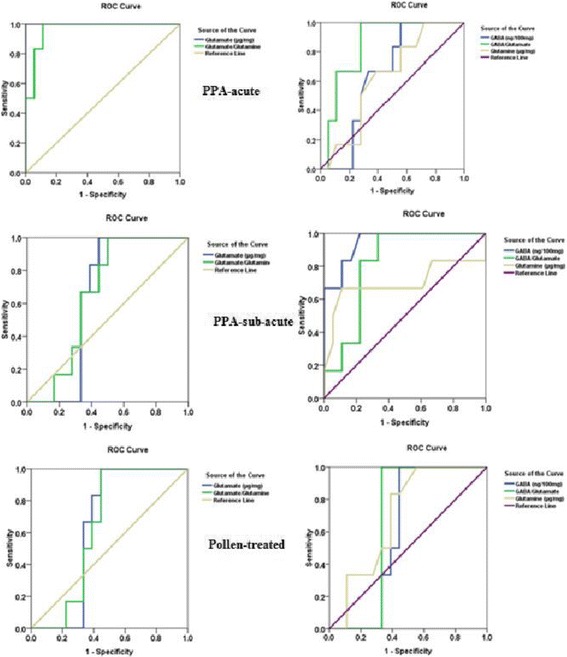
Results: The results showed that PPA caused multiple signs of excitotoxicity, as measured by the elevation of glutamate and the glutamate/glutamine ratio and the decrease of GABA, glutamine and the GABA/glutamate ratio. Bee pollen was effective in counteracting the neurotoxic effects of PPA to a certain extent.
Conclusion: In conclusion, bee pollen demonstrates ameliorating effects on glutamate excitotoxicity and the impaired glutamine-glutamate-GABA circuit as two etiological mechanisms in PPA-induced neurotoxicity.
Keywords: Bee pollen; GABA; Glutamate excitotoxicity; Glutamine; Propionic acid.
Figures
References
-
- Rosa SG, Quines CB, Stangherlin EC, Nogueira CW. Diphenyl diselenide ameliorates monosodium glutamate induced anxiety-like behavior in rats by modulating hippocampal BDNF-Akt pathway and uptake of GABA and serotonin neurotransmitters. Physiol Behav. 2016;155:1–8. doi: 10.1016/j.physbeh.2015.11.038. - DOI - PubMed
MeSH terms
Substances
LinkOut - more resources
Full Text Sources
Other Literature Sources
