


Population-attributable fraction of tubal factor infertility associated with chlamydia
- PMID: 28532600
- PMCID: PMC5600165
- DOI: 10.1016/j.ajog.2017.05.026
Population-attributable fraction of tubal factor infertility associated with chlamydia
Abstract
Background: Chlamydia trachomatis infection is highly prevalent among young women in the United States. Prevention of long-term sequelae of infection, including tubal factor infertility, is a primary goal of chlamydia screening and treatment activities. However, the population-attributable fraction of tubal factor infertility associated with chlamydia is unclear, and optimal measures for assessing tubal factor infertility and prior chlamydia in epidemiological studies have not been established. Black women have increased rates of chlamydia and tubal factor infertility compared with White women but have been underrepresented in prior studies of the association of chlamydia and tubal factor infertility.
Objectives: The objectives of the study were to estimate the population-attributable fraction of tubal factor infertility associated with Chlamydia trachomatis infection by race (Black, non-Black) and assess how different definitions of Chlamydia trachomatis seropositivity and tubal factor infertility affect population-attributable fraction estimates.
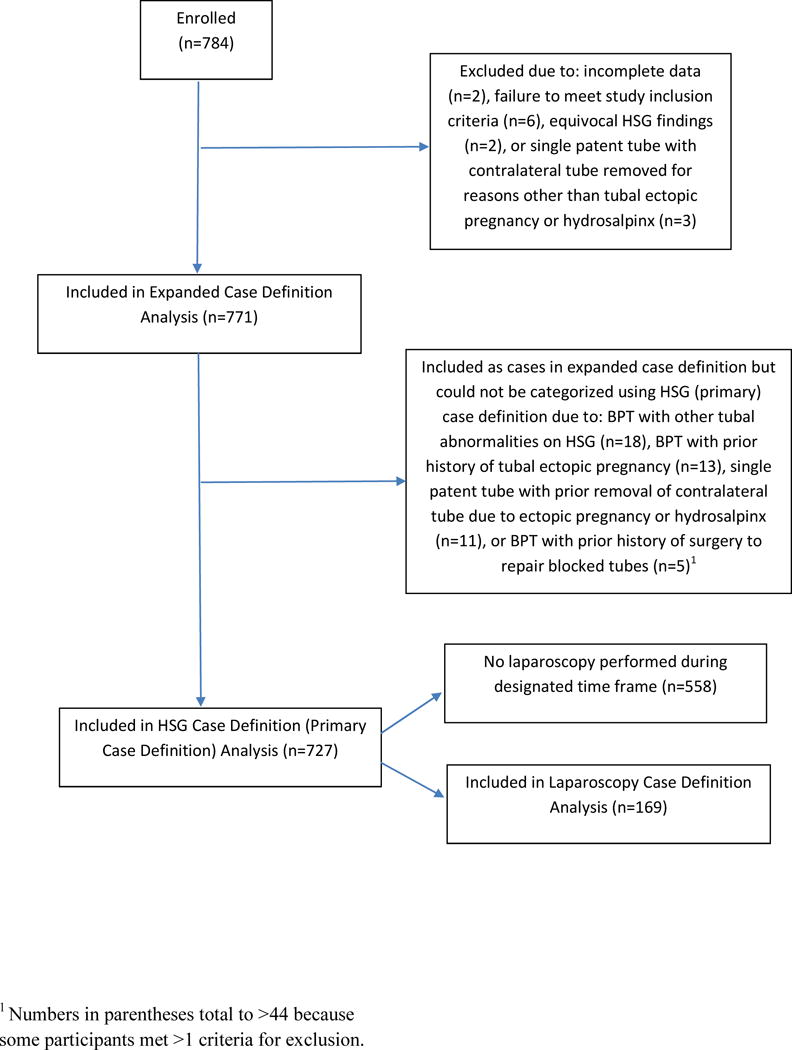
Study design: We conducted a case-control study, enrolling infertile women attending infertility practices in Birmingham, AL, and Pittsburgh, PA, during October 2012 through June 2015. Tubal factor infertility case status was primarily defined by unilateral or bilateral fallopian tube occlusion (cases) or bilateral fallopian tube patency (controls) on hysterosalpingogram. Alternate tubal factor infertility definitions incorporated history suggestive of tubal damage or were based on laparoscopic evidence of tubal damage. We aimed to enroll all eligible women, with an expected ratio of 1 and 3 controls per case for Black and non-Black women, respectively. We assessed Chlamydia trachomatis seropositivity with a commercial assay and a more sensitive research assay; our primary measure of seropositivity was defined as positivity on either assay. We estimated Chlamydia trachomatis seropositivity and calculated Chlamydia trachomatis-tubal factor infertility odds ratios and population-attributable fraction, stratified by race.
Results: We enrolled 107 Black women (47 cases, 60 controls) and 620 non-Black women (140 cases, 480 controls). Chlamydia trachomatis seropositivity by either assay was 81% (95% confidence interval, 73-89%) among Black and 31% (95% confidence interval, 28-35%) among non-Black participants (P < .001). Using the primary Chlamydia trachomatis seropositivity and tubal factor infertility definitions, no significant association was detected between chlamydia and tubal factor infertility among Blacks (odds ratio, 1.22, 95% confidence interval, 0.45-3.28) or non-Blacks (odds ratio, 1.41, 95% confidence interval, 0.95-2.09), and the estimated population-attributable fraction was 15% (95% confidence interval, -97% to 68%) among Blacks and 11% (95% confidence interval, -3% to 23%) among non-Blacks. Use of alternate serological measures and tubal factor infertility definitions had an impact on the magnitude of the chlamydia-tubal factor infertility association and resulted in a significant association among non-Blacks.
Conclusion: Low population-attributable fraction estimates suggest factors in addition to chlamydia contribute to tubal factor infertility in the study population. However, high background Chlamydia trachomatis seropositivity among controls, most striking among Black participants, could have obscured an association with tubal factor infertility and resulted in a population-attributable fraction that underestimates the true etiological role of chlamydia. Choice of chlamydia and tubal factor infertility definitions also has an impact on the odds ratio and population-attributable fraction estimates.
Keywords: Chlamydia trachomatis; population-attributable fraction; serology; tubal factor infertility.
Published by Elsevier Inc.
Figures
References
-
- Chandra A, Copen CE, Stephen EH. Infertility and impaired fecundity in the United States, 1982–2010: data from the National Survey of Family Growth. Natl Health Stat Report. 2013 Aug;14(67):1–18. - PubMed
-
- Evers JL. Female subfertility. Lancet. 2002;360(9327):151–9. - PubMed
-
- Westrom L, Joesoef R, Reynolds G, Hadgu A, Thompson SE. Pelvic inflammatory disease and fertility: A cohort study of 1,844 women with laparoscopically verified disease and 657 women with normal laparoscopy. Sexually Transmitted Diseases. 1992;19:185–92. - PubMed
-
- Wiesenfeld HC, Hillier SL, Meyn LA, Amortegui AJ, Sweet RL. Subclinical pelvic inflammatory disease and infertility. Obstet Gynecol. 2012 Jul;120(1):37–43. - PubMed
MeSH terms
Grants and funding
LinkOut - more resources
Full Text Sources
Other Literature Sources
Medical
