


Purposeful Engagement, Healthy Aging, and the Brain
- PMID: 28534002
- PMCID: PMC5438094
- DOI: 10.1007/s40473-016-0096-z
Purposeful Engagement, Healthy Aging, and the Brain
Abstract
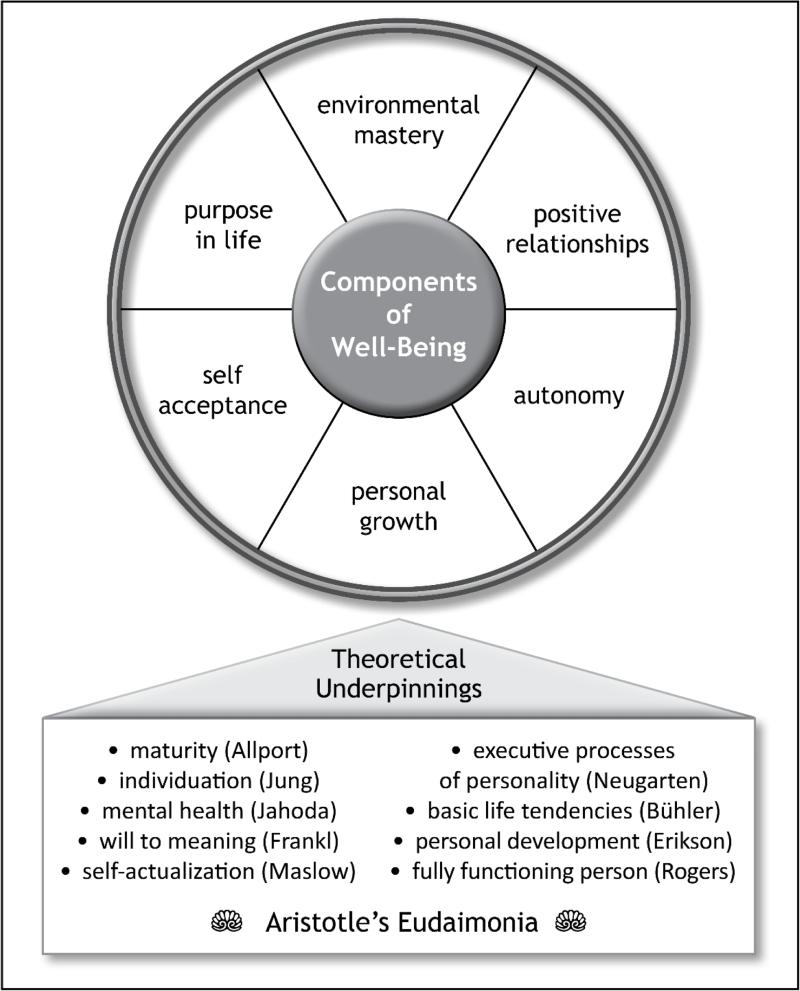
Purpose of review: Research on psychological well-being in later life has identified strengths and vulnerabilities that occur with aging. We review the conceptual and philosophical foundations of a eudaimonic model of well-being and its empirical translation into six key dimensions of positive functioning. We also consider its implications for health, broadly defined.
Recent findings: Numerous findings from national longitudinal samples of U.S. adults are described. They show declining scores on purpose in life and personal growth with aging, but also underscore the notable variability among older persons in these patterns. Recently, health benefits have been identified among older adults who maintain high levels of a particular aspect of well-being, namely, purposeful life engagement. These benefits include extended longevity, reduced risk for various disease outcomes, reduced physiological dysregulation, and gene expression linked to better inflammatory profiles. The brain mechanisms that underlie such outcomes are also examined via a focus on affective style. Adults with higher levels of purpose in life show more rapid recovery from negative stimulus provocation, whereas those with higher well-being overall show sustained activation of reward circuitry in response to positive stimuli, and this pattern is associated with lower diurnal cortisol output. Volumetric findings (right insular gray matter volume) have also been linked with eudaimonic well-being.
Summary: Eudaimonic well-being predicts better health and longer lives, and thus constitutes an important direction for future research and practice. Intervention studies designed to promote well-being, including among those suffering from psychological disorders, are briefly described.
Keywords: biological risk factors; eudaimonic well-being; intervention studies; morbidity; mortality; neural mechanisms; purpose in life.
Figures
References
-
- Ryan RM, Deci EL. On happiness and human potentials: A review of research on hedonic and eudaimonic well-being. Annu Rev Psychol. 2001;52:141–66. doi:10.1146/annurev.psych.52.1.141. - PubMed
-
- Diener E, Suh EM, Lucas RE, Smith HL. Subjective well-being: Three decades of progress. Psychol Bull. 1999;125(2):276–302.
-
- Kahneman D, Diener E, Schwarz N, editors. Well-being: The foundations of hedonic psychology. Russell Sage Foundation; New York: 1999.
-
- Ryan RM, Deci EL. Self-determination theory and the facilitation of intristic motivation, social development, and well-being. Am Psychol. 2000;55(1):68–78. - PubMed
-
- Ryff CD. Happiness is everything, or is it? Explorations on the meaning of psychological well-being. J Pers Soc Psychol. 1989;57(6):1069–81. doi:10.1037/0022-3514.57.6.1069. [Key article describing eudaimonic model of well-being.]
Grants and funding
LinkOut - more resources
Full Text Sources
Other Literature Sources
Research Materials