Ameliorating effect of anti-Alzheimer's drugs on the bidirectional association between type 2 diabetes mellitus and Alzheimer's disease
- PMID: 28534431
- PMCID: PMC5529002
- DOI: 10.1177/1535370217711440
Ameliorating effect of anti-Alzheimer's drugs on the bidirectional association between type 2 diabetes mellitus and Alzheimer's disease
Abstract
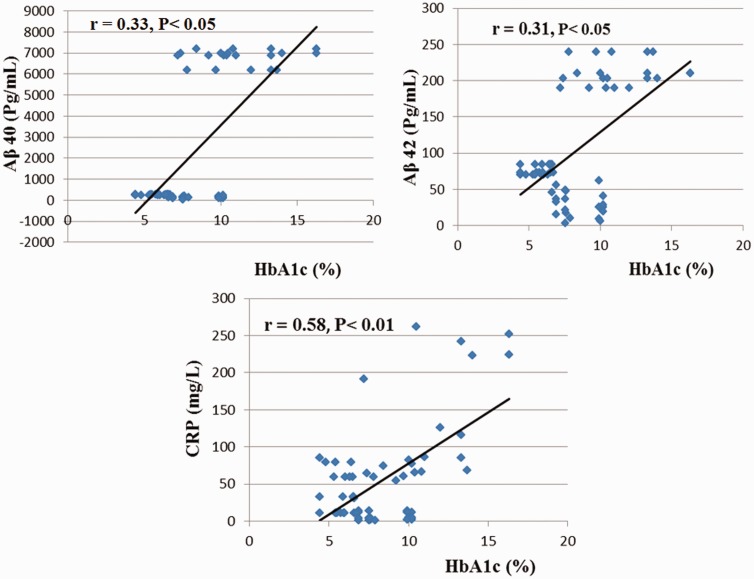
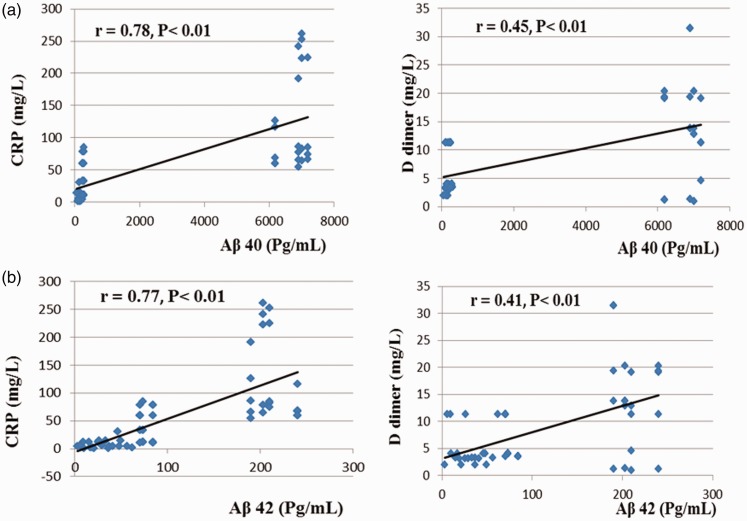
Mild to severe forms of nervous system damage were exhibited by approximately 60-70% of diabetics. It is important to understand the association between type 2 diabetes mellitus and Alzheimer's disease. The aim of the present work is to understand the bidirectional association between type 2 diabetes and Alzheimer's disease pathogenesis, that was monitored by glycaemic status, lipid profile, amyloid beta 40 and 42 (Aβ40 and Aβ42), C-reactive protein, total creatine kinase, total lactate dehydrogenase, D-dimer and magnesium measurements, to assess the association between theses biochemical markers and each other, to estimate the possibility of utilizing the amyloid beta as biochemical marker of T2D in Alzheimer's patients, and to evaluate the effect of piracetam and memantine drugs on diabetes mellitus. This study involved 120 subjects divided into 20 healthy control (group I), 20 diabetic patients (group II), 20 Alzheimer's patients (group III), 20 diabetic Alzheimer's patients with symptomatic treatment (group IV), 20 diabetic Alzheimer's patients treated with memantine (group V), and 20 diabetic Alzheimer's patients treated with piracetam (group VI). The demographic characteristics, diabetic index, and lipid profile were monitored. Plasma amyloid beta 40 and amyloid beta 42, C-reactive protein, total creatine kinase, total lactate dehydrogenase, D-dimer, and magnesium were assayed. The levels of amyloid beta 40 and amyloid beta 42 were significantly elevated in diabetic Alzheimer's patients with symptomatic treatment (group IV) compared to group II (by 50.5 and 7.5 fold, respectively) and group III (by 25.4 and 2.8 fold, respectively). In groups II, III, IV, V and VI, significant and positive associations were monitored between insulin and amyloid beta 40, amyloid beta 42, C-reactive protein, total creatine kinase, and D-dimer. Diabetic markers were significantly decreased in diabetic Alzheimer's patients treated with anti-Alzheimer's drugs (especially piracetam) compared to group IV. This study reveals the role of amyloid beta 40, amyloid beta 42, insulin, HbA1c, lipid profile disturbance, C-reactive protein, D-dimer, and magnesium in the bidirectional correlation between T2D and pathogenesis of Alzheimer's disease, that is powered by their correlations, and therefore the possibility of utilizing Aβ as a biochemical marker of T2D in Alzheimer's patients is recommended. Impact statement Several aspects associated with T2D that contribute to AD and vice versa were investigated in this study. Additionally, this work reveals the role of Aβ40, Aβ42, insulin, HbA1c, lipid profile disturbance, CRP, D-dimer, and magnesium in the bidirectional association between T2D and the pathogenesis of AD, that is powered by their correlations, and therefore the possibility of utilizing Aβ as a biochemical marker of T2D in Alzheimer's patients is recommended. Furthermore, the ameloriating effect of anti-Alzheimer's drugs on diabetes mellitus confirms this association. Hereafter, a new approach for treating insulin resistance and diabetes may be developed by new therapeutic potentials such as neutralization of Aβ by anti-Aβ antibodies.
Keywords: Alzheimer’s disease; C-reactive protein; D-dimer; Magnesium; Type 2 diabetes; amyloid beta; total creatine kinase; total lactate dehydrogenase.
Figures
References
-
- Strachan MW, Reynolds RM, Marioni RE, Price JF. Cognitive function, dementia and type 2 diabetes mellitus in the elderly. Nat Rev Endocrinol 2011; 7: 108–14. - PubMed
MeSH terms
Substances
LinkOut - more resources
Full Text Sources
Other Literature Sources
Medical
Research Materials
Miscellaneous