


Quality of life, anxiety and depression in patients with HIV/AIDS who present poor adherence to antiretroviral therapy: a cross-sectional study in Salvador, Brazil
- PMID: 28535397
- PMCID: PMC9425484
- DOI: 10.1016/j.bjid.2017.04.004
Quality of life, anxiety and depression in patients with HIV/AIDS who present poor adherence to antiretroviral therapy: a cross-sectional study in Salvador, Brazil
Abstract
The introduction of highly active antiretroviral therapy marked a major gain in efficacy of HIV/AIDS treatment and a reduction in morbidity and mortality of the infected patients. However, high levels of adherence are required to obtain virologic suppression. In Brazil, the policy of free and universal access to antiretroviral therapy has been in place since 1996, although there are reports of poor adherence.
Objective: To define the clinical, demographic and psychological characteristics, and quality of life of patients with HIV/AIDS who present poor adherence to highly active antiretroviral therapy.
Methods: This was a cross-sectional study. To be included in the study patients had to be 18 through 65 years old, diagnosed with HIV/AIDS, having the two previous viral loads above 500 copies, a surrogate for poor adherence to antiretrovirals. The following instruments were applied to all eligible patients: the sociodemographic questionnaire "Adherence Follow-up Questionnaire", the Beck Depression Inventory (BDI-II), the Beck Anxiety Inventory (BAI), and the 36-Item Short Form Survey.
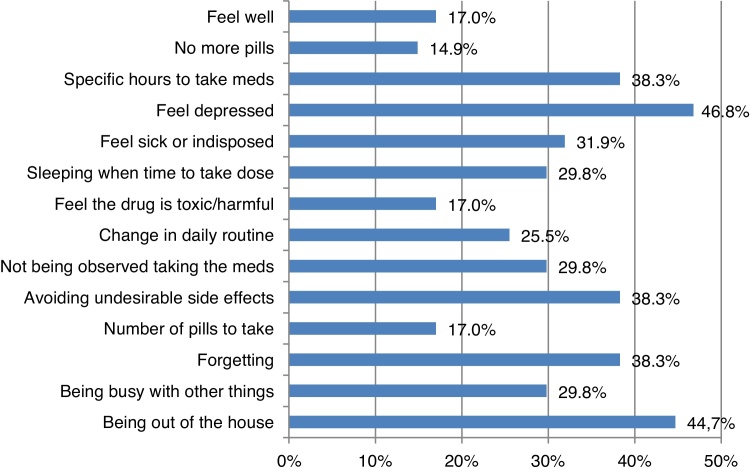
Results: 47 patients were evaluated, 70.2% were female, mean age of 41.9 years (±10.5), 46.8% were single, 51.1% self-reported adherence ≥95%, 46.8% mentioned depression as the main reason for not taking the medication, 59.5% presented symptoms of moderate to severe depression, and 44.7% presented symptoms of moderate to severe anxiety. Finally, regarding health-related quality of life these patients obtained low scores in all dimensions, physical component summary of 43.96 (±9.64) and mental component summary of 33.19 (±13.35).
Conclusion: The psychological component is considered to be fundamental in the management of HIV/AIDS patients. Psychoeducation should be conducted at the initial evaluation to reduce negative beliefs regarding antiretroviral therapy Assessment of anxiety and depression symptoms should be done throughout therapy as both psycological conditions are associated with patient adherence, success of treatment, and ultimately with patients' quality of life.
Keywords: Adherence; Anxiety; Depression; HIV/AIDS; Highly active antiretroviral therapy; Nonadherence; Quality of life.
Copyright © 2017 Sociedade Brasileira de Infectologia. Published by Elsevier Editora Ltda. All rights reserved.
Figures
References
-
- BRASIL. Congresso Nacional. Lei n° 9.313, 13 de novembro de 1996. Dispõe sobre a distribuição gratuita de medicamentos aos portadores do HIV e doentes de AIDS. Diário Oficial [da República Federativa do Brasil], Brasília, DF. (14 de nov 1996).
-
- Ministerio da Saúde . Departamento de DTS, Aids e Hepatites Virais; Brasilia: 2013. Secretaria de Vigilância em Saúde. Protocolo clínico e diretrizes terapêuticas para manejo da infecção pelo HIV em adultos. p. 216.
-
- Bangsberg D.R., Perry S., Charlebois E.D., et al. Non-adherence to highly active antiretroviral therapy predicts progression to AIDS. AIDS. 2001;15:1181–1183. - PubMed
-
- Thompson M.A., Aberg J.A., Hoy J.F., et al. Antiretroviral treatment of adult HIV infection: 2012 recommendations of the international antiviral society–USA panel. JAMA. 2012;308:387–402. - PubMed
MeSH terms
Substances
LinkOut - more resources
Full Text Sources
Other Literature Sources
Medical
