Review
. 2017 Jun 14;36(12):1643-1646.
doi: 10.15252/embj.201797177. Epub 2017 May 23.

Is magnetogenetics the new optogenetics?

Affiliations
Review

Is magnetogenetics the new optogenetics?

Simon Nimpf et al. EMBO J. .

Abstract

Optogenetics has revolutionised neuroscience as it enables investigators to establish causal relationships between neuronal activity and a behavioural outcome in a temporally precise manner. It is a powerful technology, but limited by the necessity to deliver light to the cells of interest, which often requires invasive surgery and a tethered light source. Magnetogenetics aims to overcome these issues by manipulating neurons with magnetic stimuli. As magnetic fields can pass freely through organic tissue, it requires no surgery or tethering the animals to an energy source. In this commentary, we assess the utility of magnetogenetics based on three different approaches: magneto‐thermo‐genetics; force/torque‐based methods; and expression of the iron chaperone ISCA1. Despite some progress, many hurdles need to be overcome if magnetogenetics is to take the helm from optogenetics.


Figures

Figure 1
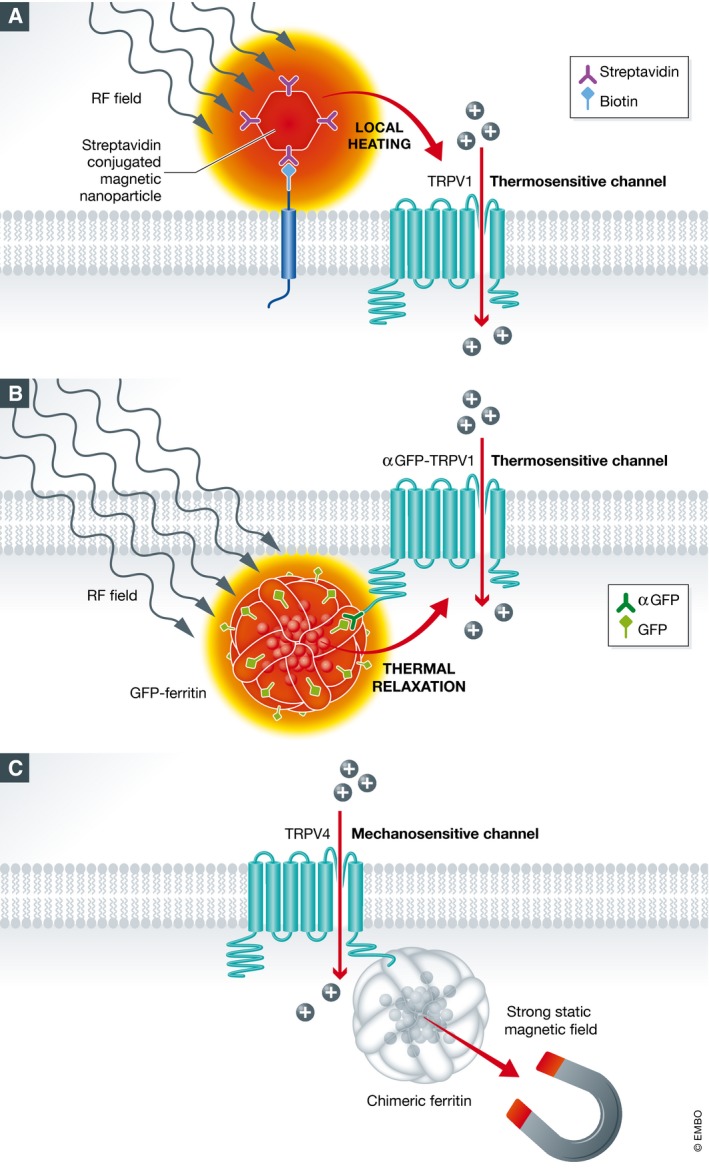
Figure 1. Methods to control the nervous system using magnetogenetics
(A) Schematic of the magnetogenetic method developed by Pralle and colleagues (Huang et al, 2010). Streptavidin‐conjugated magnetic nanoparticles (MnFe2O4) are targeted to the cell membrane by a genetically encoded transmembrane domain with a biotinylated biotin acceptor site. Application of an RF magnetic field (40 MHz, 0.84 mT) generates local heating of the nanoparticles, which triggers opening of heterologously expressed thermosensitive ion channels (TRPV1). (B) Schematic of the method developed by Stanley and colleagues, which relies on a genetically encoded ferritin nanoparticle coupled to TRPV1 via a GFP nanobody. It is thought that application of an RF magnetic field (465 kHz, 23–32 mT) leads to thermal relaxation of the central iron core of ferritin and cation influx through the thermosensitive channel (Stanley et al, 2016). (C) Schematic of the single‐component magnetogenetic system developed by Wheeler and colleagues. It consists of a chimeric ferritin protein directly coupled to the mechanosensitive cation channel TRPV4. Application of a strong static magnetic field (~50 mT), using an electromagnet, results in calcium transients possibly through a force‐based mechanism (Wheeler et al, 2016).

References

    1. Chen R, Romero G, Christiansen MG, Mohr A, Anikeeva P (2015) Wireless magnetothermal deep brain stimulation. Science 347: 1477–1480 - PubMed
    1. Huang H, Delikanli S, Zeng H, Ferkey DM, Pralle A (2010) Remote control of ion channels and neurons through magnetic‐field heating of nanoparticles. Nat Nanotechnol 5: 602–606 - PubMed
    1. Long X, Ye J, Zhao D, Zhang SJ (2015) Magnetogenetics: remote non‐invasive magnetic activation of neuronal activity with a magnetoreceptor. Sci Bull 60: 2107–2119 - PMC - PubMed
    1. Matsumoto Y, Chen R, Anikeeva P, Jasanoff A (2015) Engineering intracellular biomineralization and biosensing by a magnetic protein. Nat Commun 6: 8721 - PMC - PubMed
    1. Meister M (2016) Physical limits to magnetogenetics. eLife 5: e17210 - PMC - PubMed

Publication types