


Monocrotophos pesticide affects synthesis and conversion of sex steroids through multiple targets in male goldfish (Carassius auratus)
- PMID: 28536437
- PMCID: PMC5442159
- DOI: 10.1038/s41598-017-01935-6
Monocrotophos pesticide affects synthesis and conversion of sex steroids through multiple targets in male goldfish (Carassius auratus)
Abstract
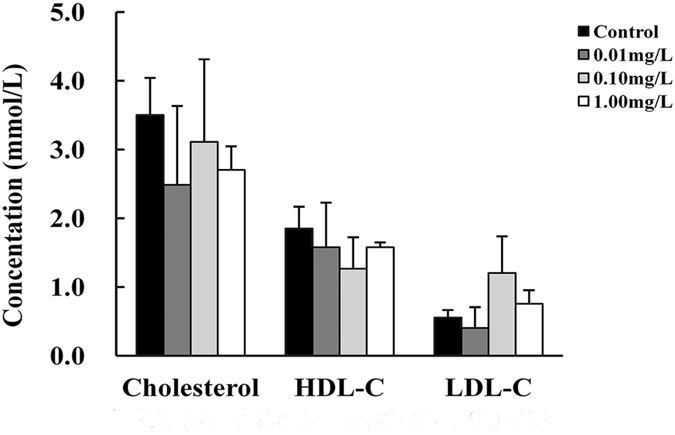
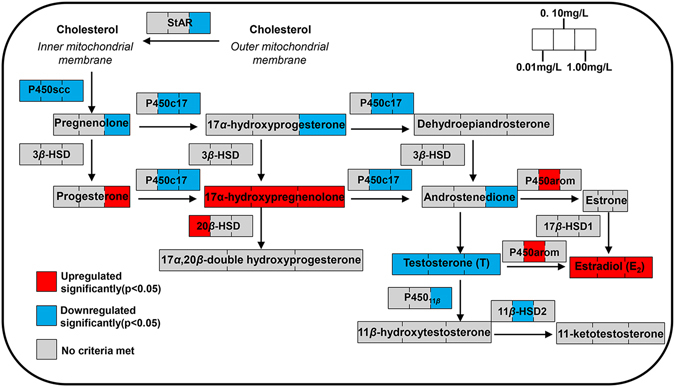
Monocrotophos (MCP) is an organophosphorus pesticide that is median-toxic to fish. MCP pesticide resulted in an increase of 17 beta estradiol following a decrease in testosterone in male goldfish (Carassius auratus). To fully understand the mechanism of MCP pesticide that causes the imbalance between male and female hormones, we determined the levels of plasma cholesterol, spermatic steroidogenic acute regulatory protein mRNA, steroidogenesis enzyme mRNA, plasma sex hormone synthesis intermediates, and effectual hormones in male goldfish exposed to MCP pesticide at nominal concentrations of 0.01, 0.10, and 1.00 mg/L for 21 days in a semi-static exposure system. The results indicated that MCP pesticide (a) led to decreased steroidogenic acute regulatory protein mRNA levels; (b) decreased mRNA levels of cholesterol side chain cleavage enzyme and cytochrome P450 17 alpha hydroxylase, which are steroidogenesis enzymes involved in androgen synthesis; and (c) increased cytochrome P450 aromatase mRNA levels, a steroidogenesis enzyme involved in the synthesis of effectual estrogen. The present study provides evidence that MCP pesticide affects synthesis and conversion of sex steroids through multiple targets in male goldfish.
Conflict of interest statement
The authors declare that they have no competing interests.
Figures



References
-
- Liu G. Moncrotophos pesticide residue were detected from snow peas samples in Wuhan, China. Pesticide Market News. 2010;8:12.
Publication types
MeSH terms
Substances
LinkOut - more resources
Full Text Sources
Other Literature Sources
Medical
Miscellaneous
