. 2017 May 24:8:15526.
doi: 10.1038/ncomms15526.

A synthetic biochemistry platform for cell free production of monoterpenes from glucose

Affiliations

A synthetic biochemistry platform for cell free production of monoterpenes from glucose

Tyler P Korman et al. Nat Commun. .

Abstract

Cell-free systems designed to perform complex chemical conversions of biomass to biofuels or commodity chemicals are emerging as promising alternatives to the metabolic engineering of living cells. Here we design a system comprises 27 enzymes for the conversion of glucose into monoterpenes that generates both NAD(P)H and ATP in a modified glucose breakdown module and utilizes both cofactors for building terpenes. Different monoterpenes are produced in our system by changing the terpene synthase enzyme. The system is stable for the production of limonene, pinene and sabinene, and can operate continuously for at least 5 days from a single addition of glucose. We obtain conversion yields >95% and titres >15 g l-1. The titres are an order of magnitude over cellular toxicity limits and thus difficult to achieve using cell-based systems. Overall, these results highlight the potential of synthetic biochemistry approaches for producing bio-based chemicals.


Conflict of interest statement

The authors have formed a company, Invizyne Technologies, to expand and develop cell-free biomolecule production technologies.

Figures
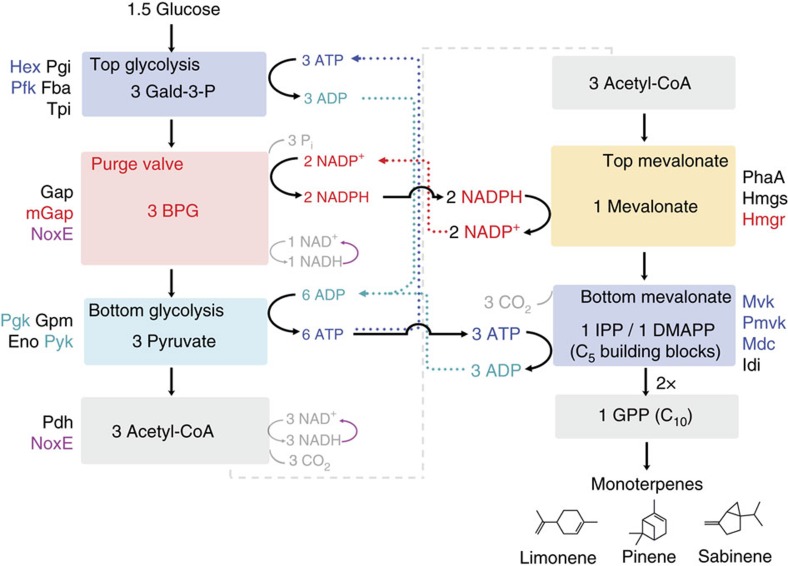
Figure 1
Figure 1. Schematic of the synthetic biochemistry system for conversion of glucose to monoterpenes.
Enzymes in each submodule (coloured boxes) are labelled as described in the text and Supplementary Table 1. ATP-consuming and -generating steps are shown in purple and blue, respectively. The NADPH-generating purge valve is shown in red while the NADPH-consuming top of the mevalonate pathway is shown in orange. Solid arrows show the flow of cofactors and dotted arrows highlight their recycle through respective steps in the pathway.
Figure 2
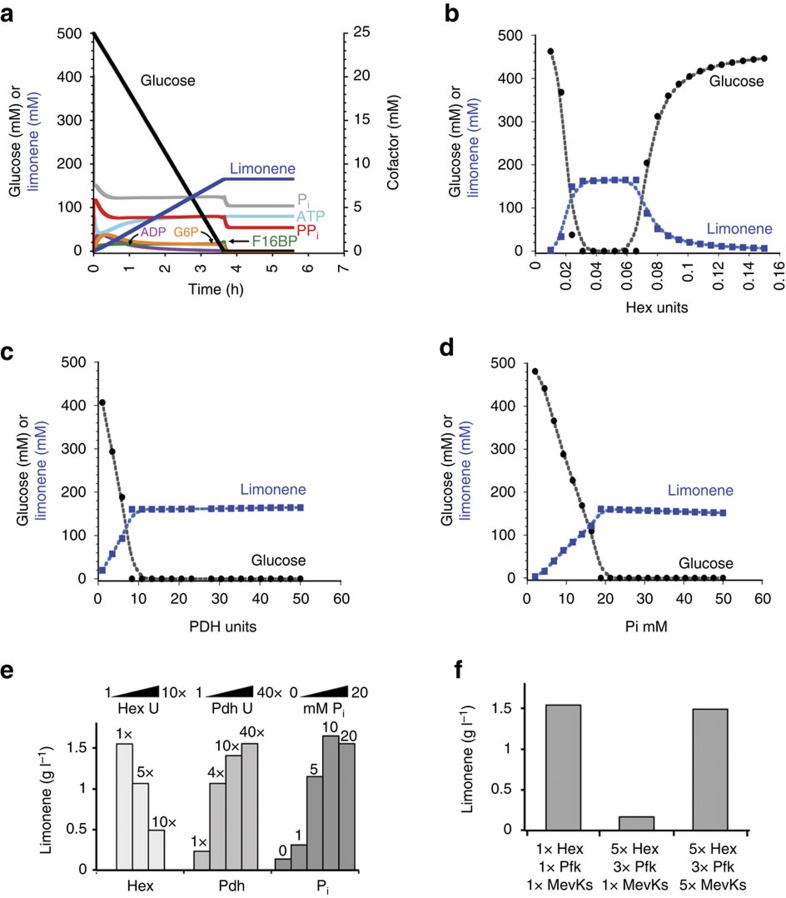
Figure 2. Modelling and optimization of enzyme levels for conversion of glucose to limonene.
(a) Levels for glucose (black line), limonene (blue line) and cofactors (ATP, ADP, G6P, F16BP, Pi and PPi) in an optimized CoPASI model starting at 500 mM glucose and a time of 20,000 s (5.6 h). Glucose and limonene levels are plotted on the left axis and cofactor levels are plotted on the right axis. (b) Parameter scan in CoPASI showing the dependence of limonene production on units of Hex varied between 0.05 and 0.15 units. (c) Parameter scan in CoPASI showing the dependence of limonene production on units of Pdh varied between 1 and 50 units. (d) Parameter scan in CoPASI showing the dependence of limonene production on starting Pi varied between 1 and 50 mM. (e) Experimental data showing the dependence of limonene production on units of Hex, Pdh and Pi. (f) Experimental data showing the dependence of limonene production on the ratio of Hex and Pfk units to the kinases in the mevalonate pathway: Mvk; Pmvk; and Mdc (MevKs). The reactions in c and d were started with the addition of 250 mM glucose and analysed after 16 h.
Figure 3
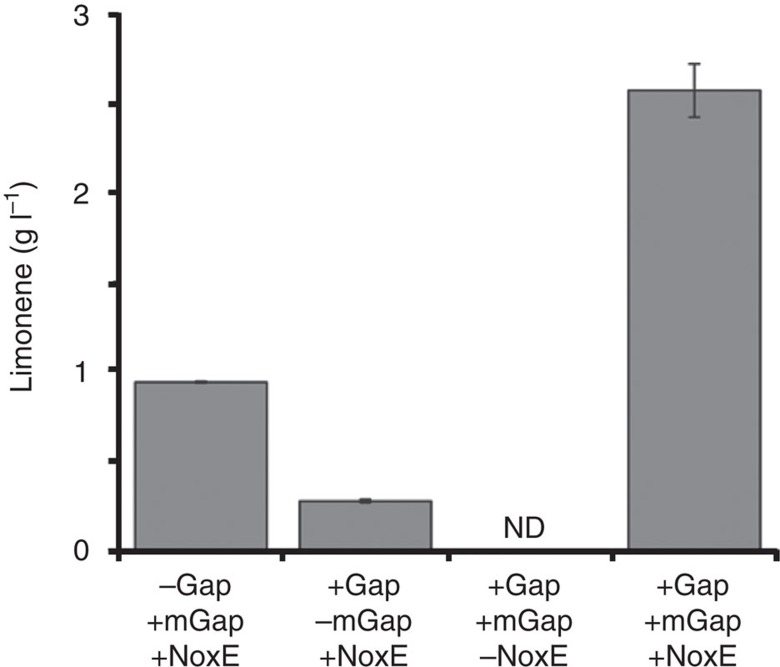
Figure 3. Dependence of limonene production on the new purge valve.
The graph shows the dependence of limonene production from glucose on the purge valve implemented at the Gap step. Various components were left out of each reaction (Gap, wild-type Gap from E. coli; mGap, NADP+-specific mutant Gap from G. stearothermphilus; NoxE, NADH oxidase from Lactococcus lactis). The last experiment (+Gap, +mGap and +NoxE) contains all components. Leaving out any component leads to reduced limonene production from glucose. All reactions were started with the addition of 250 mM glucose and analysed after 16 h. Reactions were performed in triplicate (n=3) and analysed as described in the Methods. Error bars represent s.d. ND, not determined.
Figure 4
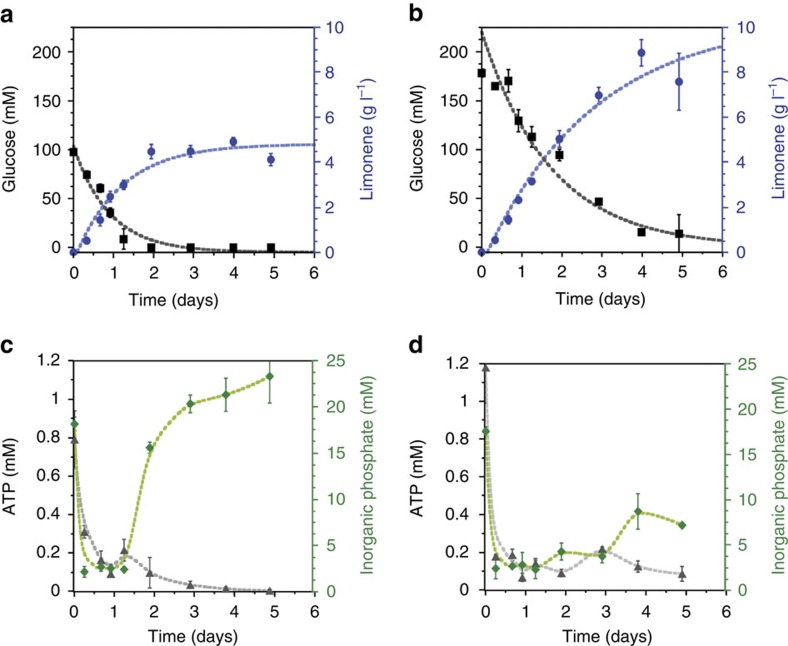
Figure 4. Time course of limonene production from glucose.
Time course of limonene production, glucose consumption, and ATP and Pi levels starting from either 100 (a,c) or 200 mM (b,d) glucose over 5 days. The reaction starting from 200 mM glucose produces twice as much limonene over 5 days compared to starting with 100 mM glucose. Reactions were performed in triplicate (n=3) and analysed as described in the Methods. Error bars represent s.d.
Figure 5
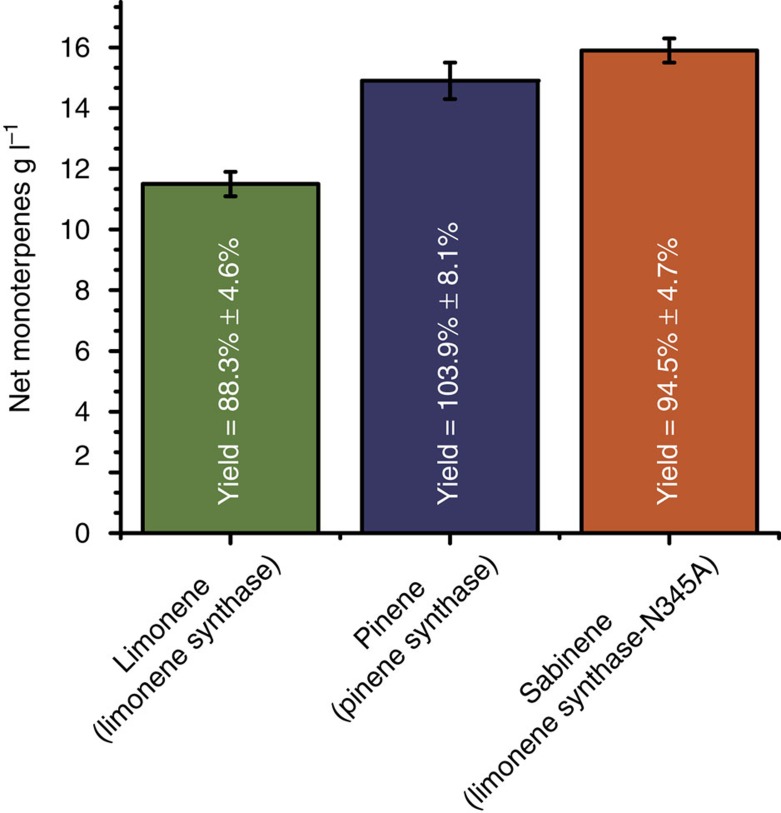
Figure 5. High-titre production of multiple monoterpenes from glucose.
The chart shows production of monoterpenes limonene, pinene and sabinine from 500 mM glucose over 7 days. The final titre of monoterpenes and glucose remaining were determined by GC and enzyme assay as described in the Methods. For the limonene synthase reaction (green bar), the product was 100% limonene. For the pinene synthase reaction (purple bar), the product distribution is 80.8±0.33% α-pinene and 19.2±0.33% β-pinene. For the sabinene synthase reaction catalysed by the N345A Limonene synthase mutant (orange bar), the product distribution is 11.5±0.03% α-pinene, 11.2±0.01% β-pinene, 37.9±0.02% (−)-sabinene, 3.5±0.01% (+)-sabinene, 27.1±0.04% limonene and 5.7±0.01% myrcene. Reactions were performed in triplicate (n=3) and analysed as described in the Methods. Error bars represent s.d.

References

    1. Oldfield E. & Lin F.-Y. Terpene biosynthesis: modularity rules. Angew. Chem. Int. Ed. 51, 1124–1137 (2012). - PMC - PubMed
    1. Dixon R. A. Plant natural products: the molecular genetic basis of biosynthetic diversity. Curr. Opin. Biotechnol. 10, 192–197 (1999). - PubMed
    1. Withers S. T. & Keasling J. D. Biosynthesis and engineering of isoprenoid small molecules. Appl. Microbiol. Biotechnol. 73, 980–990 (2006). - PubMed
    1. Krings U. & Berger R. G. Biotechnological production of flavours and fragrances. Appl. Microbiol. Biotechnol. 49, 1–8 (1998). - PubMed
    1. Ajikumar P. K. et al. Terpenoids: opportunities for biosynthesis of natural product drugs using engineered microorganisms. Mol. Pharm. 5, 167–190 (2008). - PubMed

Publication types

MeSH terms