


Carbon monoxide-releasing molecule-2 suppresses thrombomodulin and endothelial protein C receptor expression of human umbilical vein endothelial cells induced by lipopolysaccharide in vitro
- PMID: 28538400
- PMCID: PMC5457880
- DOI: 10.1097/MD.0000000000006978
Carbon monoxide-releasing molecule-2 suppresses thrombomodulin and endothelial protein C receptor expression of human umbilical vein endothelial cells induced by lipopolysaccharide in vitro
Abstract
Objective: The aim of this study was to observe the counter-effect of carbon monoxide-releasing molecule-2 (CORM-2) on lipopolysaccharide (LPS)-suppressed thrombomodulin (TM) and endothelial protein C receptor (EPCR) expressions from human umbilical vein endothelial cell (HUVEC), and to reveal its mechanisms.
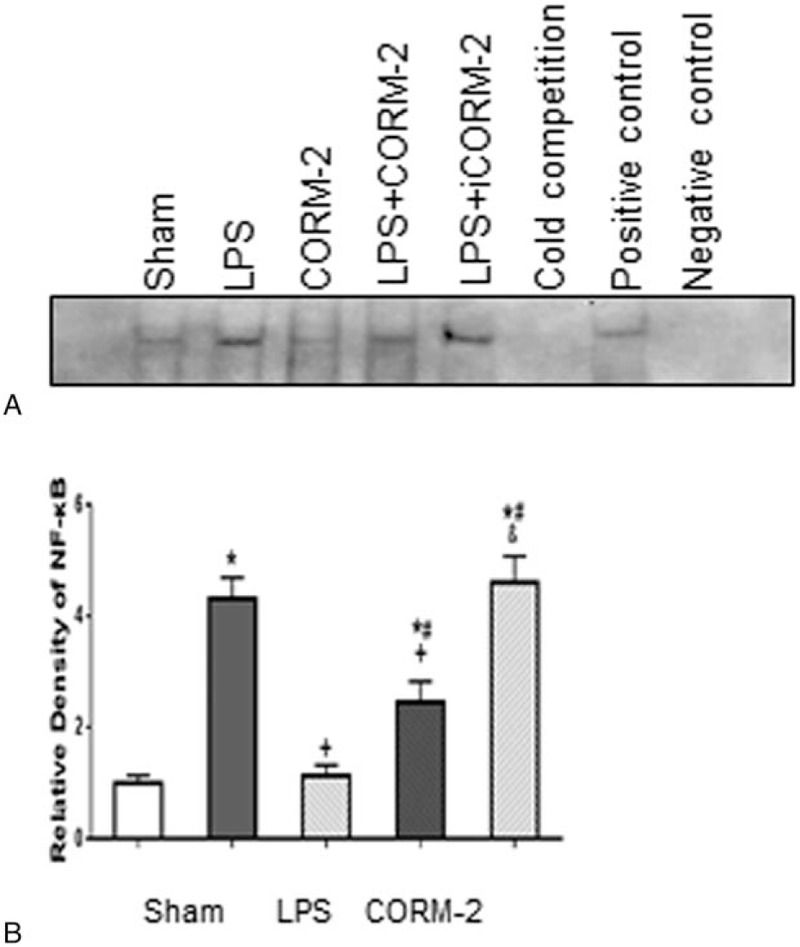
Methods: HUVECs were divided into 5 treatment groups, wherein reagents were added simultaneously. TM and EPCR proteins of the cells and the culture medium levels of soluble TM, soluble EPCR, and matrix metalloproteinase-2 (MMP-2) were detected after administration, whereas mRNA levels of TM and EPCR, as well as nuclear factor kappa-light-chain-enhancer of activated B cells (NF-κB) activity among groups, were also evaluated.
Results: No significant difference was observed in any indicator between CORM-2 and sham groups. Addition of LPS produced drastic increase in MMP-2 expression, NF-κB activity, shedding of TM and EPCR (into the culture medium), as well as remarkable decrease in both mRNA and protein expressions of TM and EPCR, and cell viability. LPS + CORM-2 treatment significantly reduced the increase in MMP-2, NF-κB activity, and TM/EPCR shedding, whereas maintained both mRNA and protein levels of TM and EPCR, and preserved cell viability.
Conclusions: CORM-2 protects HUVEC from LPS-induced injury, by way of suppressing NF-κB activity, which downregulates TM and EPCR mRNAs. It also decreases MMP-2 expression and prevents the shedding of TM and EPCR from the surface of endothelial cells, so as to preserve their protective effect.
Conflict of interest statement
The authors report no conflicts of interest.
Figures


References
-
- Schouten M, Wiersinga WJ, Levi M, et al. Inflammation and coagulation in sepsis. J Leukoc Biol 2008;83:536–45. - PubMed
-
- Van de Wouwer M, Collen D, Conway EM. Thrombomodulin-protein C-EPCR system: integrated to regulate coagulation and inflammation. Arterioscler Thromb Vasc Biol 2004;24:1374–83. - PubMed
-
- Sohn RH, Deming CB, Johns DC, et al. Regulation of endothelial thrombomodulin expression by inflammatory cytokines is mediated by activation of nuclear factor-kappa B. Blood 2005;105:3910–7. - PubMed
-
- Nakamura T, Ebihara I, Shimada N, et al. Modulation of plasma metalloproteinase-9 concentrations and peripheral blood monocyte mRNA levels in patients with septic shock: effect of fiber-immobilized polymyxin B treatment. Am J Med Sci 1998;316:355–60. - PubMed
MeSH terms
Substances
LinkOut - more resources
Full Text Sources
Other Literature Sources
Miscellaneous
