


Molecular Basis of Alcohol-Related Gastric and Colon Cancer
- PMID: 28538665
- PMCID: PMC5485940
- DOI: 10.3390/ijms18061116
Molecular Basis of Alcohol-Related Gastric and Colon Cancer
Abstract
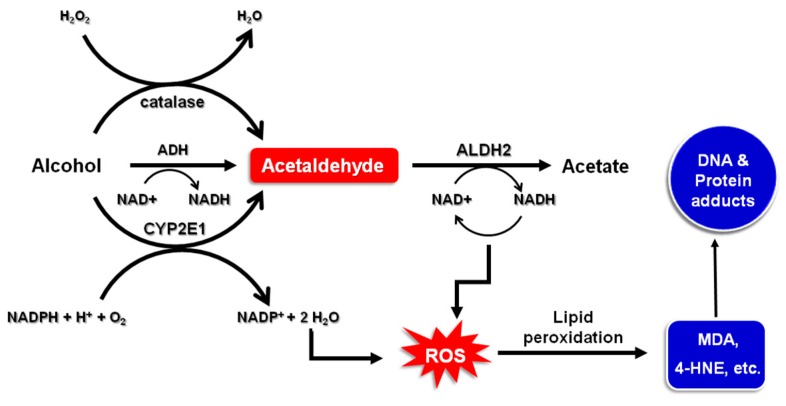
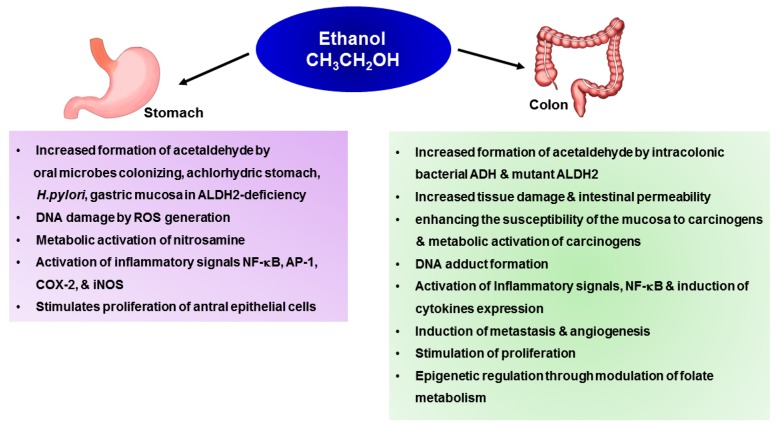
Many meta-analysis, large cohort studies, and experimental studies suggest that chronic alcohol consumption increases the risk of gastric and colon cancer. Ethanol is metabolized by alcohol dehydrogenases (ADH), catalase or cytochrome P450 2E1 (CYP2E1) to acetaldehyde, which is then further oxidized to acetate by aldehyde dehydrogenase (ALDH). Acetaldehyde has been classified by the International Agency for Research on Cancer (IARC) as a Group 1 carcinogen to humans. The acetaldehyde level in the stomach and colon is locally influenced by gastric colonization by Helicobacter pylori or colonic microbes, as well as polymorphisms in the genes encoding tissue alcohol metabolizing enzymes, especially ALDH2. Alcohol stimulates the uptake of carcinogens and their metabolism and also changes the composition of enteric microbes in a way to enhance the aldehyde level. Alcohol also undergoes chemical coupling to membrane phospholipids and disrupts organization of tight junctions, leading to nuclear translocation of β-catenin and ZONAB, which may contributes to regulation of genes involved in proliferation, invasion and metastasis. Alcohol also generates reactive oxygen species (ROS) by suppressing the expression of antioxidant and cytoprotective enzymes and inducing expression of CYP2E1 which contribute to the metabolic activation of chemical carcinogens. Besides exerting genotoxic effects by directly damaging DNA, ROS can activates signaling molecules involved in inflammation, metastasis and angiogenesis. In addition, alcohol consumption induces folate deficiency, which may result in aberrant DNA methylation profiles, thereby influencing cancer-related gene expression.
Keywords: acetaldehyde; alcohol; colon cancer; gastric cancer; polymorphism; reactive oxygen species.
Conflict of interest statement
The authors declare no conflict of interest.
Figures
References
-
- World Health Organization . Global Status Report on Alcohol and Health 2014. WHO; Geneva, Switzerland: 2014. pp. 14–376.
Publication types
MeSH terms
Substances
LinkOut - more resources
Full Text Sources
Other Literature Sources
Medical
Miscellaneous
