


Melatonin Attenuates Pulmonary Hypertension in Chronically Hypoxic Rats
- PMID: 28538666
- PMCID: PMC5485949
- DOI: 10.3390/ijms18061125
Melatonin Attenuates Pulmonary Hypertension in Chronically Hypoxic Rats
Abstract
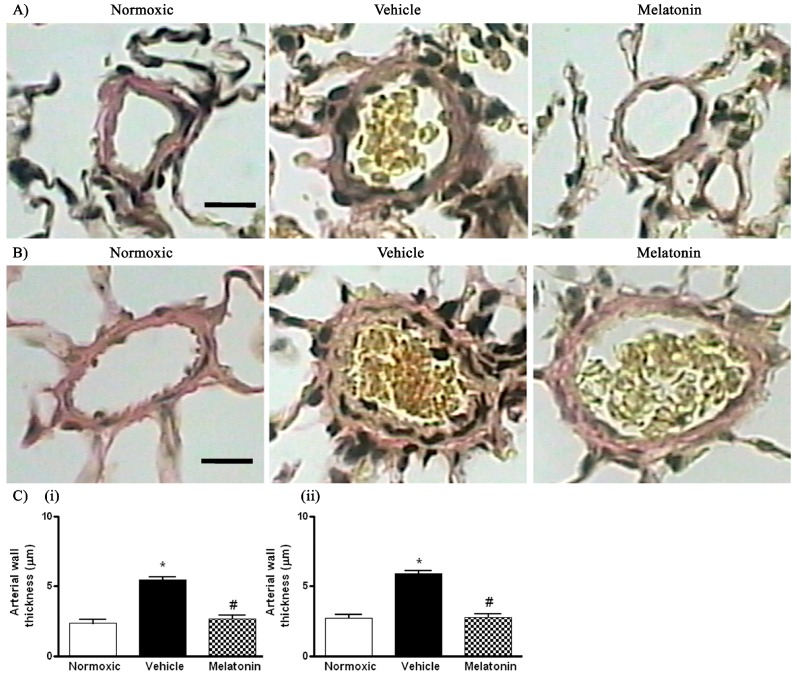
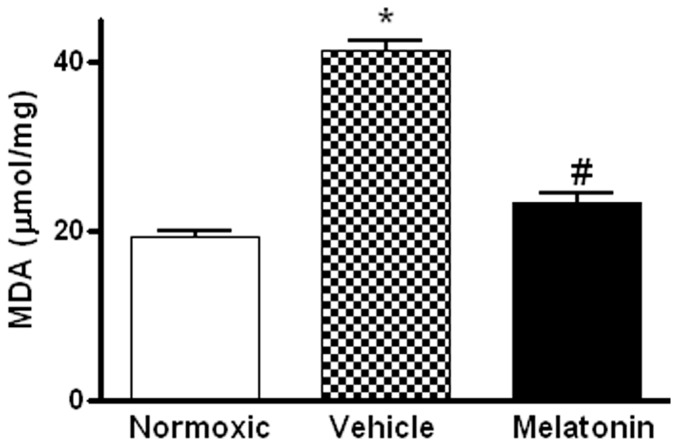
Chronic hypoxia induces pulmonary hypertension and vascular remodeling, which are clinically relevant to patients with chronic obstructive pulmonary disease (COPD) associated with a decreased level of nitric oxide (NO). Oxidative stress and inflammation play important roles in the pathophysiological processes in COPD. We examined the hypothesis that daily administration of melatonin (10 mg/kg) mitigates the pulmonary hypertension and vascular remodeling in chronically hypoxic rats. The right ventricular systolic pressure (RVSP) and the thickness of pulmonary arteriolar wall were measured from normoxic control, vehicle- and melatonin-treated hypoxic rats exposed to 10% O₂ for 14 days. Levels of markers for oxidative stress (malondialdhyde) and inflammation (tumor necrosis factor-α (TNFα), inducible NO synthase (iNOS) and cyclooxygenase-2 (COX-2)) and the expressions of total endothelial NO synthase (eNOS) and phosphorylated eNOS at serine1177 (ser1177) were determined in the lung tissue. We found that the RVSP and the thickness of the arteriolar wall were significantly increased in the vehicle-treated hypoxic animals with elevated levels of malondialdhyde and mRNA expressions of the inflammatory mediators, when compared with the normoxic control. In addition, the phosphorylated eNOS (ser1177) level was significantly decreased, despite an increased eNOS expression in the vehicle-treated hypoxic group. Melatonin treatment significantly attenuated the levels of RVSP, thickness of the arteriolar wall, oxidative and inflammatory markers in the hypoxic animals with a marked increase in the eNOS phosphorylation in the lung. These results suggest that melatonin attenuates pulmonary hypertension by antagonizing the oxidative injury and restoration of NO production.
Keywords: anti-oxidant; chronic hypoxia; inflammation; lung injury; nitric oxide.
Conflict of interest statement
The authors declare no conflict of interest.
Figures



References
-
- Rabinovitch M., Gamble W., Nadas A.S., Miettinen O.S., Reid L. Rat pulmonary circulation after chronic hypoxia: Hemodynamic and structural features. Am. J. Physiol. 1979;236:H818–H827. - PubMed
-
- Stanbrook H.S., Morris K.G., Mcmurtry I.F. Prevention and reversal of hypoxic pulmonary hypertension by calcium antagonists. Am. Rev. Respir. Dis. 1984;130:81–85. - PubMed
MeSH terms
Substances
LinkOut - more resources
Full Text Sources
Other Literature Sources
Medical
Research Materials
