


A Second Mortuary Hiatus on Lake Baikal in Siberia and the Arrival of Small-Scale Pastoralism
- PMID: 28539653
- PMCID: PMC5443801
- DOI: 10.1038/s41598-017-02636-w
A Second Mortuary Hiatus on Lake Baikal in Siberia and the Arrival of Small-Scale Pastoralism
Abstract
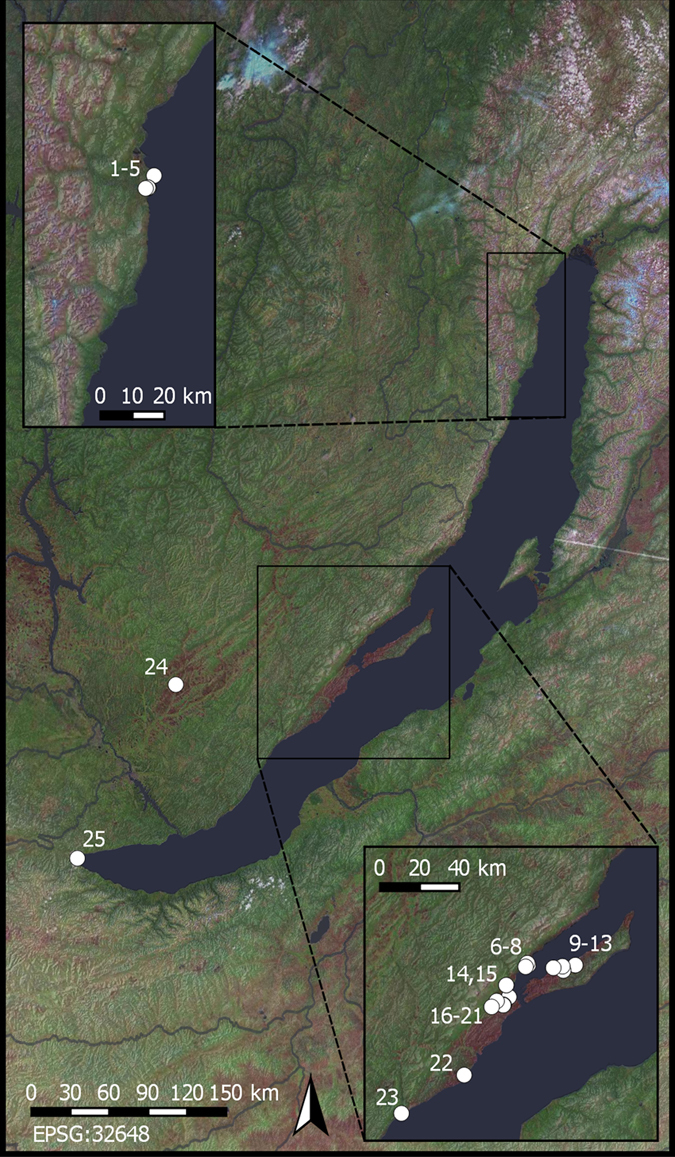
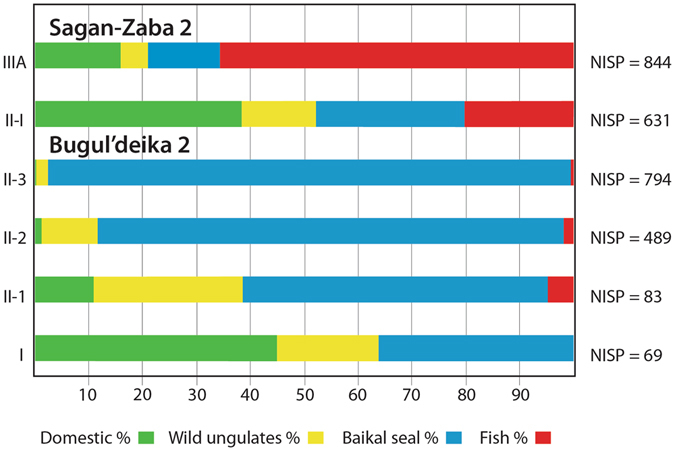
The spread of pastoralism in Asia is poorly understood, including how such processes affected northern forager populations. Lake Baikal's western shore has a rich Holocene archaeological record that tracks these processes. The Early Bronze Age here is evidenced by numerous forager burials. The Early Iron Age (EIA) is thought to mark the arrival of pastoralists, but archaeological remains from this period have received little analysis. New radiocarbon dates for EIA human remains from 23 cemeteries indicate that no burials were created along this shore for ~900 years. This period, from ~3670 to 2760 cal. BP, spans from the end of the Early Bronze Age to the advent of the EIA. The burial gap may mark disruption of local foraging populations through incursions by non-local pastoralists. Radiocarbon dates on faunal remains indicate that domestic herd animals first appear around 3275 cal. BP, just prior to the first EIA human burials. Stable carbon and nitrogen isotope analysis of human remains and zooarchaeological data indicate that domestic fauna were minor dietary components for EIA people. Like preceding foragers, the EIA groups relied extensively on Baikal's aquatic food sources, indicating that the scale of pastoralism during this period was relatively limited.
Conflict of interest statement
The authors declare that they have no competing interests.
Figures

References
-
- Anthony, D. W. The Horse, the Wheel, and Language: How Bronze-Age Riders from the Eurasian Steppes Shaped the Modern World (Princeton University Press, 2007).
-
- Franchetti, M. Pastoralist Landscapes and Social Interaction in Bronze Age Eurasia (University of California Press, 2008).
-
- Hanks B. Archaeology of the Eurasian Steppes and Mongolia. Annu. Rev. Anthropol. 2010;39:469–486. doi: 10.1146/annurev.anthro.012809.105110. - DOI
-
- Honeychurch, W. Inner Asia and the Spatial Politics of Empire: Archaeology, Mobility, and Culture Contact (Springer, 2015).
-
- Koryakova, L., Epimakhov, A. The Urals and Western Siberia in the Bronze and Iron Ages (Cambridge University Press, 2006).
Publication types
LinkOut - more resources
Full Text Sources
Other Literature Sources
Miscellaneous
