


GM2 Activator Deficiency Caused by a Homozygous Exon 2 Deletion in GM2A
- PMID: 28540636
- PMCID: PMC5874204
- DOI: 10.1007/8904_2017_31
GM2 Activator Deficiency Caused by a Homozygous Exon 2 Deletion in GM2A
Abstract
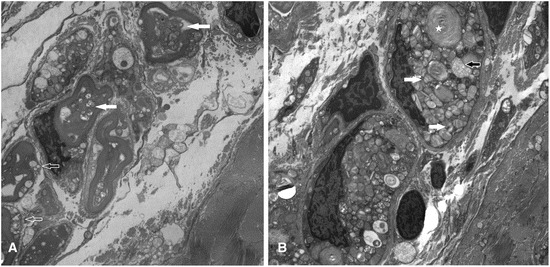
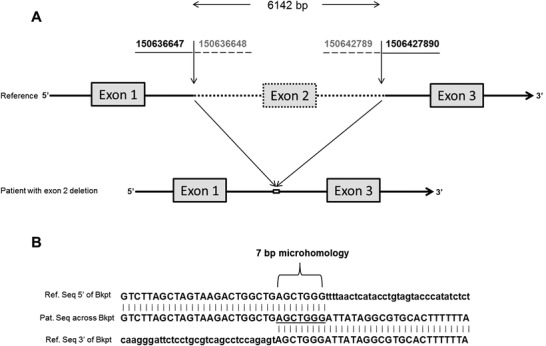
GM2 activator (GM2A) deficiency (OMIM 613109) is a rare lysosomal storage disorder, with onset typically in infancy or early childhood. Clinically, it is almost indistinguishable from Tay-Sachs disease (OMIM 272800) or Sandhoff disease (OMIM 268800); however, traditionally available biochemical screening tests will most likely reveal normal results. We report a 2-year-old male with initially normal development until the age of 9 months, when he presented with developmental delay and regression. Workup at that time was unrevealing; at 15 months, he had abnormal brain MRI findings and a cherry red spot on ophthalmological examination. Family history and all laboratory studies were uninformative. The combination of a cherry red spot and developmental regression was strongly suggestive of a lysosomal storage disorder. Sequence analysis of GM2A did not reveal any pathogenic variants; however, exon 2 of GM2A could not be amplified by PCR, raising suspicion for a large, homozygous deletion. Subsequent copy number analysis confirmed a homozygous deletion of exon 2 in GM2A. This is the first reported case of GM2A deficiency being caused by a whole exon deletion. We describe previously unreported electron microscopy findings in this disease, thus expanding the clinical and variant spectrum for GM2 activator deficiency. These findings demonstrate the increased degree of suspicion required for diagnosis of this rare disorder. Brief Summary: This case of GM2 activator deficiency was caused by a homozygous deletion in GM2A, demonstrating the need to include exon level copy number analysis in any workup to fully exclude this disorder.
Keywords: Cherry red spot; Copy number analysis; Electron microscopy; GM2 activator deficiency; GM2A; Lysosomal storage disorder.
Conflict of interest statement
Patricia Hall is employed by Emory University and is a laboratory director at EGL Genetic Diagnostics, LLC, a clinical genetics laboratory which performs testing described in this paper.
John Alexander is employed by Emory University and is a laboratory director at EGL Genetic Diagnostics, LLC, a clinical genetics laboratory which performs testing described in this paper.
Arun Ankala is employed by Emory University and is a laboratory director at EGL Genetic Diagnostics, LLC, a clinical genetics laboratory which performs testing described in this paper.
Regina Laine, Hart Lidov, Lisa Teot, and Irina Anselm declare that they have no conflict of interest.
Figures
References
-
- Hall P, Minnich S, Teigen C, Raymond K. Diagnosing lysosomal storage disorders: the GM2 gangliosidoses. Curr Protoc Hum Genet. 2014;83:17.16.11–17.16.18. - PubMed
LinkOut - more resources
Full Text Sources
Other Literature Sources
