Review
. 2017 May 25:8:15422.
doi: 10.1038/ncomms15422.

Modeling the process of human tumorigenesis

Affiliations
Review

Modeling the process of human tumorigenesis

Sneha Balani et al. Nat Commun. .

Abstract

Modelling the genesis of human cancers is at a scientific turning point. Starting from primary sources of normal human cells, it is now possible to reproducibly generate several types of malignant cell populations. Powerful methods for clonally tracking and manipulating their appearance and progression in serially transplanted immunodeficient mice are also in place. These developments circumvent historic drawbacks inherent in analyses of cancers produced in model organisms, established human malignant cell lines, or highly heterogeneous patient samples. In this review, we survey the advantages, contributions and limitations of current de novo human tumorigenesis strategies and note several exciting prospects on the horizon.


Conflict of interest statement

The authors declare no competing financial interests.

Figures
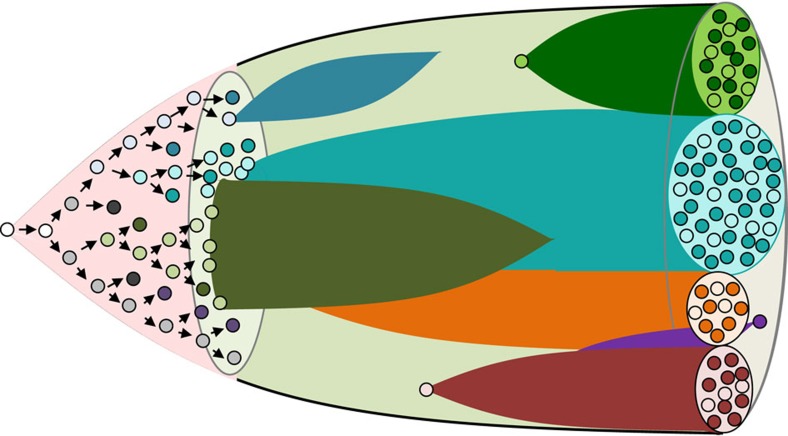
Figure 1
Figure 1. Schematic depiction of the subclonal evolution and diversification of cell types in developing malignant populations.
In this diagram, subclones identified by accumulating genetic changes are shown by different colours. Cells within each clone that have proliferative potential are shown as pale cells in contrast to some of their progeny that can no longer divide that are shown as dark cells (to illustrate the diversification of biological properties that occurs both within and between subclones), with some clones being transient, whereas others are persistent but variably expanding.
Figure 2
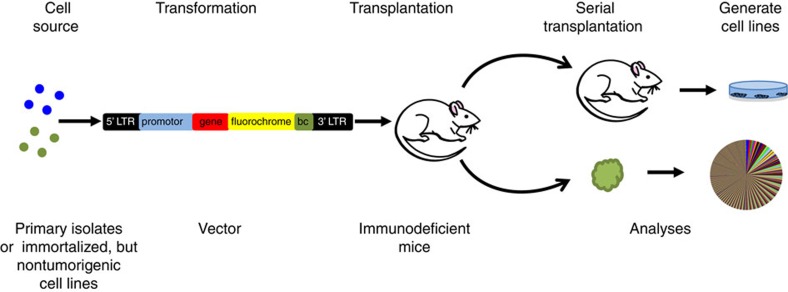
Figure 2. De novo generation of tumours from ‘normal' human cells.
Most examples of successful transformation of primary sources of normal human cells (or non-tumorigenic human cell lines) have used retro- or lenti-viruses encoding one or more oncogenes and a fluorochrome (for example, GFP) to enable malignant cells to be later isolated and characterized. The transduced cells are then transplanted into a receptive site in immunodeficient mice. When a tumour forms, the cells can then be removed for morphological, immunohistochemical, flow cytomteric and/or various molecular and clonal analyses. When this method is efficient, polyclonal tumours may be generated (as illustrated by the pie chart). Retrieved viable cells can also be further transplanted or may be used to generate cell lines.
Figure 3
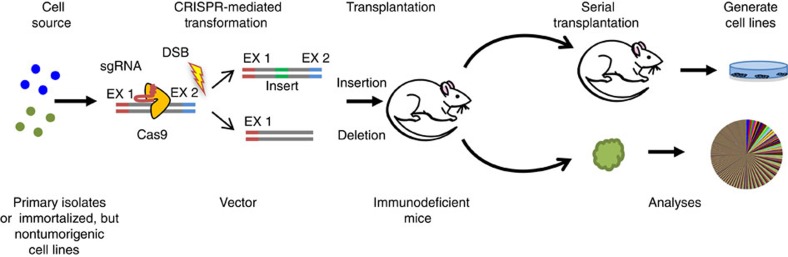
Figure 3. Use of> CRISPR/Cas9 gene editing to examine the tumorigenic consequences of modifying specific genes in human cells.
In this methodology, the test cells are exposed to CRISPR/Cas9 reagents and then transplanted into immunodeficient mice as in Fig. 2.

References

    1. Hanahan D. & Weinberg R. A. Hallmarks of cancer: the next generation. Cell 144, 646–674 (2011). - PubMed
    1. Atlas T. C. G. TCGA Research Network Publications. Available at: https://cancergenome.nih.gov/publications.
    1. Friedman J. M. & Fialkow P. J. Cell marker studies of human tumorigenesis. Transplant. Rev. 28, 17–33 (1976). - PubMed
    1. Nachman M. W. & Crowell S. L. Estimate of the mutation rate per nucleotide in humans. Genetics 156, 297–304 (2000). - PMC - PubMed
    1. Whiteman D. C. & Wilson L. F. The fractions of cancer attributable to modifiable factors: A global review. Cancer Epidemiol. 44, 203–221 (2016). - PubMed

Publication types