


The burden of chronic spontaneous urticaria is substantial: Real-world evidence from ASSURE-CSU
- PMID: 28543019
- PMCID: PMC5724512
- DOI: 10.1111/all.13209
The burden of chronic spontaneous urticaria is substantial: Real-world evidence from ASSURE-CSU
Abstract
Background: Chronic spontaneous urticaria (CSU) can be debilitating, difficult to treat, and frustrating for patients and physicians. Real-world evidence for the burden of CSU is limited. The objective of this study was to document disease duration, treatment history, and disease activity, as well as impact on health-related quality of life (HRQoL) and work among patients with inadequately controlled CSU, and to describe its humanistic, societal, and economic burden.
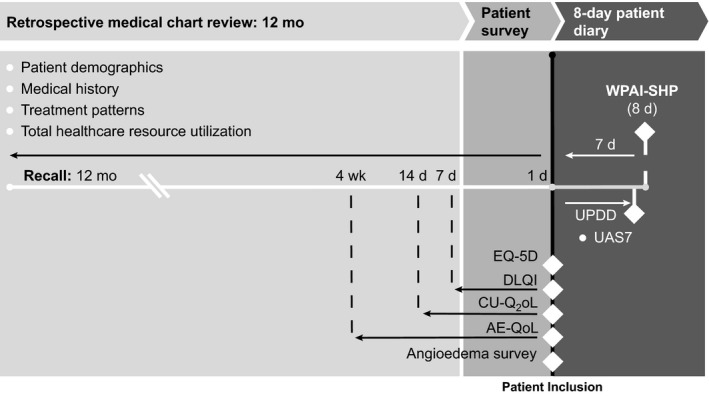
Methods: This international observational study assessed a cohort of 673 adult patients with CSU whose symptoms persisted for ≥12 months despite treatment. Demographics, disease characteristics, and healthcare resource use in the previous 12 months were collected from medical records. Patient-reported data on urticaria and angioedema symptoms, HRQoL, and work productivity and activity impairment were collected from a survey and a diary.
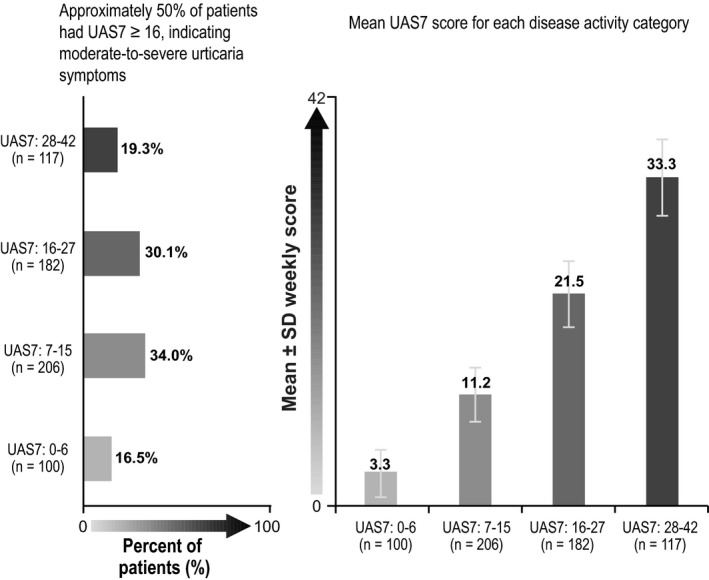
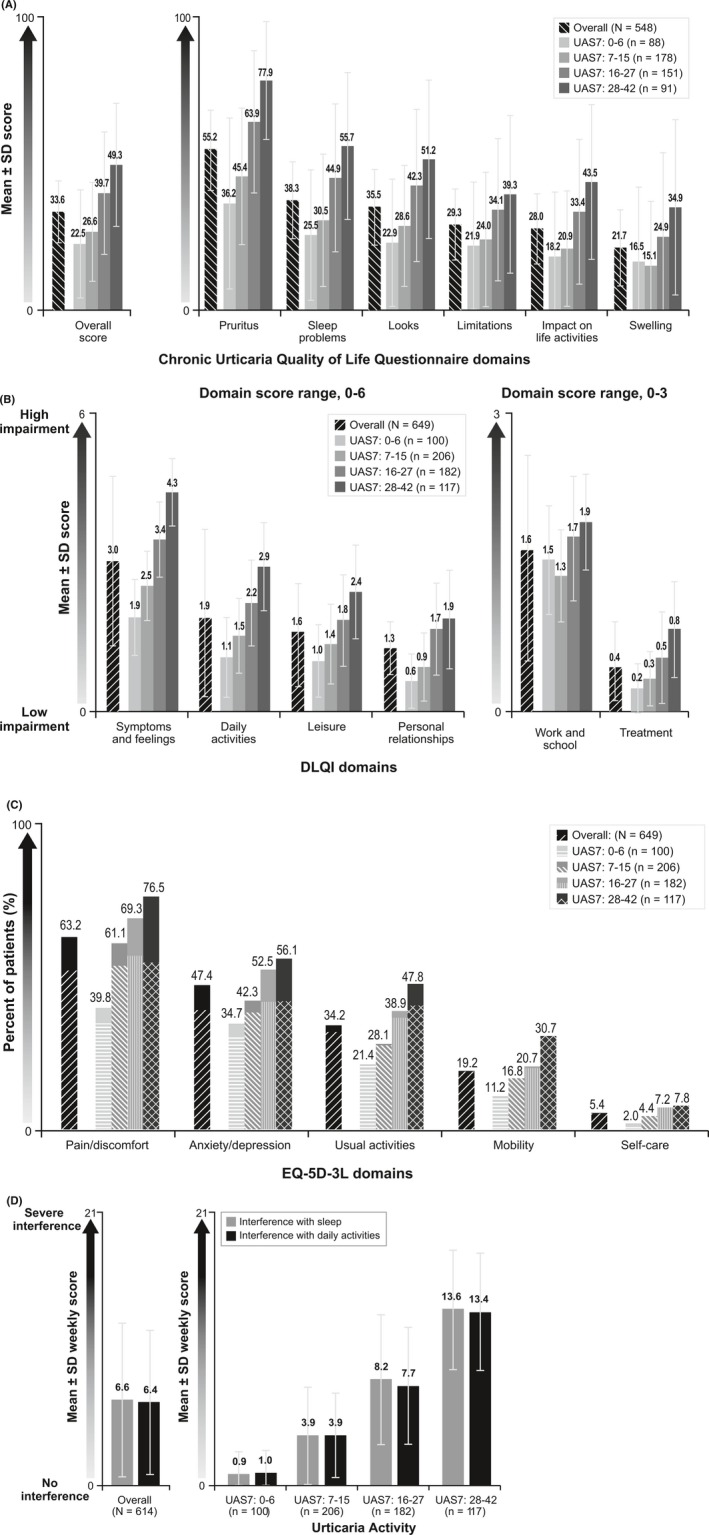
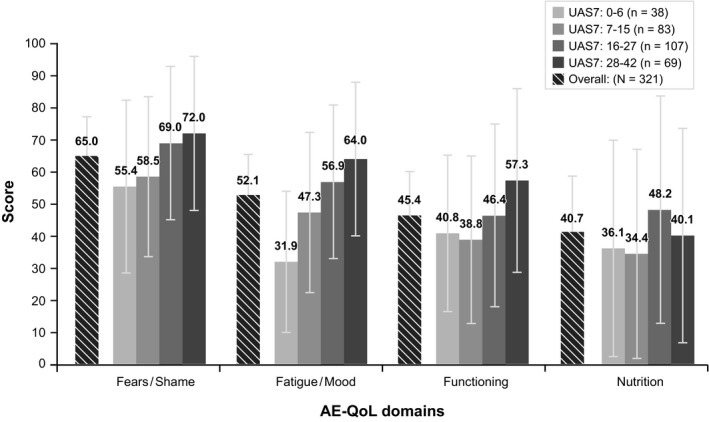
Results: Almost 50% of patients had moderate-to-severe disease activity as reported by Urticaria Activity Score. Mean (SD) Dermatology Life Quality Index and Chronic Urticaria Quality of Life Questionnaire scores were 9.1 (6.62) and 33.6 (20.99), respectively. Chronic spontaneous urticaria markedly interfered with sleep and daily activities. Angioedema in the previous 12 months was reported by 66% of enrolled patients and significantly affected HRQoL. More than 20% of patients reported ≥1 hour per week of missed work; productivity impairment was 27%. These effects increased with increasing disease activity. Significant healthcare resources and costs were incurred to treat CSU.
Conclusions: Chronic spontaneous urticaria has considerable humanistic and economic impacts. Patients with greater disease activity and with angioedema experience greater HRQoL impairments.
Keywords: angioedema; economic burden; observational study; quality of life; urticaria.
© 2017 The Authors. Allergy Published by John Wiley & Sons Ltd.
Figures
References
-
- Maurer M, Bindslev‐Jensen C, Gimenez‐Arnau A, et al. Chronic idiopathic urticaria (CIU) is no longer idiopathic: time for an update!. Brit J Dermatol. 2013;168:455‐456. - PubMed
-
- Zuberbier T, Aberer W, Asero R, et al. The EAACI/GA(2) LEN/EDF/WAO guideline for the definition, classification, diagnosis, and management of urticaria: the 2013 revision and update. Allergy. 2014;69:868‐887. - PubMed
-
- Toubi E, Kessel A, Avshovich N, et al. Clinical and laboratory parameters in predicting chronic urticaria duration: a prospective study of 139 patients. Allergy. 2004;59:869‐873. - PubMed
-
- van der Valk P, Moret G, Kiemeney L. The natural history of chronic urticaria and angioedema in patients visiting a tertiary referral centre. Br J Dermatol. 2002;146:110‐113. - PubMed
-
- Gaig P, Olona M, Muñoz Lejarazu D, et al. Epidemiology of urticaria in Spain. J Investig Allergol Clin Immunol. 2004;14:214‐220. - PubMed
MeSH terms
LinkOut - more resources
Full Text Sources
Other Literature Sources
Medical
