


Insulin-like growth factor-1 signaling is responsible for cathepsin G-induced aggregation of breast cancer MCF-7 cells
- PMID: 28544544
- PMCID: PMC5543509
- DOI: 10.1111/cas.13286
Insulin-like growth factor-1 signaling is responsible for cathepsin G-induced aggregation of breast cancer MCF-7 cells
Abstract
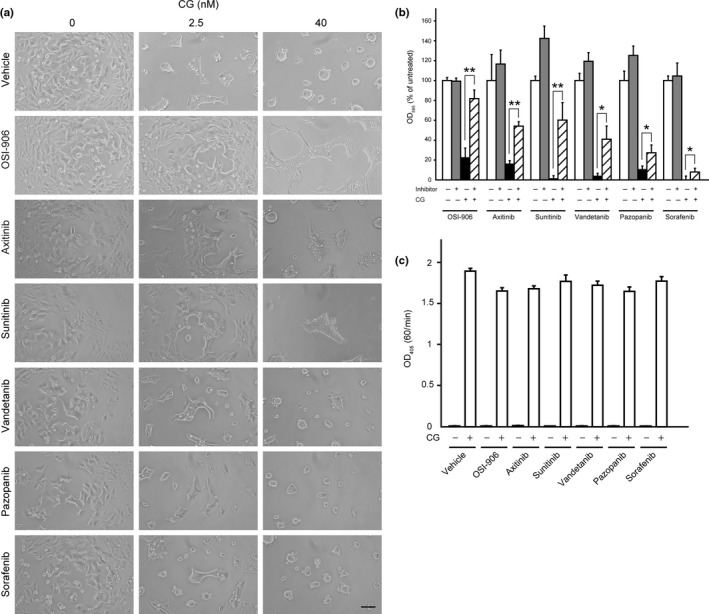
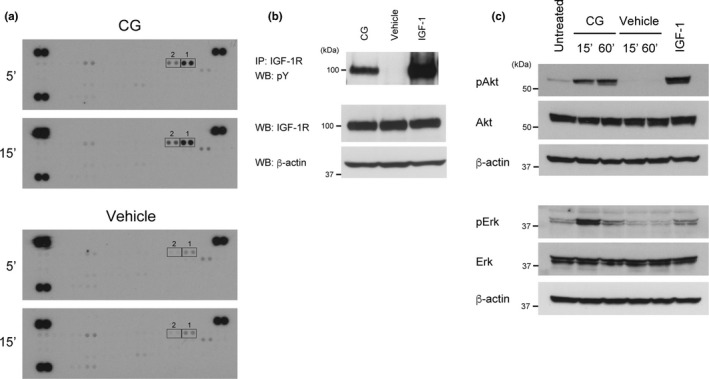
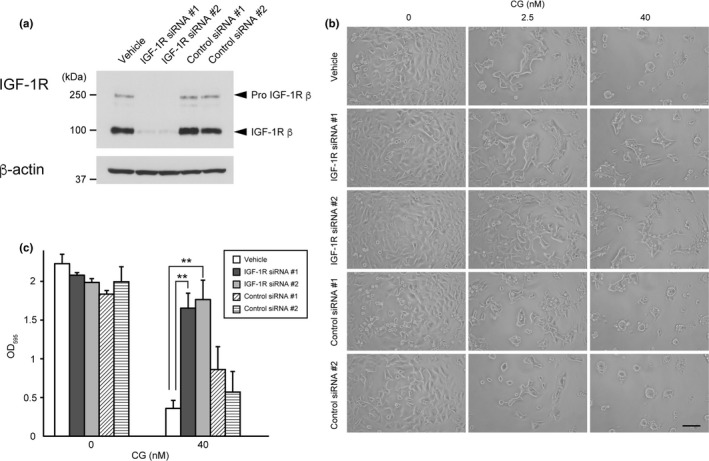
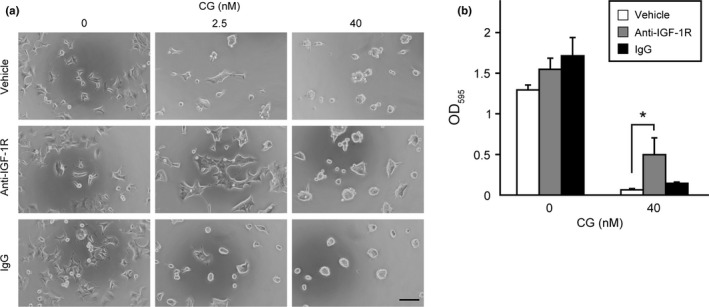
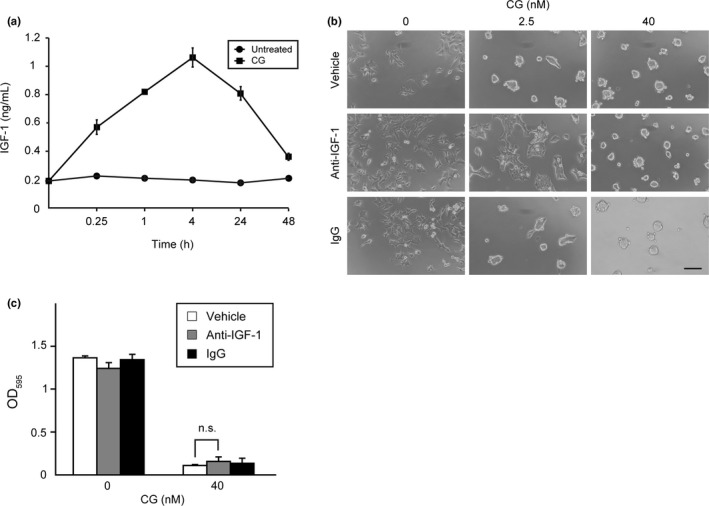
Cathepsin G (CG), a neutrophil serine protease, induces cell migration and multicellular aggregation of human breast cancer MCF-7 cells in a process that is dependent on E-cadherin and CG enzymatic activity. While these tumor cell aggregates can cause tumor emboli that could represent intravascular growth and extravasation into the surrounding tissues, resulting in metastasis, the molecular mechanism underlying this process remains poorly characterized. In this study, we aimed to identify the signaling pathway that is triggered during CG-mediated stimulation of cell aggregation. Screening of a library of compounds containing approximately 90 molecular-targeting drugs revealed that this process was suppressed by the insulin-like growth factor-1 (IGF-1) receptor (IGF-1R)-specific kinase inhibitor OSI-906, as well as the multikinase inhibitors axitinib and sunitinib. Antibody array analysis, which is capable of detecting tyrosine phosphorylation of 49 distinct receptor tyrosine kinases, and the results of immunoprecipitation studies indicated that IGF-1R is phosphorylated in response to CG treatment. Notably, IGF-1R neutralization via treatment with a specific antibody or silencing of IGF-1R expression through siRNA transfection suppressed cell aggregation. Furthermore, CG treatment of MCF-7 cells resulted in increased release of IGF-1 into the medium for 24 h, while antibody-mediated IGF-1 neutralization partially prevented CG-induced cell aggregation. These results demonstrate that autocrine IGF-1 signaling is partly responsible for the cell aggregation induced by CG.
Keywords: breast neoplasm; neoplasm metastasis; neutrophil; serine protease; tumor microenvironment.
© 2017 The Authors. Cancer Science published by John Wiley & Sons Australia, Ltd on behalf of Japanese Cancer Association.
Figures
References
-
- Elinav E, Nowarski R, Thaiss CA, Hu B, Jin C, Flavell RA. Inflammation‐induced cancer: crosstalk between tumours, immune cells and microorganisms. Nat Rev Cancer 2013; 13: 759–71. - PubMed
-
- Gregory AD, Houghton AM. Tumor‐associated neutrophils: new targets for cancer therapy. Cancer Res 2011; 71: 2411–6. - PubMed
-
- Fridlender ZG, Albelda SM. Tumor‐associated neutrophils: friend or foe? Carcinogenesis 2012; 33: 949–55. - PubMed
MeSH terms
Substances
LinkOut - more resources
Full Text Sources
Other Literature Sources
Medical
Miscellaneous
